Which format suits your book club?
The strongest reason to buy a single large case is an established preference for its flavour; a newer group has more reason to keep its selection flexible.
Regular clubs with a favourite flavour
If members already enjoy a berry infusion, a 250-envelope case offers a near-240 quantity with individually wrapped portions for a self-serve table. Clipper Tea Shop and TRAMPOLINE Teas each list a berry-style 250-envelope product.
Clubs with mixed preferences
Smaller packs let you put out more than one flavour without committing every serving to the same blend. Tesco Groceries lists fruit and herbal products in 20- and 80-bag formats, while Sainsbury’s lists 20-bag options.
Hosts managing ingredient questions
Keep the original packs or an accurate ingredient record beside the drinks. This matters when choosing blends containing ingredients such as liquorice root and when a food business needs to provide allergen information.
What should you check before buying?
Decide how much flavour variety the group needs, then check the quantity and product information for each pack you plan to serve.
One-flavour catering case
Choose when: Members already accept one berry flavour and individually wrapped bags suit the serving table.
Trade-off: A 250-envelope case exceeds a 240-serving target by 10 bags and offers no flavour choice within the case.
Mixed smaller packs
Choose when: Preferences are mixed or you want to try several infusions before settling on one.
Trade-off: Multiple cartons take more organising, and their ingredient information needs to stay with the right flavours.
| Priority |
What to check |
Your needs |
| Serving count |
Check the number of bags per pack and how many cartons the order contains. Twelve 20-bag cartons provide 240 bags; one 250-envelope case provides 10 more. |
I need enough servings for the planned meetings without buying a large quantity of a flavour the group may leave untouched. |
| Flavour choice |
Check whether each carton is an assortment or a single blend. Compare the named flavours, not just the fruit-tea category. |
For a new club, I would rather offer a choice; for a group with a known favourite, one flavour may be simpler. |
| Caffeine |
Read the exact pack’s ingredients and caffeine statement. Twinings describes its fruit and herbal range as a caffeine-free alternative to traditional tea, but Clipper says some of its infusions contain caffeine. |
At an evening meeting, I want to be able to tell guests what the particular drink says about caffeine, rather than relying on the word “fruit”. |
| Ingredients |
Keep each blend’s ingredient list available. Clipper Tea Shop lists liquorice root in Organic Berry Burst; the British Heart Foundation warns that liquorice tea may raise blood pressure, even in modest amounts. |
If someone needs to avoid an ingredient, I want them to identify which blend contains it and choose accordingly. |
| Serving information |
Keep packs identifiable after opening. If the organiser operates as a food business, the Food Standards Agency says allergen information must be provided for prepacked and non-prepacked food and drink. |
I want ingredient and allergen questions answered from the right pack, particularly when several flavours share a table. |
Which brands offer relevant formats?
These brand examples illustrate different pack and flavour approaches; check the exact product rather than applying a range-wide description to every blend.
Clipper
Clipper Tea Shop lists Organic Berry Burst as a 250-envelope infusion, close to a 240-serving brief.
- Its listed ingredients include berry components, and Clipper describes its tea bags as unbleached and plastic-free.
- Organic Berry Burst contains liquorice root; check whether that ingredient suits the people being served.
Trampoline Teas
TRAMPOLINE Teas lists Red Berry in a case of 250 single-serve envelopes.
- The supplier specifies a 2–3 minute brew with water at 100°C.
- The case contains one flavour, so it does not provide a mixed selection.
Twinings
Twinings fruit and herbal products offer a smaller-pack route; Tesco Groceries lists examples in 20- and 80-bag formats.
- Smaller cartons can be combined when the club wants more than one flavour.
- Twinings describes its fruit and herbal range as a caffeine-free alternative, but check the statement on each exact pack before serving it as caffeine-free.
Pukka
Pukka’s fruit-tea range is an option when assembling smaller packs rather than buying one catering case.
- Pukka states that its fruit-tea range uses organic ingredients and compostable tea bags.
- Combining smaller cartons means checking the ingredients and serving count of every chosen flavour.
Teapigs
Teapigs offers Super Fruit in tea temples or loose-leaf pouches, a different format from a 250-envelope case.
- It provides a fruit-flavour option for a smaller selection.
- Tea temples and loose leaf need a separate pack-count or portion check when planning 240 servings.
Joybuy options for smaller packs
These 20-count fruit and berry options suit a book club assembling smaller packs; neither card represents a single 240-bag catering case.
 No image available
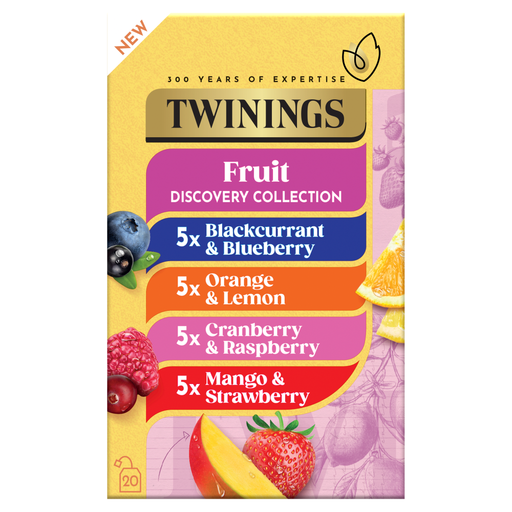
Twinings Fruit Selection 20 Tea Bags 40g
A fruit selection is an option when book-club preferences vary. Each carton contains 20 tea bags, so twelve cartons would provide 240; check the exact pack’s ingredients, including any liquorice root, and its caffeine statement before serving.
View on Joybuy
 No image available
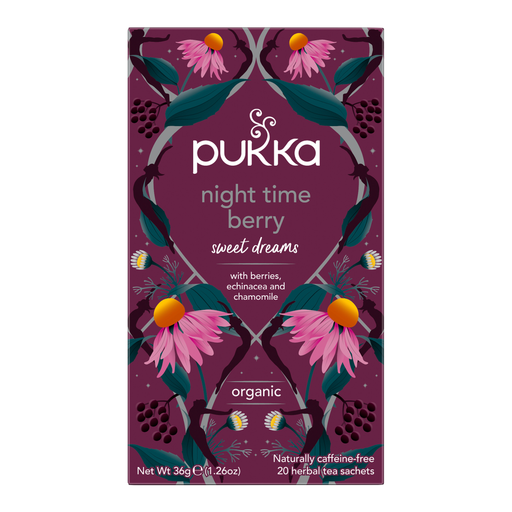
Pukka Night Time Berry Organic 20 Tea Sachets 36g
This single berry blend is an option for a group that already favours that flavour, or as one part of a mixed table. The carton contains 20 sachets; check its ingredient list, particularly for liquorice root, and its caffeine statement before serving.
View on Joybuy
Book-club fruit tea questions
Can I buy 250 envelopes when I need around 240 servings?
Yes, if one flavour suits the club: a 250-envelope case leaves 10 bags beyond a 240-serving target. If members want a choice, twelve 20-bag cartons also add up to 240 and can contain different flavours.
Is every fruit tea caffeine-free?
Do not assume so from the flavour name. Twinings describes its fruit and herbal range as a caffeine-free alternative to traditional tea, while Clipper says some of its infusions contain caffeine; check the statement and ingredients on the exact pack.
What if a berry infusion contains liquorice root?
Keep its ingredient list visible and offer another blend for someone who needs to avoid liquorice. Clipper Tea Shop lists liquorice root in Organic Berry Burst, and the British Heart Foundation warns that liquorice tea may raise blood pressure, even in modest amounts; this does not describe every fruit infusion.
What allergen information does a book club need when serving tea?
If the organiser operates as a food business, the Food Standards Agency says allergen information must be provided for prepacked and non-prepacked food and drink. Keep each product’s packaging available so the information given matches the drink being served.


