Who is an 80-bag box for?
A single-flavour box of 80 is easier to choose when you know who will drink it and which flavour they prefer.
Households with a familiar favourite
If everyone already drinks the same kind of infusion, one 80-bag box can stock that choice. Birchall Tea lists an 80-bag Red Berry & Flower infusion, while Twinings lists Lemon & Ginger in an 80-bag pack; they suit different flavour preferences.
Shoppers choosing a caffeine-free drink
Birchall Tea describes its Red Berry & Flower 80-bag infusion as naturally caffeine-free, as does Twinings for its Lemon & Ginger 80-bag pack. Check the statement on the exact blend rather than relying on the words ‘fruit tea’ alone.
Households still exploring flavours
A smaller pack offers a way to try a blend before storing 80 bags of it. Teapigs lists Super Fruit in 15 Tea Temples, and Tesco lists Pukka fruit or herbal options in 20-bag packs; those individual packs do not fulfil a request for one box of 80.
What should you check before choosing?
Settle on a flavour the household will use, then check the exact bag count and the details that matter to the people drinking it.
| Priority |
What to check |
Your needs |
| Pack and flavour |
Confirm that the individual box contains 80 bags. Decide whether one flavour will be used regularly or whether smaller packs make more sense for trying several blends. |
I have cupboard space for 80 bags, but I want a flavour the household already enjoys rather than a large box left untouched. |
| Blend and caffeine |
Compare the named ingredients and look for a caffeine statement on the exact product. Birchall Tea’s Red Berry & Flower and Twinings Lemon & Ginger 80-bag packs are both described by their makers as naturally caffeine-free, despite their different flavour profiles. |
A berry-style infusion suits what we usually drink; in another household, lemon and ginger may be the flavour people reach for. If caffeine matters to me, I check the particular pack. |
| Ingredients and allergens |
Read the current ingredients and any precautionary allergen statement on the exact pack. The Food Standards Agency explains that precautionary labelling can signal possible unintended presence of a regulated allergen; a vegan or caffeine-free description is not an allergen-safety guarantee. |
When I am serving someone with an allergy or intolerance, the label for the blend I am buying matters more than its broad ‘fruit tea’ description. |
| Brewing and disposal |
Follow the blend’s brewing directions: Birchall Tea recommends three minutes for Red Berry & Flower, while Twinings specifies three minutes for Lemon & Ginger. Check the pack’s separate instructions for disposing of its bags and packaging. |
I want a straightforward cup to prepare, and I need disposal instructions that apply to this pack and my local collection service. |
Brands and pack formats to compare
The relevant question is which blend and pack size each brand offers, not whether the brand name alone meets the 80-bag brief.
Twinings
Twinings lists Lemon & Ginger as an 80-bag herbal infusion.
- Twinings describes this specific blend as naturally caffeine-free and gives preparation directions.
- Lemon and ginger are a different choice from a red-berry-style fruit infusion; check the ingredients if the blend is for someone with dietary restrictions.
Pukka
Pukka offers fruit and herbal blends; Tesco lists relevant options in 20-bag formats.
- Smaller packs can help a household try a flavour before choosing a larger single-flavour supply.
- Do not count a 20-bag listing as one box of 80. Check the variant if the individual pack size is essential.
Teapigs
Teapigs lists fruit infusions including Super Fruit and Strawberry & Juniper in 15-Tea-Temple packs.
- Teapigs describes these specific fruit infusions as naturally caffeine-free; its Super Fruit directions call for a brew of at least three minutes.
- The listed 15-Tea-Temple fruit packs are smaller-format choices, not individual boxes of 80.
Clipper
Clipper lists Organic Blackcurrant & Blueberry among its fruit-style infusions.
- Clipper provides an ingredient list for that blend, including hibiscus, rosehip, liquorice, nettle and natural fruit flavourings.
- The Clipper Tea Shop lists Blackcurrant & Blueberry as 20 bags; its listed 80-bag rooibos is a different infusion. Check both blend and count.
A Joybuy option for the pantry
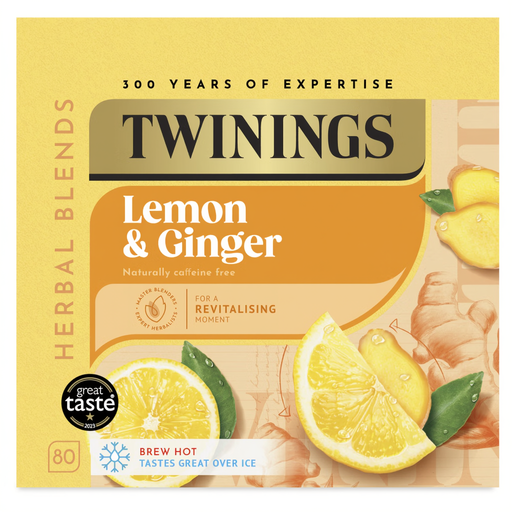
This 80-bag lemon-and-ginger option suits a household that already wants a citrus-and-ginger herbal infusion rather than a berry-style blend.
 No image available
Twinings Lemon & Ginger 80 Pack
This single-flavour pack fits a pantry where lemon and ginger are already a welcome choice. It contains 80 tea bags and is described as caffeine-free; the listed ingredients include sweet fennel. Check the current pack’s ingredients and precautionary allergen information if buying for someone with an allergy or intolerance.
Joybuy
Questions about fruit infusions
Is fruit tea always caffeine-free?
Check the exact blend rather than assuming it is. Twinings identifies its Lemon & Ginger 80-bag infusion as naturally caffeine-free, but the words ‘fruit tea’ alone do not tell you the ingredients or caffeine status of every flavoured tea.
How should I store an 80-bag box?
Follow the directions for the box you buy. Birchall Tea specifies a cool, dry place away from strong aromas for its Red Berry & Flower 80-bag pack, a useful detail when one box will remain in the pantry over multiple servings.
How long should a fruit infusion brew?
Use the directions for the particular blend. Twinings specifies three minutes in 200 ml of freshly boiled water for Lemon & Ginger, with longer infusion for a stronger drink; Teapigs specifies at least three minutes for Super Fruit Tea Temples.
Does a vegan or caffeine-free label settle allergy suitability?
No. The Food Standards Agency explains that vegan labelling does not guarantee suitability for a person with a food allergy and that precautionary labelling can indicate possible unintended allergen presence. Read the current ingredients and precautionary statements on the exact pack.
Can tea bags and their packaging go in the same bin?
Follow the instructions for each part of the specific pack rather than assuming they share a disposal route. Pukka describes its tea bags as certified home compostable, but bags, tags and packaging from other products may carry different instructions; check those alongside your local collection rules.


