What should you check?
Start with residents’ plans and preferences, then choose blends and pack formats that staff can use consistently.
| Priority |
What to check |
Your needs |
| Drink choice |
Check the available flavours, caffeine wording and preparation directions. Offer fruit tea within the wider drinks service, not in place of every other option. |
I want residents to be able to choose a drink they will accept at mealtimes or drinks rounds. The Care Quality Commission’s Regulation 14 guidance says providers should take people’s preferences into account. |
| Ingredients |
Read the ingredient list for the exact blend and keep its packaging identifiable after opening. Check ingredients against any relevant individual plan. |
If a resident needs an ingredient check, I need staff to know which blend they are serving—not just its brand or berry flavour. |
| Taste and oral health |
Look for descriptions of tartness and keep a less sharp alternative available. Follow individual oral-health guidance where frequent acidic drinks are a concern. |
A resident may prefer a milder drink or need a different option. NHS dental guidance notes that acidic drinks can contribute to dental erosion; sugar-free wording does not establish that a drink is non-acidic. |
| Pack format |
Compare the number of bags or envelopes with planned servings, and check how different flavours will remain identifiable in storage. |
For regular rounds, I need enough of the flavours residents choose while still being able to offer alternatives. |
Brand and product-line references
These examples illustrate different flavour and pack formats; check the current product label before adding a blend to routine service.
Twinings
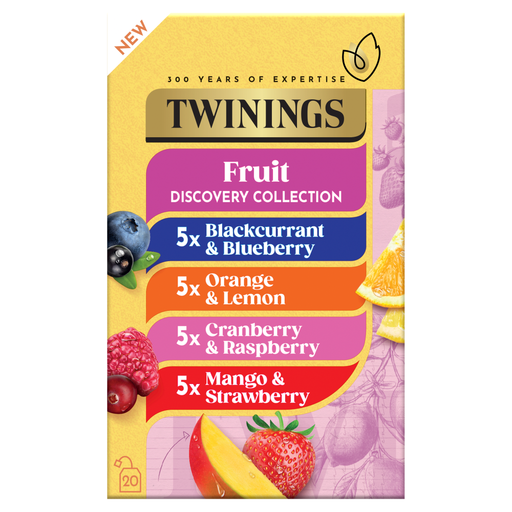
The Twinings Fruit Discovery Collection is a 20-envelope selection for offering several named fruit flavours.
- Twinings describes four fruity infusions with each bag sealed in its own envelope.
- Check the ingredients of each flavour separately rather than treating the collection as one recipe.
Tesco
Tesco Red Berries is a 40-bag, single-flavour fruit infusion.
- Tesco describes the product as naturally caffeine-free.
- A single flavour gives residents less choice than a mixed selection; check that its taste suits those offered it.
Clipper
Clipper offers Berry Burst fruit infusion in a 250-envelope catering format.
- The product is described by Clipper as naturally caffeine-free.
- A large pack still calls for an exact-ingredient check and a decision about whether residents want that flavour regularly.
Pukka
Pukka Elderberry & Echinacea combines fruit with named herbal ingredients.
- Pukka describes the infusion as naturally caffeine-free.
- Check whether its elderberry and echinacea profile fits residents’ preferences and individual ingredient requirements.
Teapigs
Teapigs Super Fruit comes in a 15-tea-temple pack.
- Teapigs describes the infusion as naturally caffeine-free.
- The brand describes its flavour as tart, so offer another choice for residents who prefer a milder drink.
Sainsbury's
Sainsbury's lists own-label fruit-and-herbal tea options, including Strawberry, Raspberry & Cranberry and Blackberry & Blueberry.
- The named options give homes flavours to consider when planning variety.
- Assess each chosen product’s current ingredients and pack directions before serving it routinely.
Fruit-tea options on Joybuy
This fruit-tea selection is relevant to homes considering a mixed-flavour box for hot-drink choice at meals or drinks rounds.
 No image available
Twinings Fruit Selection 20 Tea Bags 40g
A fruit-tea selection to consider when residents want a choice of flavours at hot-drink rounds. The pack contains 20 tea bags; check each blend’s current ingredients against individual plans, and check the pack directions before setting staff preparation guidance.
View on Joybuy
Frequently asked questions
Can fruit tea be part of a care-home drinks offer?
Yes, fruit tea can be offered alongside other drinks when it suits the resident’s individual hydration plan and preferences. The Care Quality Commission’s Regulation 14 guidance says providers should take people’s food and drink preferences into account; one fruit-tea blend should not replace a suitable choice of drinks.
Are all fruit teas caffeine-free?
Do not assume so from the category name; check the exact pack. The Tesco Red Berries, Clipper Berry Burst, Pukka Elderberry & Echinacea and Teapigs Super Fruit products described by their sellers or manufacturers here are labelled naturally caffeine-free.
Why check a fruit tea for liquorice root?
A fruit flavour name does not tell staff whether a blend contains liquorice root. Read the ingredient list for the exact variety and check it against the resident’s care plan, seeking appropriate clinical or pharmacy advice where the plan calls for it.
Does sugar-free fruit tea rule out oral-health concerns?
No. Sugar-free wording does not establish that a drink is non-acidic. NHS dental guidance notes that acidic drinks can contribute to dental erosion, so follow individual oral-health advice and offer other drinks when frequent tart fruit infusions are a concern.
How can staff serve different blends consistently?
Keep each blend identifiable and follow its own pack directions for preparation. This also lets staff check the ingredients of the drink being served against a resident’s plan, rather than relying on a general instruction for all fruit teas.


