Hosts serving mixed preferences
Offer a decaf black tea for guests who expect a conventional cream-tea cup, alongside a fruit infusion for those who would rather have a fruit-led drink. Twinings lists both types of product.


Serve decaffeinated black tea if guests want a familiar cup with milk, but do not treat decaf as caffeine-free: Twinings says minor traces can remain. For a fruit-led drink, choose an infusion explicitly labelled naturally caffeine-free and check its ingredients. A rooibos blend offers another route when guests want to add milk; Teapigs says its Spiced Winter Red Tea can be served with or without it.
For a mixed group, offering two flavour styles gives guests a clearer choice than asking one tea to stand in for both.
Offer a decaf black tea for guests who expect a conventional cream-tea cup, alongside a fruit infusion for those who would rather have a fruit-led drink. Twinings lists both types of product.
Look for an infusion whose exact pack says it is naturally caffeine-free, rather than relying on the word “decaf”. Twinings says minor traces of caffeine can remain in decaffeinated tea.
Check the serving advice if they do not want decaf black tea. Teapigs says its naturally caffeine-free Spiced Winter Red Tea can be served with or without milk, though its spiced rooibos flavour differs from black tea.
Choose the serving style first, then check the exact blend’s caffeine wording and ingredients before deciding how many bags you need.
Choose it when: Guests expect a conventional tea flavour and may add milk; Twinings gives milk-serving advice for Everyday Decaffeinated.
Bear in mind: Decaffeination does not necessarily remove every trace of caffeine, according to Twinings.
Choose it when: A fruit-led drink matters more than recreating a black-tea cup; Twinings describes its Strawberry & Raspberry infusion as naturally caffeine-free.
Bear in mind: Ingredients vary by blend, so check the exact pack for guests with ingredient restrictions.
Choose it when: Guests want a naturally caffeine-free drink with the option of milk; Teapigs gives both serving options for Spiced Winter Red Tea.
Bear in mind: That particular blend contains cinnamon, clove and orange notes, rather than the flavour of plain black tea or a straightforward fruit infusion.
| Priority | What to check | Your needs |
|---|---|---|
| Caffeine wording | Check whether the exact product says “naturally caffeine-free” or “decaffeinated”. Read the ingredients and any caffeine statement on the pack; Twinings notes that decaf tea can retain minor traces. | I need to know whether avoiding caffeine altogether matters for my guests, or whether a decaf black tea suits the occasion. |
| Flavour and milk | Check the blend’s flavour description and serving advice. Twinings suggests milk with Everyday Decaffeinated; Teapigs says its Spiced Winter Red Tea can be served with or without milk. | Will guests expect a familiar milky tea, or would they welcome a separate fruit or spiced option with their scones? |
| Ingredients | Read the full ingredient list on the current pack, including botanicals and allergen information. Tesco warns that food formulations and labels can change. | I want to check the particular blend before serving anyone with an ingredient restriction, rather than assuming all infusions are alike. |
| Pack size | Check the stated bag count or pack weight against the number of drinks you plan to make. Keep the fruit option distinct from the decaf black tea when counting servings. | For a small gathering, I might offer a second flavour without buying the same quantity of each tea. |
Twinings says minor traces can remain in decaffeinated tea. A decaf black tea therefore does not answer a request for complete caffeine avoidance on its wording alone.
Look for an explicit naturally caffeine-free statement on the exact alternative you plan to serve, and check its ingredients.
A fruit-led infusion is a different flavour choice. Twinings gives milk-serving advice for its Everyday Decaffeinated black tea, while its Strawberry & Raspberry product is a fruit infusion.
If preferences are mixed, offer the fruit infusion alongside a decaf black tea instead of assuming it will replace the traditional cup.
The Twinings Strawberry & Raspberry blend is listed as containing liquorice root. NHS pregnancy guidance advises avoiding teas containing liquorice root.
Read the exact ingredients before serving a pregnant guest and choose a different blend where that guidance applies.
Tesco warns that food ingredients, nutrition information and allergens can change when products are reformulated.
Check the current pack label before serving, particularly when caffeine wording or an ingredient restriction affects the choice.
These examples illustrate different serving routes; a brand’s inclusion does not mean every tea it makes has the same ingredients or caffeine status.
Its UK range includes the naturally caffeine-free Strawberry & Raspberry infusion and Everyday Decaffeinated black tea, for hosts offering both fruit-led and conventional cups.
Its Organic & Fairtrade Everyday Decaf is a black-tea option for guests seeking a conventional tea style rather than a fruit infusion.
Pukka describes its Elderberry & Echinacea blend as a naturally caffeine-free organic herbal tea for a separate fruit-led serving option.
Its Spiced Winter Red Tea offers a rooibos-based alternative when guests want a naturally caffeine-free drink that can also take milk.
Tesco lists its own Decaff Original tea bags as a conventional decaf option and has a separate decaf fruit-and-herbal tea category.
These options cover decaf tea for a conventional cream-tea cup and soursop-based alternatives. Check each herbal product’s ingredients and caffeine wording if you need a fruit-led drink or are avoiding caffeine completely.
 No image available
A decaf tea option when serving guests who prefer a conventional cup; the pack contains 80 tea bags and weighs 250g. Check the product’s caffeine wording if complete avoidance matters.
 No image available
Another decaf option for guests who want conventional tea rather than a fruit-led infusion; this variant contains 80 tea bags and weighs 277g. Check the exact pack for caffeine and serving guidance.
 No image available
A 250g decaf tea option for the conventional serving route, rather than a fruit infusion. Check the format and number of servings on the pack when planning for a group.
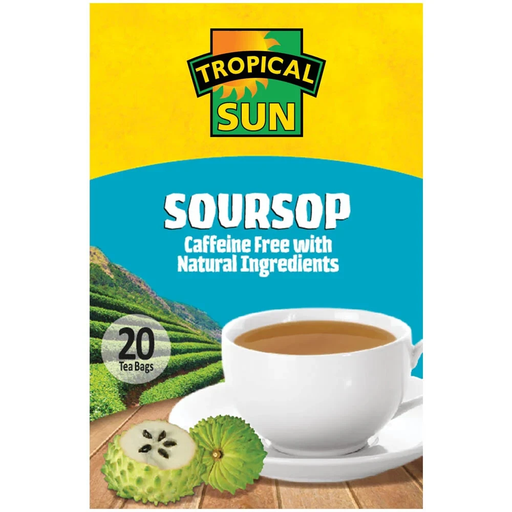 No image available
A 20-bag soursop tea option for guests considering a different drink from conventional decaf tea. Check the ingredients and caffeine statement on the exact pack; the name alone does not establish a fruit-led flavour or suitability with milk.
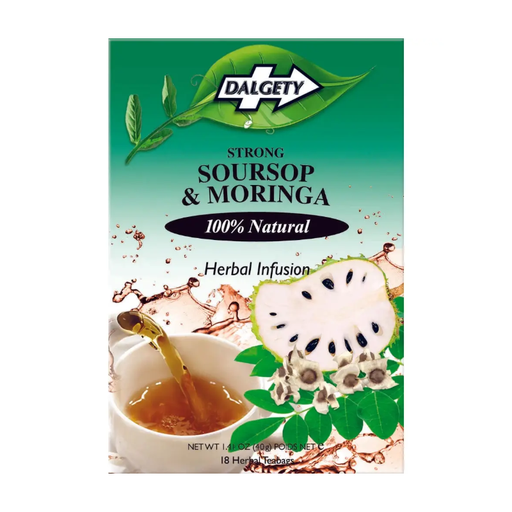 No image available
A 40g soursop-and-moringa tea option to consider alongside conventional decaf tea. Read the exact pack for ingredients, caffeine wording and serving instructions rather than assuming it tastes like fruit tea or takes milk.
No. A fruit infusion labelled naturally caffeine-free is a different product from black tea processed to reduce its caffeine. Check the exact blend’s ingredients and caffeine wording rather than assuming its category settles the question.
Yes. Twinings says minor traces can remain after decaffeination. If complete caffeine avoidance matters, look for an exact product explicitly described as naturally caffeine-free instead of relying on a decaf label.
A rooibos blend may suit that serving preference when its maker recommends milk. Teapigs describes Spiced Winter Red Tea as naturally caffeine-free and suitable with or without milk; its spiced flavour is different from conventional black tea.
Check the exact ingredients: NHS pregnancy guidance advises avoiding teas containing liquorice root and drinking no more than four cups of herbal tea a day. The listed Twinings Strawberry & Raspberry blend contains liquorice root, so choose a different blend where that guidance applies.
Yes. Tesco warns that food products can be reformulated, changing ingredients, nutrition information and allergens. Check the current pack before serving anyone whose choice depends on a particular ingredient or caffeine statement.