For a fruit-forward lunch drink without tea-leaf caffeine, choose a fruit or herbal infusion explicitly labelled naturally caffeine-free, and check its ingredients for additions such as maté or guarana. Choose decaffeinated tea made from tea leaves if you want a conventional tea flavour and are reducing, rather than avoiding, caffeine; then weigh up flavour, brewing time and any ingredients you need to avoid.
Who is each option for?
Students avoiding caffeine at lunch
Start with a fruit or herbal infusion labelled naturally caffeine-free. Twinings notes that blends containing maté or guarana are exceptions to the usual caffeine-free pattern, so read the ingredients as well as the front of the pack.
Students choosing a fruit flavour
Check the flavour description rather than relying on a berry name. Twinings Strawberry & Raspberry is a fruit infusion, while teapigs describes its hibiscus-led Super Fruit blend as tart.
Students reducing caffeine but keeping a tea-leaf flavour
Decaffeinated black tea is a different choice from a fruit infusion. Clipper Organic Everyday Decaf is made from decaffeinated black tea, and Twinings notes that decaf tea can retain minor traces of caffeine.
What should you check before choosing?
Naturally caffeine-free infusion
Choose it when: You want a fruit or herbal drink at lunch rather than the flavour of tea leaves.
Bear in mind: A hibiscus-led blend can taste tart, and the caffeine claim still needs checking against the ingredients.
Decaffeinated tea-leaf tea
Choose it when: You prefer conventional tea and want to reduce your caffeine intake.
Bear in mind: Decaffeination does not necessarily remove every trace of caffeine, and black tea is not a fruit infusion.
| Priority |
What to check |
Your needs |
| Caffeine status |
Read the caffeine claim and ingredient list. Twinings distinguishes naturally caffeine-free infusions from decaffeinated tea leaves and identifies maté and guarana as possible exceptions in fruit or herbal blends. |
I want a fruit drink without tea-leaf caffeine, so I need the pack to say naturally caffeine-free—not merely decaf. |
| Flavour |
Look for descriptions of tartness and ingredients such as hibiscus. teapigs describes Super Fruit as tart; a berry name alone does not tell you how the brewed drink will taste. |
A sharper berry drink appeals to me, or I would rather choose a different fruit flavour for lunch. |
| Preparation |
Check the pack’s water and brewing instructions, then consider whether you will have a cup and hot water available. Twinings specifies three minutes in 200 ml of freshly boiled water for Strawberry & Raspberry; teapigs specifies at least three minutes for Super Fruit. |
Between lectures, I need a drink I can prepare with the time and facilities available. |
| Ingredients |
Read the current pack for botanicals and allergen information. Twinings lists liquorice root in Strawberry & Raspberry; the NHS advises pregnant people to avoid teas containing liquorice root. |
If an ingredient matters to me, the caffeine claim or flavour name is not enough to make the choice. |
What is easy to overlook?
-
Reading “decaf” as “naturally caffeine-free”
Tea made from decaffeinated leaves can retain traces of caffeine. Fruit and herbal infusions are usually caffeine-free, but Twinings identifies blends with maté or guarana as exceptions.
If avoiding caffeine is your aim, check both the caffeine statement and the ingredients instead of choosing by the product name alone.
-
Expecting every berry infusion to taste sweet
teapigs describes its hibiscus-based Super Fruit infusion as tart, so a berry flavour name may not match the drink you expect.
Read the flavour description and ingredient list before choosing a blend for regular lunches.
-
Overlooking botanicals on a caffeine-free pack
Caffeine status does not settle ingredient suitability. Twinings Strawberry & Raspberry contains liquorice root, which the NHS advises pregnant people to avoid in teas.
Check the current ingredients of the particular blend, especially when pregnancy or an ingredient-specific concern applies.
-
Using an older listing instead of the pack
Tesco cautions that recipes and allergen information for its teapigs Super Fruit listing can change.
Before drinking an infusion, check the pack in hand for its ingredients, allergen statement, storage instructions and best-before date.
Relevant brand references
These brands illustrate different types of infusion and decaffeinated tea; the distinction is between particular products, not every drink a brand makes.
Twinings
A reference for both fruit infusions and decaffeinated tea-leaf products.
- Twinings labels Strawberry & Raspberry naturally caffeine-free and gives a three-minute brewing instruction.
- That blend contains liquorice root; check the particular product’s ingredients rather than assuming all Twinings fruit infusions are alike.
Clipper
Relevant when “decaf tea” means tea made from black tea leaves, rather than a fruit infusion.
- Clipper identifies Organic Everyday Decaf as decaffeinated organically grown black tea and says it uses a carbon-dioxide decaffeination process.
- It is not a fruit-tea option, and decaffeinated tea should not be treated as necessarily free of caffeine traces.
Pukka
Its Elderberry & Echinacea product is an organic fruit and herbal tea, according to Pukka’s UK product description.
- Pukka describes this particular blend as naturally caffeine-free.
- Check the current ingredients for individual suitability rather than treating the product’s name as a complete ingredient description.
teapigs
Its Super Fruit blend offers a hibiscus-led berry infusion in tea temples.
- teapigs lists hibiscus and several berries, describes the blend as naturally caffeine-free and recommends brewing it for at least three minutes.
- The brand describes its flavour as tart, which matters if you expect a mild fruit drink.
Fruit and herbal infusions on Joybuy
These options include a fruit-infusion selection and two herbal alternatives. The lemon-and-ginger and soursop-leaf drinks are worth considering if a caffeine-free herbal infusion appeals to you, but they are not fruit-tea blends.
 No image available
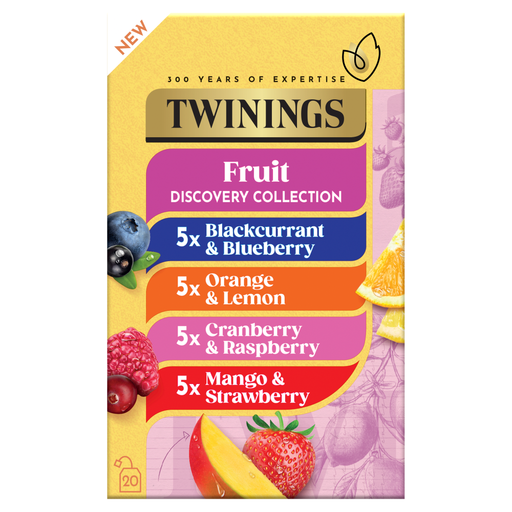
Twinings Fruit Selection, 20 tea bags, 40 g
Consider this selection if you want a choice of fruit infusions for lunch rather than a single flavour. Check the caffeine statement and ingredients for each blend on the current pack; ingredient suitability can differ within an assortment.
View on Joybuy
 No image available
Twinings Lemon & Ginger, 20 tea bags
This is a lemon-and-ginger herbal alternative if you would prefer those flavours to a berry fruit tea. Allow for its stated 3–5 minute brew with freshly boiled water, and check the current pack for ingredients and preparation directions.
View on Joybuy
 No image available
Tropical Sun Soursop Tea, 20 tea bags
Consider this herbal alternative if soursop leaves appeal to you; it is not a fruit blend. Its stated preparation times are 3–5 minutes hot or 5–7 minutes cold, so check the pack’s directions against how you plan to make it at lunch.
View on Joybuy
Frequently asked questions
Is fruit tea the same as decaf tea?
No. A fruit or herbal infusion may be naturally caffeine-free, while decaffeinated black or green tea is made from tea leaves with most caffeine removed. Twinings notes that decaf tea can retain traces of caffeine and that infusions containing maté or guarana can be exceptions to the usual caffeine-free pattern.
What should I check for a drink between lectures?
Check the caffeine statement, ingredients and brewing instructions, as well as whether you will have water and a cup available. Twinings specifies three minutes in 200 ml of freshly boiled water for Strawberry & Raspberry; teapigs recommends at least three minutes for Super Fruit.
Will a berry fruit infusion taste sweet?
Not necessarily. teapigs describes its hibiscus-led Super Fruit blend as tart. Read the flavour description and ingredients rather than treating “berry” as a promise of sweetness.
What if I am pregnant or need to avoid liquorice root?
Check the current ingredients of each blend: a caffeine-free label does not tell you whether it contains liquorice root. Twinings lists liquorice root in Strawberry & Raspberry, and the NHS advises pregnant people to avoid teas containing it and to have no more than four cups of herbal tea a day.


