Older adults who prefer a caffeine-free drink
A fruit infusion can offer a different flavour from ordinary tea or coffee. Check the blend's caffeine statement and follow any individual advice about fluid intake.


For an older adult who enjoys a fruity drink, choose a fruit infusion labelled caffeine-free, while following any individual advice to limit fluids. Do not treat it as a substitute for nourishing food or drinks when appetite is poor or weight is being lost. For ethical sourcing, check the exact pack: Pukka's Fair for Life certification is distinct from the FAIRTRADE Mark, and a brand's general sourcing claims do not establish certification for every blend.
A fruit infusion can offer a different flavour from ordinary tea or coffee. Check the blend's caffeine statement and follow any individual advice about fluid intake.
Keep the choice of an enjoyable drink separate from the need for nourishment. Frimley Health NHS Foundation Trust advises people with a poor appetite to focus on calories and protein from food and drinks.
The FAIRTRADE Mark, Fair for Life certification and general ethical-sourcing wording make different claims. Compare the wording and symbols on the particular pack, rather than relying on the brand name.
Start with the drink's role: a pleasant fluid option, nutritional support or a purchase requiring a particular certification.
| Priority | What to check | Your needs |
|---|---|---|
| Drink choice | Check the exact blend's caffeine statement and preparation directions. Follow any individual fluid limit before increasing drinks. | I'd like a fruity alternative to ordinary tea or coffee that the person enjoys drinking. NHS Sussex notes that older adults may need to make a point of drinking regularly. |
| Nourishment | Look at the prepared drink's energy and protein information when choosing drinks for someone with a poor appetite. Fruit tea should not replace nourishing food or drinks. | If someone is eating poorly or losing weight unintentionally, I need to consider nourishment as well as fluid. Frimley Health NHS Foundation Trust advises focusing on calorie and protein intake in that situation. |
| Ethical certification | Inspect the exact pack for the FAIRTRADE Mark, any arrow and its sourcing explanation. Read a Fair for Life claim as a separate certification. | I want to know which standard the drink carries, rather than assume that an ethical-sounding brand name certifies this particular blend. Fairtrade International explains that its marks can carry different ingredient and sourcing information. |
| Botanical ingredients | Read the full ingredients list, especially if a blend is being considered for a health purpose. Ask a pharmacist or doctor about herbal medicines when medicines or serious health conditions are involved. | For an older person taking medicines, I want the ingredients available for an individual check. NHS inform advises older adults to seek professional advice before trying herbal medicines; that advice does not mean every fruit tea is a medicine. |
A brand's history or sourcing language does not establish that a particular fruit infusion carries the FAIRTRADE Mark. Fair for Life is a different certification.
Check the exact pack for the mark or logo and read any ingredient-specific or back-of-pack sourcing information. Fairtrade International notes that tea can use a mass-balance sourcing model.
A fruit infusion chosen for flavour and fluid does not address the calorie and protein needs described in Frimley Health NHS Foundation Trust's guidance for poor appetite.
If someone is eating poorly or losing weight unintentionally, seek appropriate clinical or dietetic advice about food and nourishing drinks rather than relying on fruit tea.
General drinking advice may not apply to a person who has been told to restrict fluids.
Check their individual advice before offering more fruit tea, water or other drinks.
A fruit tea's ingredients or flavour do not establish a therapeutic effect. NHS inform advises older adults to speak to a pharmacist or doctor before trying herbal medicines.
Choose tea as a drink, not a treatment. If considering a botanical product for a health purpose, take its ingredients list to a pharmacist or doctor, particularly when medicines are involved.
Twinings Cranberry & Raspberry is a fruit infusion the brand describes as naturally caffeine-free and sugar-free.
Pukka offers berry blends and states that all its teas are certified to the Fair for Life standard.
Clipper describes itself as the UK's first Fairtrade tea company and describes its Organic Berry Burst infusion as naturally caffeine-free.
Sainsbury's describes its Red Label black tea as 100% Fairtrade.
These options represent two different choices: a Pukka berry herbal tea for shoppers considering Fair for Life, and a Clipper decaffeinated black tea for those willing to move away from fruit tea to consider a Fairtrade-labelled option. Decaffeinated black tea should not be assumed caffeine-free.
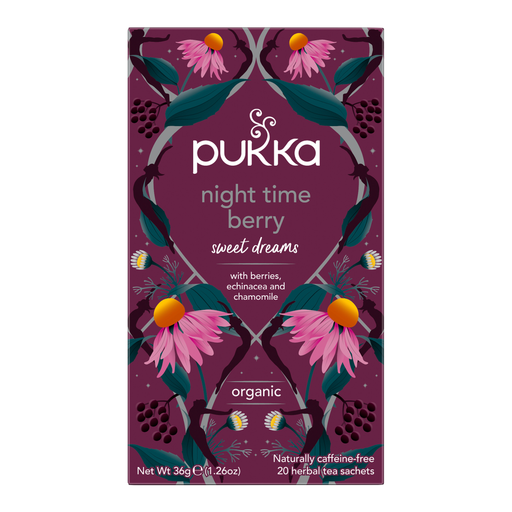 No image available
A berry herbal tea to consider if Pukka's stated Fair for Life certification meets your ethical-trade criteria. Fair for Life is not the FAIRTRADE Mark; check the exact pack for its certification details, caffeine statement and ingredients before choosing it for an older person.
 No image available
This is decaffeinated black tea, not a fruit infusion. Consider it only if a Fairtrade-labelled tea matters more than the fruit-tea format; inspect the exact pack for its FAIRTRADE Mark and caffeine information rather than treating “decaf” as caffeine-free.
A fruit infusion can be one of the drinks an older adult has during the day. NHS guidance encourages regular fluid intake, but individual medical advice takes priority if the person has been told to limit fluids.
No: choose fruit tea for flavour and fluid, not as a substitute for nourishment. Frimley Health NHS Foundation Trust advises people with a poor appetite or unintended weight loss to focus on increasing calories and protein through food and drinks.
Check the exact pack for the FAIRTRADE Mark and read any accompanying ingredient or sourcing information. Fairtrade International explains that an arrow on the mark points to further information on the back of a pack; tea may use its mass-balance sourcing model.
No. Pukka states that its teas are Fair for Life certified, while Fairtrade International defines the separate FAIRTRADE Marks. If the FAIRTRADE Mark is essential to your choice, look for it on the particular product rather than substituting a different certification.
Read the ingredients and do not choose the blend as a treatment. If a botanical product is being considered for a health purpose, NHS inform advises older adults to seek advice from a pharmacist or doctor before trying herbal medicines, particularly when medicines are involved.