Organisers serving mixed preferences
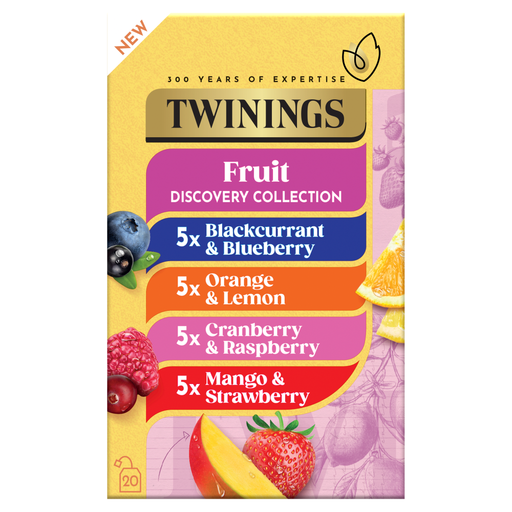
If you do not know which flavours colleagues or guests prefer, several fruit profiles give them a choice. Twinings describes four flavours and individually wrapped bags in its Fruit Discovery Collection.


For a work meeting where flavour preferences are unknown, start with a multi-flavour fruit-infusion box so attendees can choose a blend; individually wrapped bags can also make a shared refreshment station easier to manage. A single fruit blend makes more sense when you know the group’s preferences, while a botanical-led blend is a more distinctive option. Whichever you choose, check the exact product’s caffeine information and every blend’s ingredients, particularly for liquorice root and allergens.
If you do not know which flavours colleagues or guests prefer, several fruit profiles give them a choice. Twinings describes four flavours and individually wrapped bags in its Fruit Discovery Collection.
A fruit or herbal infusion can provide another hot-drink option alongside conventional tea and coffee. Check the caffeine information for the exact blend rather than relying on the words “fruit tea”.
Keep each blend’s packaging available so attendees can read its ingredients and allergen information. This is particularly useful when a selection contains several different recipes or someone needs to avoid an ingredient.
Consider it when: guests’ flavour preferences are unknown or several people will use the same refreshment station.
Trade-off: a mixed box offers fewer bags of each flavour, and every included blend needs its own ingredient check.
Consider it when: you know the group likes that flavour or need one fruit option alongside other drinks.
Trade-off: anyone who dislikes that profile has no alternative fruit flavour from the same box.
Consider it when: the group welcomes pronounced herbal notes as well as fruit flavours.
Trade-off: ginger- or hibiscus-led flavours may not appeal to people expecting a simpler fruit infusion.
| Priority | What to check | Your needs |
|---|---|---|
| Flavour choice | Compare the named blends in a selection; for a single blend, read its flavour and ingredient description. Check the bag count against how many people you plan to serve. | I would rather offer a choice than assume everyone likes the same berry, citrus or botanical flavour. |
| Caffeine information | Look for a caffeine-free statement on the exact product’s pack or manufacturer description; do not infer it from a fruity name. | There should be a clearly identified non-caffeinated option alongside the meeting’s other drinks. |
| Ingredients | Read each blend’s full ingredients and allergen information, including any roots, flowers, herbs and flavourings. Keep the pack available when serving. | People need to be able to check what is in their chosen bag before making a drink. |
| Shared setup | Check whether bags are individually wrapped if that matters for the refreshment station. Confirm the preparation instructions and storage information on the chosen pack. | I want people to find their preferred blend and make a cup without sorting through loose, unlabelled bags. |
Fruit infusions can contain roots and other botanicals as well as fruit ingredients. The Twinings Fruit Discovery Collection includes blends containing liquorice root; the NHS advises pregnant people to avoid teas containing liquorice root.
Read the ingredients of every flavour in a mixed box and offer a clearly labelled alternative where needed.
Teapigs describes its hibiscus-based Super Fruit as slightly tart, while Pukka’s Elderberry & Echinacea includes ginger. Neither flavour description tells you what an unfamiliar group will prefer.
If preferences are unknown, provide a choice of fruit profiles rather than relying on one pronounced botanical blend.
“Fruit tea” describes a flavour or category, not the caffeine status of every product sold under that name.
Check the caffeine statement for the exact blend and keep its packaging available for attendees.
A retailer’s fruit-and-herbal category can contain products with different recipes, even when their flavour names sound similar.
Before buying, check the chosen product’s ingredients, allergen information, bag count and storage instructions.
These ranges illustrate different fruit-infusion styles; check the particular pack rather than treating a brand name as a guarantee of ingredients or flavour.
Twinings offers berry and citrus-oriented fruit infusions, including a Fruit Discovery Collection for serving several flavours from one box.
Clipper’s organic fruit-and-herbal range includes Blackcurrant & Blueberry and Berry Burst.
Pukka’s Elderberry & Echinacea combines berries with echinacea and ginger for a botanical-led option.
Teapigs describes Super Fruit as a berry infusion with a hibiscus base.
Sainsbury’s lists own-label fruit teas alongside branded fruit-and-herbal infusions.
These options cover two ways to serve fruit tea at a meeting: a multi-flavour selection for mixed preferences and a single berry-and-botanical blend for a group that welcomes herbal flavours.
 No image available
A four-flavour option for a meeting where attendees may prefer different fruit profiles; Joybuy names Cranberry & Raspberry, Mango & Strawberry, Blackcurrant & Blueberry and St Clements. Check each blend’s ingredients for liquorice root, and confirm the bag wrapping on this pack if individually sealed bags matter to your setup.
 No image available
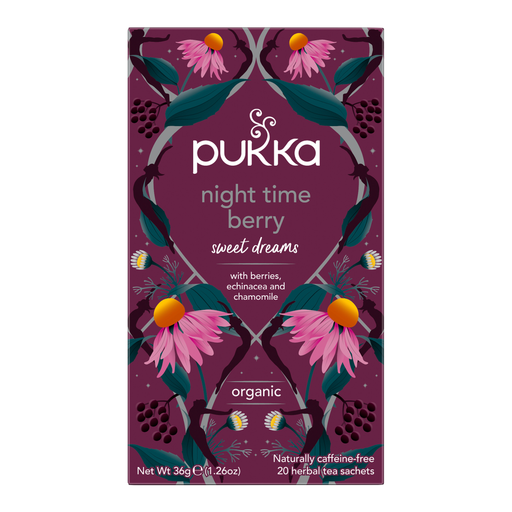
A single berry-and-botanical blend to consider when the group welcomes herbal flavours rather than needing a choice of fruit profiles. It contains liquorice root; check the full ingredients before serving, and confirm the pack’s caffeine information if a caffeine-free option is required.
No. A fruit-flavoured name does not establish a drink’s caffeine status. If attendees need a non-caffeinated option, check the exact product’s pack or manufacturer description for a caffeine-free statement.
A multi-flavour selection lets attendees choose rather than committing everyone to one blend. Twinings lists four flavours in individually wrapped bags for its Fruit Discovery Collection, but you should still check the ingredients of each flavour, including for liquorice root.
Keep the original packaging or accurate product information available for each blend. A general “fruit tea” label cannot tell attendees which botanicals or declared allergens are in the particular bag they choose.
Make that ingredient clear and offer another labelled choice. The NHS advises pregnant people to avoid teas containing liquorice root, so a fruit-tea selection that includes it should not be assumed suitable for every attendee.