Who is this choice for?
The reason for choosing fruit tea changes what matters on the label: flavour, nutritional contribution and botanical ingredients are separate considerations.
Older adults who want more variety in their drinks
A fruit infusion offers another flavour when plain water is unappealing. Cumbria, Northumberland, Tyne and Wear NHS Foundation Trust advises older adults to drink a variety of non-alcoholic drinks, including tea. Follow an individual care plan if fluid amounts or textures are restricted.
Older adults with a poor appetite
Tea can contribute to fluid intake, but choosing a drink for nutrition is a different decision. British Nutrition Foundation guidance says older adults with poor appetites may also need drinks that provide energy and nutrients.
People taking medicines or managing a health condition
Check the complete ingredient list rather than relying on an organic claim. Hertfordshire and West Essex Integrated Care Board advises asking a pharmacist about herbal products when taking medicines or managing a health condition.
What should you check before buying?
Start with the purpose of the drink, then check the exact product’s organic wording, caffeine status and ingredients.
| Priority | What to check | Your needs |
|---|
| Drink variety |
Choose a flavour the person enjoys and check whether the preparation suits their usual drink routine. Follow any prescribed fluid-volume or texture instructions. |
Plain water does not appeal to me, and I would like another drink I can offer regularly. |
| Nutrition |
Decide whether the drink needs to provide energy or nutrients, not just fluid. British Nutrition Foundation guidance distinguishes this need for older adults with poor appetites. |
If appetite is poor or weight is falling, I need advice on drinks that contribute to nutrition rather than relying on fruit tea. |
| Organic status |
Check the exact product’s organic label and certification details. UK guidance from the Department for Environment, Food & Rural Affairs says food labelled organic must meet certification requirements and contain at least 95% organic agricultural ingredients. |
I want an organic-labelled product, not one described only as natural or herbal. |
| Caffeine |
Look for an explicit caffeine-free statement on the chosen pack and read its ingredient list. Do not assume every fruit-flavoured tea has the same recipe. |
I am choosing a drink for someone who wants to avoid caffeine. |
| Botanical ingredients |
Read the full list for ingredients such as liquorice root or echinacea. Ask a pharmacist about regular use alongside medicines or with a health condition, as advised by Hertfordshire and West Essex Integrated Care Board. |
I need to know whether this particular blend is suitable with the person’s medicines or condition. |
Brand ranges to consider
Brand ranges can help narrow a flavour choice, but check the organic wording and ingredients on the particular product.
Pukka
Pukka offers fruit and herbal blends including Wild Apple & Cinnamon and Elderberry & Echinacea.
- Pukka describes both named products as organic and naturally caffeine-free.
- The named blends include herbs or spices; choose by the complete ingredient list rather than wellbeing wording.
Clipper
Clipper offers organic infusions, including Blackcurrant & Blueberry.
- Clipper identifies its infusion range as organic and says it labels products that contain caffeine.
- Its Blackcurrant & Blueberry infusion lists liquorice root, which warrants an individual ingredient check.
Twinings
Twinings has a fruit-and-herbal infusion range and a separate organic-and-Fairtrade collection.
- The separate collections offer a starting point for checking flavours and organic-labelled options.
- Do not assume a fruit infusion is organic because the brand also sells organic products; check the exact variant.
Joybuy fruit-tea option
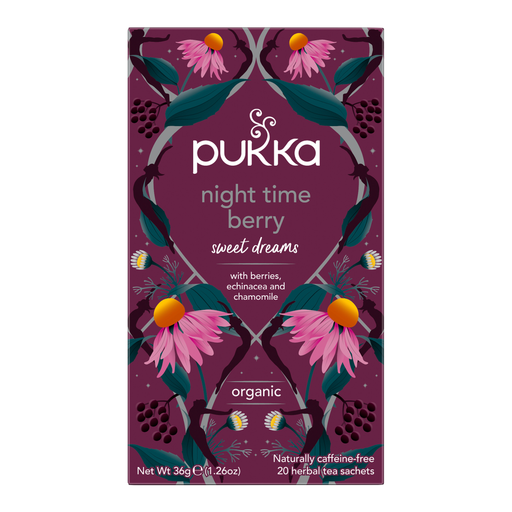
This Pukka berry-and-herbal infusion is an option for someone choosing fruit-tea flavours. Check its ingredients with a pharmacist where relevant, and confirm caffeine and organic details on the exact pack if those are essential to the choice.
 No image available
Pukka Night Time Berry Organic, 20 Tea Sachets, 36g
For someone who enjoys a berry-flavoured herbal drink, the listed ingredients include blackcurrant and elderberry, and the preparation description offers hot or chilled serving. The ingredient list also includes liquorice root, echinacea and valerian: ask a pharmacist about regular use if the person takes medicines or has a health condition. If caffeine avoidance or certified organic status is essential, check those details on the exact pack before choosing it.
View on Joybuy
Questions about fruit tea for older adults
Can organic fruit tea provide the nutrition an older adult needs?
Do not rely on fruit tea as nutrition support. British Nutrition Foundation guidance says older adults with poor appetites may need drinks that provide energy and nutrients as well as fluids. Seek clinical advice if appetite is poor, weight is falling or swallowing is difficult.
Does fruit tea count towards fluid intake?
Yes, tea counts towards fluid intake according to the NHS. If the person has a fluid restriction, needs thickened fluids or is nil by mouth, follow their individual care instructions instead of offering standard brewed tea freely.
How can I check whether a UK fruit tea is organic?
Check the exact product’s organic labelling and certification details. The Department for Environment, Food & Rural Affairs says food labelled organic in the UK must meet applicable certification rules and contain at least 95% organic agricultural ingredients; words such as ‘natural’ or ‘herbal’ do not establish organic status.
What if the older adult takes regular medicines?
Read the complete botanical ingredient list and ask a pharmacist about regular use of a herbal blend. Hertfordshire and West Essex Integrated Care Board advises this check for people taking medicines or managing health conditions; NHS GP practice information also identifies possible medicine interactions with liquorice.
Is every fruit tea caffeine-free?
Do not assume so from the fruit flavour alone. Clipper says most of its infusions are caffeine-free and that it labels those that are not; check the caffeine statement and ingredients on the exact product you intend to buy.


