Households avoiding caffeine
If a drinker needs a caffeine-free option, look for an explicit naturally caffeine-free statement on the infusion. Twinings distinguishes these infusions from decaffeinated tea, which can retain traces of caffeine.


For a household that needs to avoid caffeine, choose a fruit or herbal infusion explicitly labelled naturally caffeine-free rather than assuming decaf tea is equivalent: Twinings explains that decaffeinated tea can retain traces of caffeine. For pantry stocking, check the ingredients of every blend alongside the pack size, flavour choice and wrapping. This matters particularly when buying for someone who is pregnant, as NHS guidance advises avoiding teas containing liquorice root.
If a drinker needs a caffeine-free option, look for an explicit naturally caffeine-free statement on the infusion. Twinings distinguishes these infusions from decaffeinated tea, which can retain traces of caffeine.
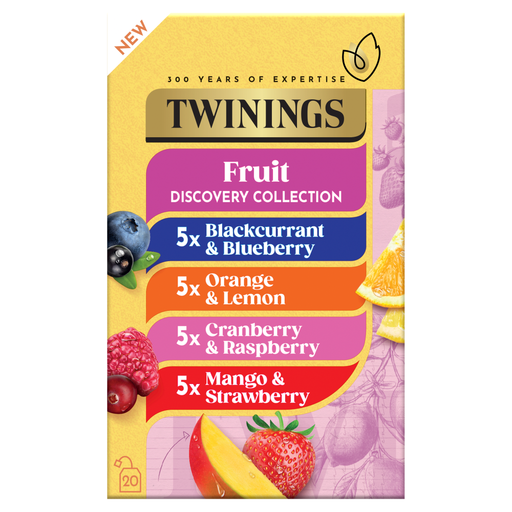
A mixed box offers several drinks without opening a separate box for each flavour. Twinings describes its Fruit Discovery Collection as four fruity infusions in individually sealed envelopes; check the wrapping on the particular pack you buy.
Check each blend, not just the caffeine statement. NHS guidance advises avoiding teas containing liquorice root during pregnancy, and liquorice root appears in the ingredients of some fruit infusions.
Decide whether the requirement is a caffeine-free infusion or tea-leaf flavour with reduced caffeine; then compare ingredients and a pack format the household will use.
Choose when: The household needs a caffeine-free drink and the product explicitly carries that description.
Bear in mind: Fruit and herbal blends have different ingredients and flavours from tea made with tea leaves; check each blend separately.
Choose when: The drinker wants tea-leaf flavour while reducing caffeine intake.
Bear in mind: Twinings says decaffeination removes nearly all caffeine, but traces can remain.
| Priority | What to check | Your needs |
|---|---|---|
| Caffeine status | Read the product’s caffeine wording and ingredients. Twinings notes that decaffeinated tea may retain traces of caffeine; do not treat a decaf label as a naturally caffeine-free claim. | I need a drink explicitly labelled naturally caffeine-free, rather than tea with most of its caffeine removed. |
| Ingredients | Read the full list for each flavour in a mixed box, including botanicals and flavourings. NHS guidance advises avoiding liquorice-root teas during pregnancy. | If I am stocking drinks for someone who is pregnant, I need to check every blend for liquorice root, not just the name on the box. |
| Flavour and wrapping | Check the number of flavours and whether the bags in the specific pack are individually wrapped. Twinings describes four flavours and sealed envelopes in its Fruit Discovery Collection. | Several people use the cupboard, so a mixed selection could give us a choice without opening several single-flavour boxes. |
| Pack size | Compare the stated bag count with how often the blend will be used. Clipper lists a 250-envelope Berry Burst catering pack, while teapigs lists 15 tea temples for Super Fruit. | For an unfamiliar flavour, I would rather try a smaller pack before committing cupboard space to a catering quantity. |
Twinings explains that decaffeinated tea can retain traces of caffeine, so a decaf tea may not meet a strict caffeine-avoidance requirement.
Look for an explicit naturally caffeine-free statement on the infusion and read its ingredients.
Ingredients can differ within a mixed selection. Some Twinings Fruit Discovery blends and Clipper Berry Burst list liquorice root; NHS guidance advises avoiding liquorice-root teas during pregnancy.
Read each flavour’s ingredient list before choosing a shared box for a pregnancy-aware household.
A flavour that does not suit a regular drinker may leave bags unused.
A 250-envelope pack commits the household to substantially more of one blend than a 15- or 20-bag pack.
Start with a smaller format if regular drinkers have not yet tried the flavour and checked its ingredients.
These examples show different blends and pack formats; a brand’s inclusion does not mean every product in its range has the same ingredients or caffeine status.
Twinings describes its Fruit Discovery Collection as a 20-envelope selection with four fruity infusions.
Clipper lists Organic Berry Burst as a 250-envelope catering-format infusion.
Pukka describes Elderberry & Echinacea as an organic, naturally caffeine-free herbal tea with fruity berries, echinacea and ginger.
Teapigs lists Super Fruit as a naturally caffeine-free infusion in a 15-tea-temple pack.
Tesco is a retailer reference for browsing fruit and herbal tea, rather than a manufacturer example here.
These options include a mixed fruit selection, a berry-style blend and single-flavour herbal infusions for cupboard use. Check each product’s caffeine wording and ingredients against the needs of everyone who will drink it.
 No image available
For a cupboard shared by people who want different fruit flavours, this selection contains four infusions in 20 tea bags and is described as naturally caffeine-free. Three blends list liquorice root; NHS guidance advises avoiding liquorice-root teas during pregnancy. Check the pack if individually wrapped bags are important to you.
 No image available
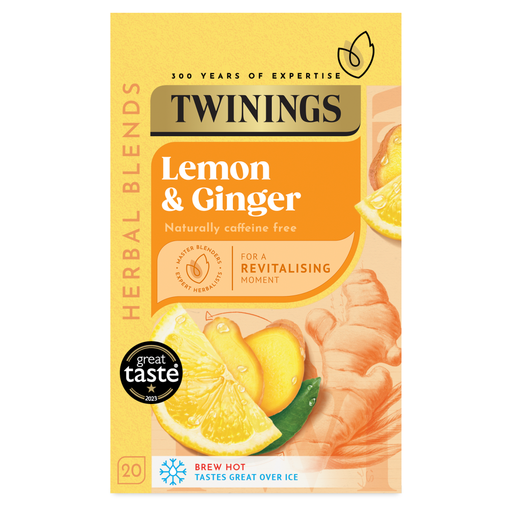
A lemon-and-ginger herbal infusion rather than a mixed fruit selection, this 20-bag pack is described as naturally caffeine-free. Its listed ingredients include ginger root, lemon peel, lemon flavouring and fennel. Check the pack if individually wrapped bags matter to you.
 No image available
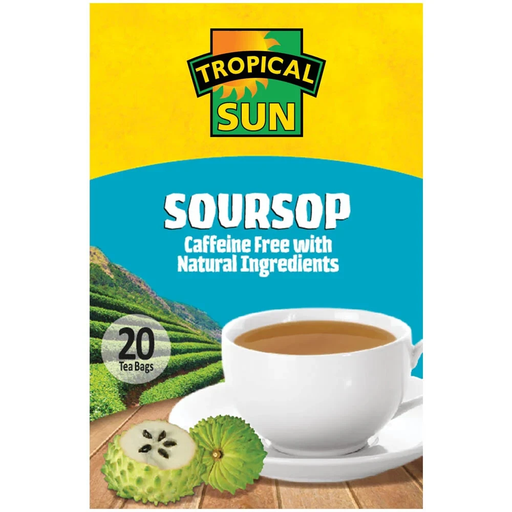
This is a soursop-leaf herbal infusion, not a fruit-pieces blend. It comes in a 20-bag pack, is described as naturally caffeine-free and has separate preparation directions for hot and cold drinks.
 No image available
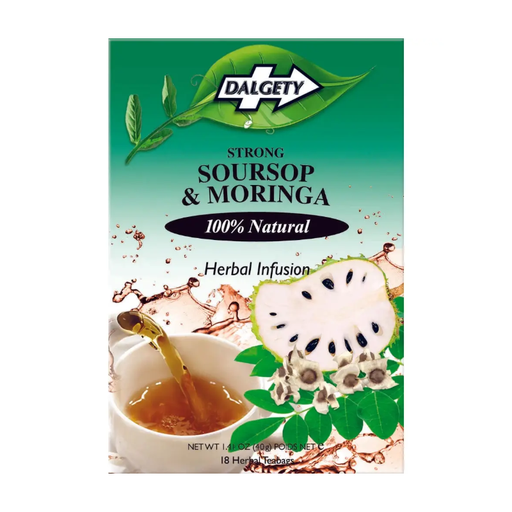
For a pantry where separate wrapping matters, this soursop- and moringa-leaf infusion contains 18 individually wrapped bags. It is described as caffeine-free, but the wording does not establish a naturally caffeine-free claim; check the pack if that distinction is essential. It is a leaf infusion rather than a fruit blend.
 No image available
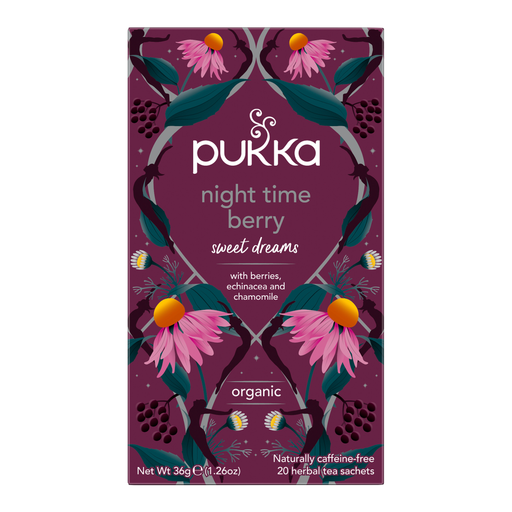
This berry-style herbal tea comes in a 20-sachet pack. Check its caffeine statement before choosing it for strict caffeine avoidance. Its listed ingredients include liquorice root, which NHS guidance advises avoiding in teas during pregnancy.
No. Twinings explains that decaffeinated tea is processed to remove nearly all its caffeine, but traces can remain. If caffeine avoidance is the requirement, look for a fruit or herbal infusion explicitly labelled naturally caffeine-free and check its ingredients.
Check every included blend before buying it for that household. NHS guidance advises avoiding teas containing liquorice root during pregnancy and drinking no more than four cups of herbal tea a day. Some Twinings Fruit Discovery blends contain liquorice root, as does Clipper Berry Burst.
A mixed box can provide flavour choice, while individually sealed bags may be useful when an opened box stays in the cupboard. Twinings describes four flavours and sealed envelopes in its Fruit Discovery Collection. Consider a large single-flavour catering pack once regular drinkers know they want that blend and its ingredients suit them.
Follow the storage instructions on the particular pack. The UK Food Standards Agency gives “Store in a cool dry place” as an example of food-storage wording; check your product’s packaging for its own instructions.