Hosts serving individual drinks
If you plan to serve fruit infusions in individual mugs or glasses, the stated serving size helps you choose a suitable vessel. Twinings specifies one Revive pyramid bag for a 340 ml serve.


For a Sunday brunch where the bag is part of the presentation, choose a fruit infusion explicitly sold in pyramid bags: Twinings specifies individually enveloped bags and a 340 ml serve for its Revive Raspberry & Vitamin C pyramids. If a choice of fruit blends or home-compostable bags matters more than pyramid shape, consider standard fruit-herbal bags instead and check the exact blend and packaging.
The useful distinction for brunch is whether you need a particular bag format, a choice of flavours or specific packaging instructions.
If you plan to serve fruit infusions in individual mugs or glasses, the stated serving size helps you choose a suitable vessel. Twinings specifies one Revive pyramid bag for a 340 ml serve.
Twinings describes its fruit and herbal infusions as caffeine-free and made without leaves from the tea plant. Check the exact blend if avoiding caffeine matters: a fruit-flavoured drink can also contain black or green tea.
If pyramid shape is optional, Pukka’s organic fruit-tea range offers another format to consider. Pukka says its tea bags are certified home compostable in the UK, with separate instructions for the tag.
Start with the format you want to put on the table, then check the serving instructions, blend and packaging for the exact product.
| Priority | What to check | Your needs |
|---|---|---|
| Bag format | Look for an explicit pyramid-bag or Tea Temple description; a fruit-tea label alone does not identify the bag shape. Twinings lists Revive as a pyramid infusion, while teapigs lists Super Fruit in Tea Temples. | I want the bag itself to suit an individual mug or clear glass, without preparing loose tea. |
| Serving size | Follow the instructions for the chosen blend. Twinings specifies one Revive Raspberry & Vitamin C pyramid bag for 340 ml, infused for 3 minutes; those figures do not apply to every fruit tea. | A full individual mug would be useful, so I need to know how much water the bag is intended for. |
| Blend | Read the exact flavour and ingredient description. Twinings’ Revive option is a raspberry-and-hibiscus fruit-herbal infusion, not a black breakfast tea; check the pack for any blend you plan to serve to guests. | I’d like a fruit drink alongside brunch, but I may also need a traditional tea option for guests who prefer one. |
| Pack format | Check the bag count and whether each serving is wrapped. Twinings specifies 15 individually enveloped Revive pyramids; teapigs lists Super Fruit and Strawberry & Juniper in 15-Tea-Temple packs. | If some bags will remain after brunch, I’d prefer to know how the unused servings are packed. |
| Disposal | Read instructions for the bag, tag and wrapper separately. Pukka says its tea bags are certified home compostable in the UK and directs users to put the tag in paper recycling. | Bag disposal matters to me, but I don’t want to assume every part of the packaging goes in the same bin. |
Fruit blend and bag shape are separate choices. Pukka’s fruit range is not presented as a pyramid range, while the Clipper pyramid selection cited here includes other types of infusion and tea.
If pyramid format matters for the table, confirm the construction on the exact pack rather than choosing by flavour name alone.
Twinings describes fruit infusions as containing no conventional tea leaves. A berry-and-hibiscus infusion therefore serves a different purpose from a black tea that guests might drink with milk.
Offer fruit infusion alongside a traditional tea option if guests may want both.
Pukka gives different disposal instructions for its tea bag and card tag. A claim about the bag does not establish how to dispose of its wrapper or other components.
Check the current pack’s instructions for each component; also check local food-waste collection rules before using that bin.
These references help distinguish fruit-pyramid products from other fruit infusions and shopping routes; they do not indicate which products are currently stocked by Joybuy.
Twinings lists Revive Raspberry, Hibiscus & Vitamin C among its loose-leaf pyramid infusions.
Teapigs lists Super Fruit and Strawberry & Juniper in 15-Tea-Temple packs.
Pukka’s UK fruit-tea range is an option when organic blends matter more than pyramid shape.
Clipper has a pyramid-bag range, but the listed options include mint, lemon and ginger, and rooibos rather than a named fruit pyramid blend.
Tesco’s fruit-and-herbal tea category is a grocery route for comparing listed brands, including Twinings and Pukka.
This fruit-tea assortment suits a brunch table where a choice of blends matters. Check the listing if pyramid construction or individual wrapping is essential to your plans.
 No image available
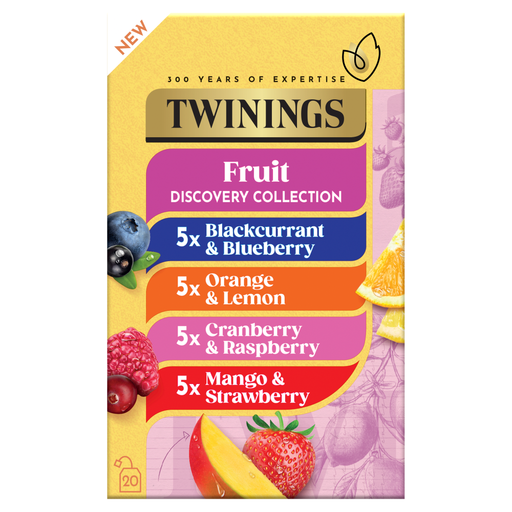
The four-blend assortment offers a choice of fruit infusions for individual brunch drinks. The listing describes them as caffeine-free and specifies 20 tea bags, 40g; check the exact listing if you need pyramid bags, individual envelopes or instructions for a particular mug size.
Twinings describes its fruit and herbal infusions, made without leaves from the tea plant, as naturally caffeine-free. Check the exact pack: a fruit-flavoured product containing black or green tea is a different blend.
Use the instructions for that product. Twinings specifies one Revive Raspberry & Vitamin C pyramid bag for a 340 ml serve and a 3-minute infusion; that is not a rule for other blends.
Twinings says its fruit and herbal infusions can be enjoyed hot or cold. Brew the chosen product according to its instructions, then cool it before serving over ice if you wish.
Pukka says its tea bags are certified home compostable in the UK, but advises putting the card tag in paper recycling. Follow the exact pack instructions and check local collection rules before putting a bag in food waste.
Check the current pack’s ingredients and allergen information for the exact blend before serving. Keep the pack available so the guest can read the information rather than relying on the flavour name or memory.