Hosts offering a non-coffee drink
If you want fruit tea alongside brunch, decide whether to serve it hot or cold and whether guests would prefer berry or citrus flavours.


For a tart berry cup at Sunday brunch, start with a hibiscus-led blend and follow its brewing directions before judging the flavour. If guests prefer different flavours, a fruit selection pack offers more choice; neither a dark colour nor a brand's description establishes that one tea tastes stronger than another.
If you want fruit tea alongside brunch, decide whether to serve it hot or cold and whether guests would prefer berry or citrus flavours.
Look for a stated tart, berry-led profile and clear brewing directions. The word 'strong' does not give you a common measure for comparing fruit teas.
Read the ingredient list for each blend, particularly if a guest avoids liquorice root or needs to check other herbal ingredients.
Choose the flavour direction and format first, then check the ingredients and brewing instructions for the exact product you plan to serve.
| Priority | What to check | Your needs |
|---|---|---|
| Flavour | Compare descriptions of tart berry, hibiscus and citrus flavours. Read the ingredient list rather than treating 'strong' as a comparable rating. | I would like a noticeable tart berry cup, rather than a lighter citrus flavour. |
| Brewing | Follow the product's water and infusion directions. Tesco lists a 100°C, 3–5 minute brew for Teapigs Super Fruit; its Red Berries directions say about 3–5 minutes, according to taste. | I want to know how to prepare a cup before deciding whether its flavour suits brunch. |
| Ingredients | Check each blend's current ingredient list for liquorice root and other herbs. Check the selected pack if caffeine avoidance matters. | Some guests may need to check ingredients, and I do not want to assume that every fruit-flavoured blend has the same composition. |
| Variety | Compare a single-flavour pack with the named blends in a selection pack. Twinings Fruit Selection lists four different fruit profiles. | When guests' preferences are unknown, I would rather offer a choice of flavours than one tart blend. |
Ingredient lists, flavour descriptions and brewing directions tell you different things; they do not put fruit teas on a shared strength scale.
Pick the flavour you want, then use the directions for that blend before deciding whether it suits you.
Liquorice root appears in the listed ingredients for Twinings Cranberry & Raspberry and Clipper Berry Burst. A fruit-tea label alone does not tell guests what else is in the bag.
Check the current pack before serving it to anyone who needs to avoid particular ingredients.
A tart hibiscus blend may suit someone seeking that flavour, while a selection pack offers several profiles without promising a stronger cup.
If preferences are unknown, compare the assortment with a single-flavour pack before choosing.
Super Fruit is a berry-led infusion sold in a 15-bag Tea Temples format.
Its fruit-and-herbal range includes individual blends and a fruit selection pack for guests with different preferences.
Berry Burst is a berry-and-herb infusion for shoppers considering a recipe that includes liquorice.
Morning Berry takes a berry-and-hibiscus direction with additional herbal ingredients.
Red Berries is Tesco's own-brand hibiscus-based fruit infusion.
These options cover a hibiscus-and-ginger infusion and a mixed fruit-tea pack for brunch. Choose between them by flavour preference and preparation format, not an assumed strength ranking.
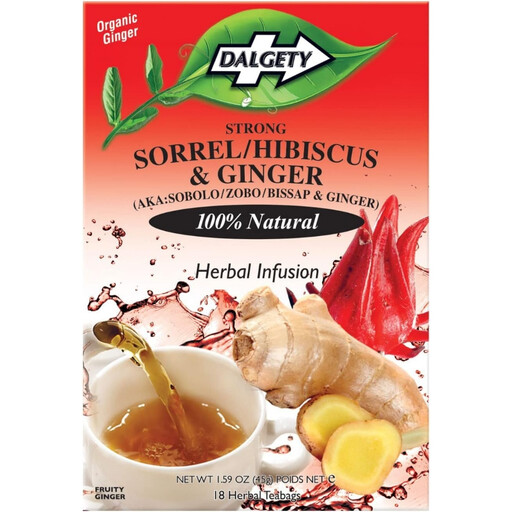 No image available
Consider this for a tart hibiscus-and-ginger direction rather than an assortment of fruit flavours. Preparation involves measuring and straining; follow the pack directions.
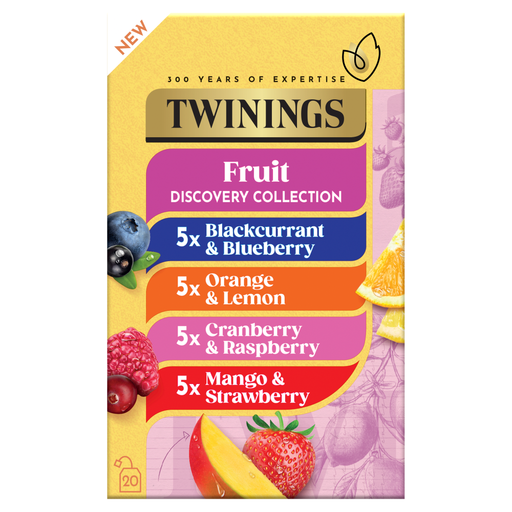 No image available
Four listed blends give brunch guests a choice of fruit flavours rather than one deliberately tart cup. Cranberry & Raspberry lists liquorice root; check the current ingredients for each blend before serving.
Do not decide from the category name alone. Twinings describes its fruit-and-herbal range as naturally caffeine-free, but check the statement and ingredients on the particular pack you are serving.
Start with the maker's directions rather than assuming a longer brew will improve every blend. Tesco gives a 100°C, 3–5 minute method for Teapigs Super Fruit and recommends about 3–5 minutes for Tesco Red Berries, according to taste.
Liquorice root is listed in some berry blends, including Twinings Cranberry & Raspberry and Clipper Berry Burst. Read the current ingredients before serving a blend to a guest who needs to avoid it.
Some fruit infusions can be served hot or cold: Twinings describes its fruit-and-herbal range that way. Follow the chosen product's preparation directions rather than assuming that every blend has the same cold-serving method.