Hosts serving tea with milk
Decaffeinated black tea keeps the familiar cream-tea format. Twinings suggests serving its English Breakfast Decaffeinated with a splash of milk, although it still has a declared caffeine content.


Choose decaffeinated black tea if guests expect a familiar cup with milk: Twinings describes its English Breakfast Decaffeinated as 100% black tea, with 0.02% caffeine, and suggests serving it with milk. For fruit flavour without caffeine, choose an infusion explicitly labelled naturally caffeine-free and check its ingredients; the UK Tea & Infusions Association notes that some infusions contain caffeine-bearing ingredients. Rooibos offers another naturally caffeine-free route if milk matters more than fruit flavour, according to Clipper’s serving guidance.
Decaffeinated black tea keeps the familiar cream-tea format. Twinings suggests serving its English Breakfast Decaffeinated with a splash of milk, although it still has a declared caffeine content.
A fruit or herbal infusion can be served as a separate cup alongside scones. Look for an explicit naturally caffeine-free statement on the chosen blend rather than relying on the words “fruit tea”.
Caffeine status is only one consideration. NHS guidance says to avoid herbal teas containing liquorice root during pregnancy and identifies pasteurised cream as suitable; check the particular tea blend and cream before serving.
Decide whether the cup needs to taste fruity, work with milk or meet an explicit caffeine-free requirement. Then check the exact blend rather than treating all infusions or decaf teas alike.
| Priority | What to check | Your needs |
|---|---|---|
| Caffeine status | Look for an explicit naturally caffeine-free statement and read the ingredients. Decaf black tea is a different category: Twinings declares 0.02% caffeine for its English Breakfast Decaffeinated. | I want to distinguish avoiding caffeine from choosing a decaffeinated version of black tea. |
| Serving with milk | Check the serving guidance for the exact drink. Twinings suggests milk with its decaf English Breakfast; Clipper says rooibos can be enjoyed with milk. | If guests expect to add milk, I want a drink presented for that style of service rather than assuming a fruit infusion will serve the same role. |
| Fruit flavour | Read the blend name and ingredients for the flavour offered. Rooibos is not fruit tea, while decaffeinated black tea retains a black-tea base. | A fruity cup alongside scones matters more to me than recreating conventional tea with milk. |
| Ingredients | Check every blend in a selection pack for botanicals such as liquorice root. For pre-packed foods, GOV.UK says the ingredients list must emphasise any of the 14 allergens that require declaration. | Before serving guests, I want to check the tea and the other cream-tea foods separately for relevant ingredients and allergens. |
Decaffeinated black tea can retain caffeine: Twinings declares 0.02% for its English Breakfast Decaffeinated. The UK Tea & Infusions Association also notes caffeine-containing exceptions among fruit and herbal infusions.
If avoiding caffeine is the deciding requirement, look for a naturally caffeine-free statement and check the ingredients of the exact product.
A fruity cup can accompany scones without filling the same role as conventional black tea. Twinings gives milk-serving guidance for its decaf English Breakfast, while Clipper says rooibos can be enjoyed with milk.
Choose by how guests will drink it: decaf black tea for a familiar milk-tea service, or a fruit infusion for a separate fruit-flavoured cup.
A caffeine-free label does not describe every botanical in a blend. Clipper lists liquorice root in Berry Burst, and NHS guidance says to avoid herbal teas containing liquorice root during pregnancy.
Check the ingredients of each flavour you plan to serve, particularly when buying an assortment.
Tea-bag ingredients cannot tell you what is in the scones, cream or other foods on the table.
Read each pre-packed food’s ingredients and emphasised allergens. GOV.UK sets out those labelling requirements for pre-packed foods; ask the provider about ingredients when food is served loose.
These examples show how product labels and serving guidance differ; a brand’s inclusion here does not describe every tea it makes.
Its Fruit Discovery Collection provides a fruit-infusion route, while English Breakfast Decaffeinated provides a black-tea route for serving with milk.
Wild Apple & Cinnamon is a naturally caffeine-free herbal option for an apple-and-spice cup alongside scones.
Berry Burst offers a naturally caffeine-free berry-led infusion; Clipper separately describes rooibos as a drink that can be enjoyed with milk.
Tesco Groceries lists decaffeinated tea and fruit or herbal tea in separate categories, which can help distinguish the two formats when planning a shop.
These options include decaffeinated black tea for a conventional cream-tea cup and two soursop-based herbal teas. The herbal options are not fruit-flavoured black teas; check their pack details if caffeine status or serving with milk is decisive.
 No image available
Consider these when the cream tea calls for decaffeinated tea rather than a fruit infusion. If a particular caffeine amount or serving method matters, check the pack before serving.
 No image available
This is an herbal option to consider for a separate cup alongside scones, not a substitute chosen for a familiar black-tea flavour. Check its caffeine statement, ingredients and serving directions against your guests’ needs.
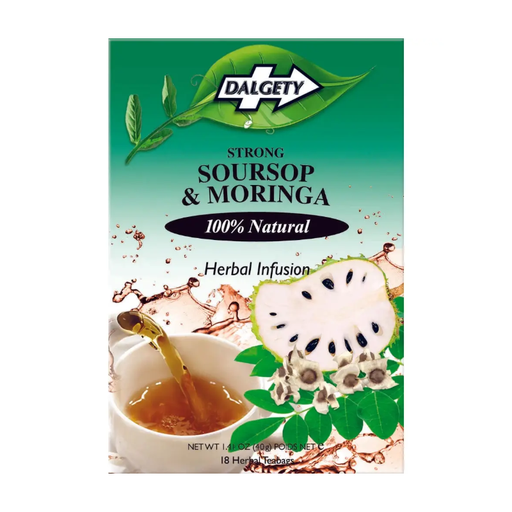 No image available
Consider this soursop-and-moringa option if guests would welcome an herbal cup rather than decaffeinated black tea. Check the exact ingredients and caffeine statement, and do not assume it is intended to be served with milk.
No. The UK Tea & Infusions Association says many fruit and herbal infusions are naturally caffeine-free but identifies exceptions with caffeine-bearing ingredients. Check the caffeine statement and ingredients on the exact blend.
Decaffeinated black tea is the more familiar format for serving with milk: Twinings recommends a splash of milk with its English Breakfast Decaffeinated, which it declares to contain 0.02% caffeine. If naturally caffeine-free matters more than fruit flavour, Clipper says rooibos can also be enjoyed with milk.
No. NHS guidance says to avoid herbal teas containing liquorice root during pregnancy. Check each blend’s ingredients; Clipper lists liquorice root in Berry Burst.
Check the tea and each accompanying food separately. GOV.UK says pre-packed food labels must list ingredients and emphasise any of the 14 allergens that require declaration; a tea-bag label cannot cover the scones, cream or other items being served.