Home workers avoiding caffeine at lunch
If you want a warm or iced fruit drink, look for an infusion explicitly labelled naturally caffeine-free. Check the ingredients of the particular blend rather than relying on its fruit-tea name.


If you want to avoid caffeine at lunch, choose a fruit or herbal infusion whose own label says it is naturally caffeine-free, rather than assuming that fruit tea and decaf tea mean the same thing. Check the ingredients as well as the label claim, then choose a flavour and brewing time that fit your break.
If you want a warm or iced fruit drink, look for an infusion explicitly labelled naturally caffeine-free. Check the ingredients of the particular blend rather than relying on its fruit-tea name.
A caffeine-free label does not settle every ingredient question. NHS pregnancy guidance advises no more than four cups of herbal tea a day and says to avoid teas containing liquorice root.
Check the brewing instructions before choosing a fruit infusion. Tesco gives a 3–5 minute brew for Red Berries, while Teapigs instructs at least three minutes for Super Fruit.
Start with whether you want to avoid caffeine or prefer the flavour of conventional tea. Then check the individual blend and its preparation instructions.
Choose when: You want a fruit-led drink and the individual product is labelled naturally caffeine-free.
Bear in mind: Ingredients and brewing instructions differ between blends, so the flavour and preparation may not resemble black tea.
Choose when: You prefer conventional tea flavour and want a decaffeinated version rather than a fruit infusion.
Bear in mind: Do not treat a decaf label as a naturally caffeine-free claim; check the product information if avoiding caffeine is essential to your choice.
| Priority | What to check | Your needs |
|---|---|---|
| Caffeine status | Look for a naturally caffeine-free claim on the exact infusion. If choosing decaf black or green tea, check its caffeine information; also inspect blends for ingredients such as mate or guarana. | I want to avoid caffeine at lunch, not simply switch to tea described as decaf. |
| Ingredients | Read the current pack for botanicals and flavourings, rather than relying on the flavour name. During pregnancy, NHS guidance says to avoid teas containing liquorice root. | A berry or citrus name tells me little about the full blend. I need to know what is in the particular tea bag. |
| Brewing time | Follow the product’s own instructions. Tesco Red Berries specifies 3–5 minutes; Teapigs Super Fruit specifies at least three minutes. | On a short lunch break, I want to know how long the drink needs before I choose it. |
| Flavour | Compare the stated ingredients and flavour description. Teapigs describes Super Fruit as tart; a fruit infusion need not taste like black tea. | I might want a pronounced berry drink, or I might prefer a familiar tea flavour. |
Decaf black or green tea and a naturally caffeine-free fruit infusion are different products. The distinction matters if your aim is to avoid caffeine rather than choose a decaffeinated tea.
Check the exact product’s caffeine statement and ingredients before buying.
Caffeine-free status does not describe every botanical in a blend. NHS pregnancy guidance says to avoid teas containing liquorice root.
During pregnancy, read the full ingredient list and follow the NHS advice to limit herbal tea to no more than four cups a day.
A berry name does not give the full ingredient list, and formulations can change.
Compare the ingredients on the current pack with the flavour and botanicals you want.
Teapigs instructs at least three minutes for Super Fruit, while Tesco specifies 3–5 minutes for Red Berries.
Use the instructions for the blend you buy when planning a short lunch break.
These examples show why the exact blend matters more than the brand name when checking caffeine, ingredients and brewing time.
Offers fruit infusions alongside a separate decaffeinated tea range.
Offers fruit- and citrus-led infusions, including naturally caffeine-free products.
Offers fruit and herbal blends with varying botanical ingredients.
Its Super Fruit infusion is an option for shoppers considering a berry-led drink.
Its Red Berries infusion is an own-label option with 40 tea bags.
Offers infusions whose caffeine statements and brewing instructions should be checked product by product.
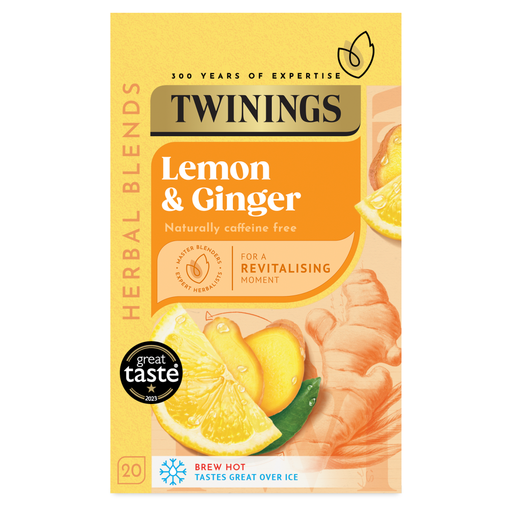
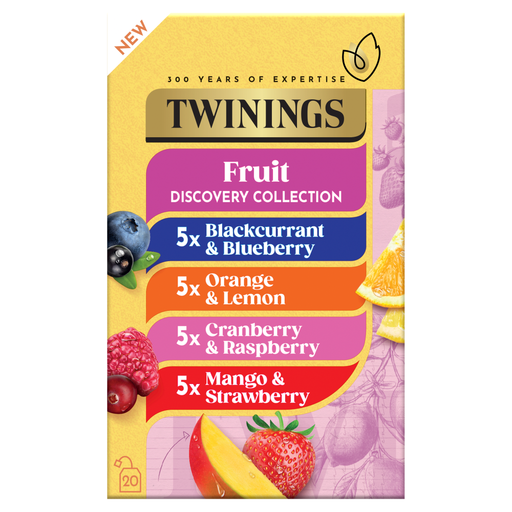
These options include a lemon-and-ginger infusion and a fruit-tea selection for a working-from-home lunch. Check each pack’s caffeine statement, ingredients and brewing instructions against what matters to you.
 No image available
Consider this lemon-and-ginger option if you prefer those flavours to a berry infusion. The named pack contains 20 tea bags; check its current caffeine statement, full ingredients and brewing instructions for your lunch routine.
 No image available
Consider this fruit-tea selection if you want to compare blends at home. The named pack contains 20 tea bags and weighs 40g; check each blend’s ingredients, caffeine statement and brew time before choosing it for lunch. During pregnancy, NHS guidance says to avoid teas containing liquorice root.
No. A fruit infusion and a decaffeinated black or green tea are different types of drink. If you want to avoid caffeine, check that the exact infusion is labelled naturally caffeine-free and read its ingredients rather than relying on the words ‘fruit tea’ or ‘decaf’ alone.
Look for a naturally caffeine-free statement on the product you are buying, then read its current ingredient list, including any mate or guarana. Tesco advises checking the pack because formulations can change.
NHS pregnancy guidance advises no more than four cups of herbal tea a day and says to avoid teas containing liquorice root. Check the ingredients of each blend; a naturally caffeine-free label does not replace that check.
Follow the instructions for the exact blend. Tesco specifies 3–5 minutes for Red Berries, while Teapigs specifies at least three minutes for Super Fruit, so check the pack before relying on a shorter break.