Households serving the same infusion regularly
An 80-bag carton avoids combining smaller packs. Twinings Lemon & Ginger fits that quantity if everyone is happy with a citrus-and-ginger herbal infusion.


Choose an 80-bag carton if one citrus-and-ginger flavour will suit your weekend breakfasts: Twinings Lemon & Ginger is an 80-bag herbal infusion that Twinings describes as naturally caffeine-free, but it is not a berry-led blend. If guests want different fruit flavours, smaller packs offer more choice; Clipper’s 250-envelope Berry Burst catering pack is a separate option for substantially larger quantities.
An 80-bag carton avoids combining smaller packs. Twinings Lemon & Ginger fits that quantity if everyone is happy with a citrus-and-ginger herbal infusion.
Smaller fruit-infusion packs let guests choose between flavours. Twinings lists several 20-bag fruit blends, while teapigs sells Super Fruit in a 15-temple pack; neither is a single 80-bag carton.
Check the statement for the exact blend rather than relying on a fruit-flavoured name. Twinings describes Lemon & Ginger as naturally caffeine-free, as teapigs does its Super Fruit infusion.
Decide whether the carton must contain 80 bags, then check flavour, the exact blend’s label and how it is brewed.
| Priority | What to check | Your needs |
|---|---|---|
| Quantity and choice | Check the count on the exact carton and whether it contains one flavour or a selection. Twinings Lemon & Ginger has 80 bags; Twinings lists fruit blends in 20-bag packs, and Clipper lists Berry Burst as 250 envelopes. | One familiar flavour works for our regular breakfasts, or I would rather offer guests a choice from smaller packs. |
| Caffeine statement | Read the caffeine statement for the chosen product. Twinings calls Lemon & Ginger naturally caffeine-free; Pukka says many of its organic herbal teas contain no caffeine, which does not establish the status of every blend. | If caffeine matters to someone at the table, I want the carton for the drink I am serving to state its status clearly. |
| Ingredients and allergens | Read the ingredients and allergen information on the carton you receive, particularly when serving guests with allergies or intolerances. The Food Standards Agency explains that precautionary allergen wording signals possible unintended presence of regulated allergens. | Before I put out drinks for guests, I need to know what is in the selected blend and what its current label says. |
| Brewing | Compare the preparation instructions for the exact infusion. Sainsbury’s lists one Twinings Lemon & Ginger bag in 200 ml of freshly boiled water for three minutes; teapigs notes that whole-fruit blends take longer to brew. | At breakfast, I want to allow enough infusion time for the drink I have chosen. |
Twinings Lemon & Ginger meets the 80-bag requirement but is a citrus-and-ginger herbal infusion, not a strawberry or mixed-berry tea.
Check the precise flavour name and ingredients before choosing quantity over flavour.
A fruit-flavoured name does not establish the caffeine status of the exact drink you intend to serve.
If caffeine avoidance matters, look for an explicit statement on the selected product.
Clipper Berry Burst contains 250 envelopes, considerably more than an 80-bag carton. One large case also commits the table to the same infusion.
Check the ingredients and whether guests like the flavour before choosing that quantity for occasional breakfasts.
An online description is not a substitute for the label on the carton being served, especially when a guest has an allergy or intolerance.
Read the current pack’s ingredients and allergen wording before preparing the drinks.
Its Lemon & Ginger herbal infusion is listed in an 80-bag carton, while its fruit-infusion range includes several 20-bag flavours.
Its Organic Berry Burst infusion is sold as a 250-envelope catering pack.
Pukka offers organic herbal teas and says many of them naturally contain no caffeine.
Super Fruit is a 15-tea-temple infusion with hibiscus and several berries in its published ingredient list.
These options show the choice between one 80-bag lemon-and-ginger infusion and a smaller fruit selection for guests who prefer variety.
 No image available
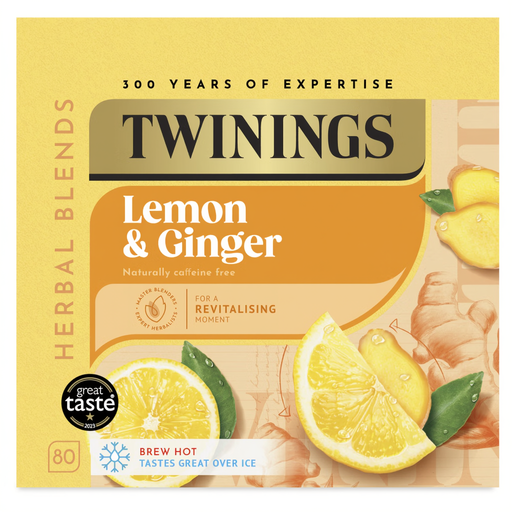
For repeated breakfasts where one citrus-and-ginger flavour suits the table, this carton contains 80 tea bags. Twinings describes the herbal infusion as naturally caffeine-free; it is not a berry-led fruit blend. Check the current pack’s ingredients and allergen information before serving guests.
 No image available
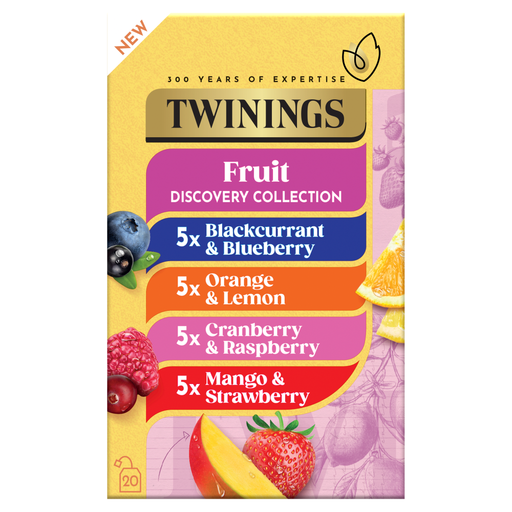
For a breakfast table where guests prefer a choice of fruit flavours, this selection contains 20 tea bags rather than 80. Check the carton for its current blends, ingredients, allergen information and brewing instructions.
Twinings and Sainsbury’s describe it as a lemon-and-ginger herbal infusion, not a black tea. Twinings states that the blend is naturally caffeine-free; choose a different flavour if you specifically want a berry-led fruit infusion.
Sainsbury’s instructions for the 80-bag product specify one bag in 200 ml of freshly boiled water for three minutes. Check the carton you receive for its preparation instructions.
Read the ingredients and allergen wording on the current carton before serving. The Food Standards Agency explains that precautionary allergen statements communicate possible unintended presence of regulated allergens.
Follow the disposal instructions for the exact product and your local collection arrangements. Pukka states that its tea bags are certified home compostable, but that statement does not establish the disposal route for other brands’ bags.