Hosts planning a small spread
If fruit is one optional accompaniment for a few guests, a smaller tin may help you avoid opening more than you need. Sainsbury’s lists 213g peach slices in fruit juice, and Princes lists a 220g juice-packed option.


Choose the tin size according to how much fruit you plan to serve: a 213g–220g tin may suit a small accompaniment, while a 410g–415g tin gives you more fruit for a shared dessert. Then choose the packing liquid and fruit cut to fit the menu; check the selected tin’s serving guidance, ingredients and warnings rather than assuming tins of similar size are interchangeable.
If fruit is one optional accompaniment for a few guests, a smaller tin may help you avoid opening more than you need. Sainsbury’s lists 213g peach slices in fruit juice, and Princes lists a 220g juice-packed option.
If several people will have fruit with a dessert, a standard-sized tin may be more useful. Check its own serving guidance: Sainsbury’s describes its 411g peach tin as two servings.
If avoiding added sugar is a priority, read the ingredients as well as the front label. NHS guidance recommends choosing tinned fruit in natural juice or water with no added sugar or salt.
Decide how much fruit the tea table needs before comparing packing liquids, cuts and instructions for anything left over.
| Concern | What to check | Who this matters to |
|---|---|---|
| Tin size | Compare the net weight and the tin’s own serving guidance with the role fruit will play on the table. | If fruit is only a small accompaniment, I would rather not open far more than I can serve. About 34% of consumers put avoiding opened-fruit leftovers first. |
| Packing liquid | Distinguish juice or water from light syrup on the description and ingredients list. NHS guidance favours natural juice or water with no added sugar or salt. | When choosing fruit for guests who prefer to avoid added sugar, I need to know what it is packed in. Packing liquid is the primary concern for about 33% of consumers. |
| Fruit cut | Choose slices, chunks, segments or halves for the way you plan to serve the fruit; check any stone warning on peach tins. | For a topping or shared serving bowl, I want a cut that works without extensive preparation. Roughly 20% of consumers place serving format first. |
| Label and leftovers | Read the selected tin’s warnings and post-opening storage instructions before serving or keeping unused fruit. | If some fruit may remain after tea, I need a workable plan for storing it and want to notice any serving warnings. These checks come first for about 13% of consumers. |
The cited peach options run from 213g to 415g, and serving guidance differs between products. A tin intended as a garnish has a different job from one used in a shared dessert.
Plan the fruit’s role, then check the selected tin’s weight and serving information.
The packing liquid changes what is in the tin. NHS guidance recommends natural juice or water with no added sugar or salt when choosing tinned fruit.
Read the description and ingredients if the packing liquid matters to your menu or guests.
Joybuy’s listing for Princes Peach Slices In Juice 410g says to transfer leftovers to a sealed container, refrigerate them and use them within two days. That instruction is specific to that product.
Check the tin you buy for its own post-opening directions, particularly if you expect fruit to remain.
Sainsbury’s warns that some stones may remain in its 411g peach slices despite removal efforts.
Inspect peach slices as you prepare a shared plate, especially when serving children.
Del Monte peach slices appear in both juice and light-syrup formats.
Princes lists peach slices with juice in 220g and 410g sizes.
Tesco lists own-label peach slices in pear juice from concentrate in a 410g tin.
Sainsbury’s lists own-label peach slices in fruit juice in 213g and 411g tins.
The M&S tinned-fruit assortment shown includes grapefruit segments and rhubarb chunks.
These single tins include a smaller peach option and standard-sized fruit in juice, with slices, chunks and halves for different serving plans.
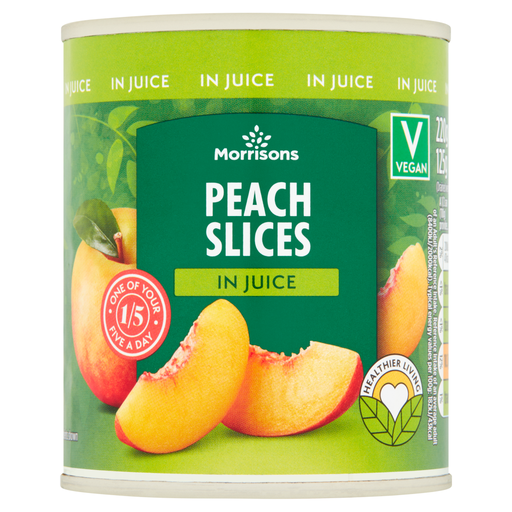 Image unavailable
A smaller tin to consider when peach slices are just one accompaniment. Match the 220g tin to your planned portions and inspect the fruit before serving in case a stone fragment remains.
 Image unavailable
Consider pineapple chunks if the fruit will be spooned into a shared dessert or serving bowl. This is a 432g tin packed with juice; check its label for portions and instructions for any unused fruit.
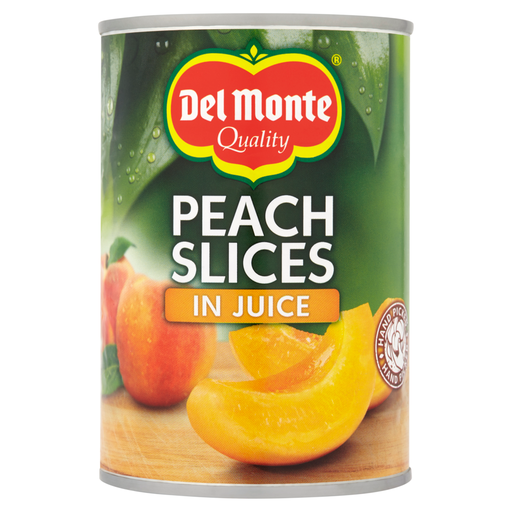 Image unavailable
A standard-sized tin of peach slices for a shared fruit accompaniment or dessert. Joybuy lists clarified pineapple juice among its ingredients; check the current label when planning portions.
 Image unavailable
Choose peach halves rather than slices if that cut fits your dessert or serving plan. The tin contains 415g of peaches in juice; check the label when dividing them into portions.
 Image unavailable
Consider pear halves when the menu calls for pears instead of peaches or pineapple chunks. This 415g tin is packed in juice; check the selected label for portioning and storage instructions.
Choose by the menu and your guests’ preferences, then check the ingredients on the tin. If avoiding added sugar is the priority, NHS guidance recommends tinned fruit in natural juice or water with no added sugar or salt; a light-syrup tin is a different packing-liquid choice.
That depends on whether fruit is a garnish, an accompaniment or a shared dessert component. Compare the tin’s serving guidance with the portions you plan to offer rather than treating its net weight as a guest count.
Follow the instructions for the tin you bought. Joybuy’s listing for Princes Peach Slices In Juice 410g calls for leftovers to be transferred to a sealed container, refrigerated and eaten within two days; do not assume the same time applies to another product.
Yes, inspect them as you prepare the serving dish. Sainsbury’s warns that some stones may remain in its 411g peach slices despite removal efforts.