
24/7 Customer Support

Free returns

Same-day & Next-day Delivery

Quality Guaranteed

Unlock Your Welcome Offers: FREE Delivery | Up to 80% OFF | Free 30-day JoyPlus trial
Download the APP
Choosing frying pans is less straightforward than it appears. A low price may conceal a thin base that heats unevenly, while a “non-stick” label may not explain the coating type, care requirements or oven limit. Even the pan size printed on the packaging can be misleading if the usable cooking surface is much smaller than the rim.
For UK home cooks, three buying traps appear frequently:
A practical purchase starts with matching the pan to your hob, cooking habits and household size rather than relying on promotional wording.
The most useful frying pan sizes for British kitchens are usually:
A frying pan set can offer better coverage than buying one large pan. For example, a 20cm and 28cm pairing handles both individual meals and larger servings without forcing a small quantity of food into an oversized pan.
Stainless steel frying pans are uncoated and suited to browning, searing and deglazing. They can handle metal utensils more readily than coated cookware, but food may stick if the pan is not preheated correctly and used with suitable oil or fat.
A tri-ply stainless steel frying pan normally combines stainless steel layers with an aluminium core. This construction is designed to distribute heat through the base and, in some designs, the sidewalls. Encapsulated or bonded bases are particularly relevant for induction cooking.
Aluminium heats quickly and is often used beneath ceramic or non-stick coatings. A hard-anodised frying pan has a treated aluminium body intended to provide a more wear-resistant surface, although the coating still needs appropriate care.
Ceramic frying pans can provide easy food release with a small amount of oil. Check whether the product specifically states that it is PFAS-free cookware, rather than assuming that every ceramic coating has the same composition. The Tower Cerastone Pro range, for instance, lists its coating as free from PFOA, PTFE, PFAS, lead and cadmium.
For any coated pan, check:
A product may be listed as dishwasher-safe while the manufacturer still recommends hand washing to preserve the coating. That distinction matters if long-term condition is a priority.
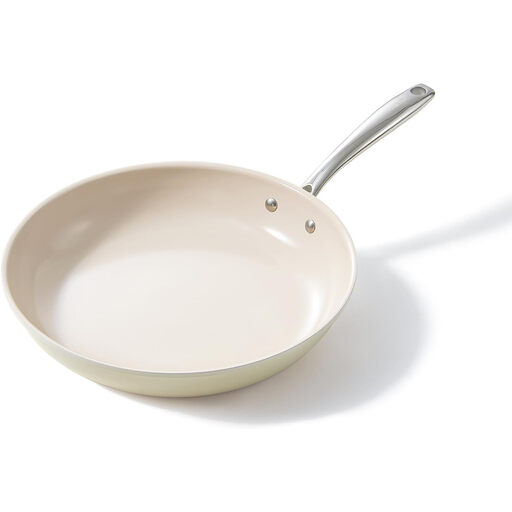
Why This Fits Their Persona: A single 28cm pan gives new household cooks a useful everyday size for eggs, fish, vegetables and family portions without committing to a larger frying pan set.
The specification states compatibility with induction, gas and electric hobs, plus dishwasher cleaning and oven use up to 842°F (450°C). Hand washing is recommended to help preserve the ceramic coating.
Triple-layer ceramic coating, forged aluminium construction and a double-riveted stainless-steel handle.
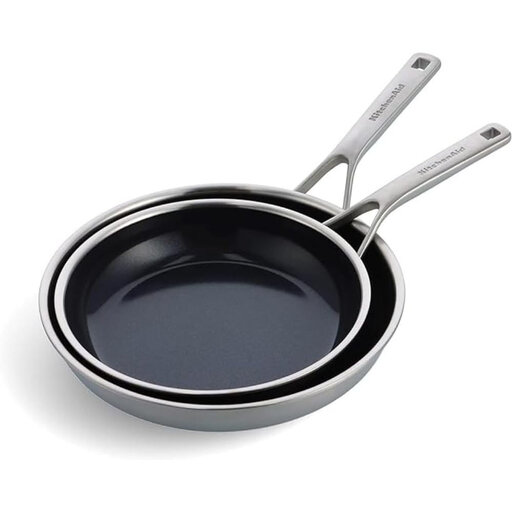
Why This Fits Their Persona: This two-pan combination suits cooks who want coordinated cookware for weekday meals and larger recipes, with stainless-steel construction that does not rely on a non-stick surface.
The uncoated MultiPly design avoids coating-wear concerns. Its aluminium core, sealed rims and seamless interiors are specified to support even heating, cleaning and resistance to warping.
Includes 24cm and 28cm pans, with induction compatibility, curved pouring rims and internal measurement marks.
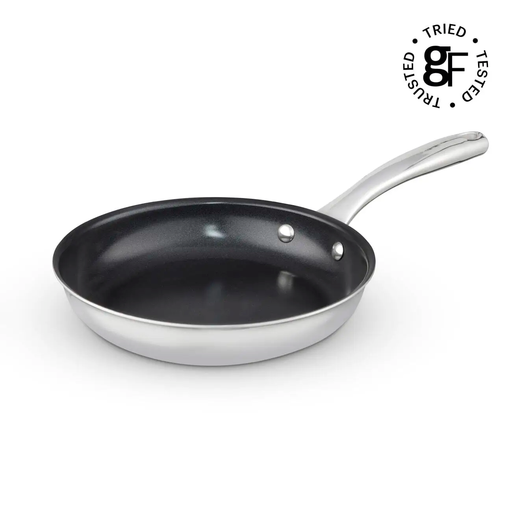
Why This Fits Their Persona: The 30cm format is suited to family cooking, batch preparation and recipes that need room to spread ingredients rather than steam them.
The listed tri-ply construction combines stainless steel with an aluminium core, while the product specification gives an oven limit of 220°C rather than leaving oven safety unclear.
Induction-compatible stainless-steel body, ceramic coating and dishwasher-safe construction; hand washing is recommended for finish maintenance.
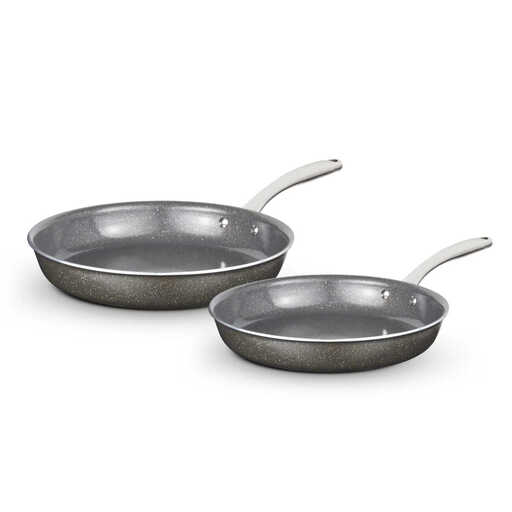
Why This Fits Their Persona: The 24cm and 28cm sizes cover lighter weekday meals and larger portions, while the ceramic surface is designed for food release with less oil or butter.
The specification identifies the coating as PFOA-, PTFE-, PFAS-, lead- and cadmium-free, and names the Inducto bonded steel base for induction use.
Forged 4mm aluminium, all-hob compatibility and oven suitability; dishwasher cleaning is listed, with hand washing recommended.
Use low to medium heat for coated cookware and avoid heating an empty pan. Silicone, wooden or nylon utensils can reduce surface damage, while abrasive pads may mark both ceramic and polished finishes.
Allow a pan to cool before washing, particularly if it has been used on a hot hob. If stacking frying pans, place a soft cloth or pan protector between them. For stainless steel, preheating and adding oil before food can reduce sticking; for non-stick pans, excessive heat is more likely to shorten coating performance than insufficient heat.
Always follow the individual product instructions for oven use. A handle that remains comfortable on the hob may become hot in an oven, and oven-safe does not automatically mean suitable for a grill.
We have compiled a complete, real-time list of products that fully satisfy these strict selection criteria and UK safety regulations.
Many are, but compatibility depends on the base rather than the ceramic coating itself. Look for wording that specifically confirms induction use and check that the pan diameter suits your hob zone.
There is no universal lifespan. Heat level, utensils, cleaning method and frequency of use all affect performance. Hand washing, avoiding overheating and replacing a pan when its coating is scratched, peeling or damaged are sensible precautions.
A set can be practical when its sizes match your cooking routine. A 20cm and 28cm combination covers different portions, while a 24cm and 28cm set may suit households cooking mainly for two or more people. Compare the included sizes, materials and care instructions rather than choosing solely by the number of pans.