Families making a one-off bake
A loose bag can provide pieces to chop or use as decoration. Check the pack size against the recipe and decide how the finished bake will be divided.


Choose the fudge format for its role in the bake: plain loose pieces give you more flexibility for chopping or decorating, while chocolate-coated bars and bites make more sense as a finished topping or a treat served afterwards. Check the actual pack for ingredients and portion information before use. For young children, piece size, texture, seated eating and supervision also matter; Sainsbury’s warns that its Dairy Fudge could be a choking hazard for small children.
A loose bag can provide pieces to chop or use as decoration. Check the pack size against the recipe and decide how the finished bake will be divided.
Choose from the ingredients and allergy information on the current pack, not the flavour name alone. The product examples include milk ingredients and, in some cases, wheat, soya or precautionary allergy statements.
Consider the size, shape and texture of any piece a child might eat. GOV.UK early-years food-safety guidance advises seated, upright eating and supervision for young children.
Start with the recipe: fudge intended to go into a bake calls for a different format from a chocolate-coated treat added after baking. Then check the physical pack before children handle or eat it.
| Priority | What to check | Your needs |
|---|---|---|
| Recipe fit | Look for loose pieces if the recipe calls for fudge to chop or use as decoration. Check whether a coated bar or biscuit-containing bite brings additional ingredients or flavours; do not assume it is intended for cooking. | I’m adding fudge during baking, rather than handing out a treat afterwards. Does this particular format suit the recipe? |
| Allergens | Read the full ingredients and emphasised allergens on the actual pack, including any ‘may contain’ or factory statement. Tesco’s Buttermilk listings, for example, describe different ingredients and cross-contact information for the two flavours. | If a child has an allergy, I need to assess this exact bag before the activity, even if I have bought the brand before. |
| Portions | Check the pack weight, stated servings and whether nutrition is given per piece, per serving or per 100g. Sainsbury’s lists 8.0g sugars per Dairy Fudge sweet; the Cadbury Treatsize listing at Waitrose gives 8.8g per serving. | How much will go into the bake, and how will I divide it afterwards? A sharing bag does not itself define a portion for each child. |
| Young children | Check product warnings and consider each piece’s size, shape and texture. Sainsbury’s warns that its Dairy Fudge could be a choking hazard for small children; GOV.UK advises upright, seated eating and supervision for young children. | With a child under five, I need to decide whether the prepared food is appropriate before serving it, not leave pieces out during the activity. |
Pack and serving sizes are different measures. Sainsbury’s lists 8.0g sugars per Dairy Fudge sweet, while Waitrose lists 8.8g per serving for the Cadbury Treatsize bag.
Decide how much fudge the recipe needs and how the finished bake will be divided; use the relevant per-piece or per-serving figure on the current pack.
The cited fudge products contain milk ingredients, and some coated, biscuit-containing or flavoured examples list wheat, soya or precautionary statements for other allergens.
Read the physical pack’s full ingredients and allergy information immediately before the activity, including any ‘may contain’ wording.
Sainsbury’s Dairy Fudge carries a choking warning for small children. GOV.UK early-years guidance also identifies size, shape and texture as relevant to choking risk.
For a child under five, assess the particular food and prepared piece, keep the child seated upright while eating and supervise them.
A chocolate-coated bar or a bite with biscuit crumb adds ingredients and texture that plain loose fudge does not. Its pack format may also be intended for serving rather than cooking.
Match the format to the recipe instructions, then check the current pack’s ingredients and intended use before substituting.
These examples illustrate different fudge formats and pack details; a brand name alone does not establish that a particular bag suits your recipe or the children taking part.
Its Dairy Fudge is a 200g loose-fudge example with 15 stated servings.
Tesco lists a 150g crumbly caramel sea salt fudge sharing box and a 175g cream tea fudge grab bag.
The Fudge Chocolate Treatsize Bag listed by Waitrose is a 202g bag of milk-chocolate-covered fudge with 15 stated servings.
M&S Blond Fudge Bites combine a fudge core, biscuit crumb and chocolate coatings.
Its 150g Stem Ginger Crumbly Fudge is an all-butter fudge with crystallised stem ginger.
These Cadbury options are chocolate-coated fudge for a finished topping or a treat served after baking. They are not plain loose fudge to cook into a recipe.
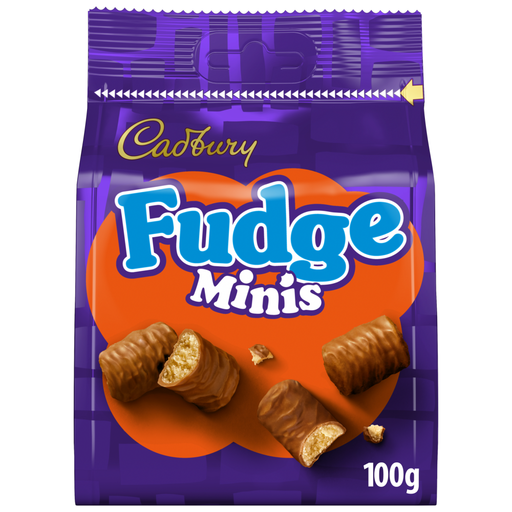 Image unavailable
Consider these minis as a topping for a finished dessert rather than an ingredient to cook. This is a 100g bag of chocolate-coated fudge minis. Check the physical pack for allergens and portion information; for young children, assess piece size and texture and supervise eating.
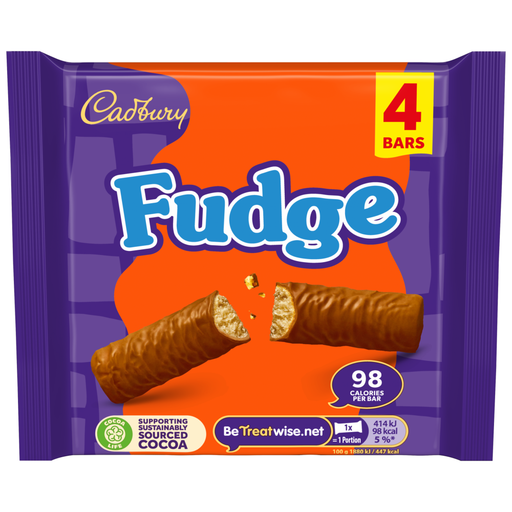 Image unavailable
The four-pack is a bar-format option for sharing after baking, not loose pieces for the recipe. It contains chocolate-coated fudge bars and has a stated pack weight of 88g. Check the physical pack for milk-allergen information and per-bar portions; for young children, assess the food served and supervise eating.
Choose loose fudge when the recipe calls for pieces to chop or use as decoration. Chocolate-coated bars and biscuit-containing bites bring additional flavours and textures, so check whether they fit the recipe and whether the pack indicates how they should be used.
Check the full ingredients and emphasised allergens on the actual pack before the activity, along with any precautionary statements. The cited product listings include milk and, depending on the bag, wheat, soya or warnings concerning peanuts, nuts or egg; do not treat those details as interchangeable across products.
Do not assume that any fudge piece is suitable. Sainsbury’s warns that its Dairy Fudge could be a choking hazard for small children, while GOV.UK early-years guidance advises considering size, shape and texture and keeping young children seated upright and supervised while eating.
Decide how much the recipe will use and how the finished food will be divided, then read the pack’s nutrition information on its stated basis. For comparison of label formats, Sainsbury’s gives 8.0g sugars per Dairy Fudge sweet and the Cadbury Treatsize listing at Waitrose gives 8.8g per serving; those are different products and stated portions.
No: a precautionary statement describes a possible cross-contact risk, not an ingredient in the recipe. The Food Standards Agency explains this purpose of precautionary allergen labelling; use the current pack information and the individual child’s allergy-management advice when deciding whether the product is appropriate.