Long-ride cyclists planning their carbohydrate intake
A small sweet bar can be one counted part of your food and drink plan for a ride over 90 minutes. Check its carbohydrate per bar rather than treating one bar as a complete hourly serving.


A single fudge bar can contribute carbohydrate to a longer ride, but it is not an hourly fuelling plan on its own: a 22 g Cadbury Fudge bar has 17 g carbohydrate, while a 36 g M&S Vanilla Fudge Bar has about 23.8 g. British Cycling’s guidance for rides over 90 minutes is 30–60 g carbohydrate per hour, so plan other food or drink alongside either bar; for long, fairly high-intensity riding, its guidance points towards options such as carbohydrate drinks and gels that you can tolerate.
A small sweet bar can be one counted part of your food and drink plan for a ride over 90 minutes. Check its carbohydrate per bar rather than treating one bar as a complete hourly serving.
A conventional fudge bar and a fudge-flavoured protein bar serve different snack preferences. Compare carbohydrate per bar as well as the protein, fibre and sweetener information on the label.
Read the wrapper for milk, soya and any other relevant ingredients or suitability warnings before carrying a bar for a ride. Check the particular pack you intend to eat.
Start with the carbohydrate in the portion you will actually carry, then consider how the bar fits your ride and any ingredient restrictions.
| Priority | What to check | Your needs |
|---|---|---|
| Carbohydrate per bar | Compare the bar’s weight and carbohydrate per portion, not just per 100 g. British Cycling advises 30–60 g carbohydrate per hour for rides over 90 minutes; plan what other food or drink will contribute. | I want to know what one bar contributes so I can plan the rest of my intake for a longer ride. |
| Format and ride conditions | Check whether the pack contains one bar or several and whether individual bars are wrapped. Consider what you can carry, open and tolerate while riding; for long, fairly high-intensity rides, British Cycling discusses carbohydrate drinks and gels. | A bar needs to fit in my cycling kit and be practical to eat at the point I plan to use it. |
| Ingredients and suitability | Read the current wrapper for allergens and sweeteners. M&S lists milk and soya for its Vanilla Fudge Bar; Huel and Grenade fudge-flavoured bars carry warnings about excessive consumption of sweeteners. | I need the particular bar I carry to match my ingredient requirements, not just my preferred flavour. |
A 22 g Cadbury Fudge bar has 17 g carbohydrate, and a 36 g M&S Vanilla Fudge Bar has about 23.8 g. Each is below British Cycling’s 30 g lower end of its hourly guidance for rides over 90 minutes.
Use the carbohydrate figure for the actual bar size and plan any additional food or drink for the ride.
Fudge-flavoured Huel and Grenade bars emphasise different snack features from conventional fudge. Their stated bar sizes provide about 17.1 g and 19.2 g carbohydrate respectively, and their labels warn that excessive consumption may cause laxative effects.
Compare carbohydrate per whole bar with your ride plan, and read the sweetener information before deciding when to use one.
The M&S Vanilla Fudge Bar lists milk and soya and carries nut, peanut and egg suitability warnings. Ingredient and allergen information can change between packs.
Check the wrapper of the bar you buy, particularly if you have an allergy or receive a substitute product.
These examples illustrate different fudge-style bar formats; the figures and warnings apply to the named products, not every product from each brand.
Its 36 g Vanilla Fudge Bar has a vanilla fudge centre with milk-chocolate coating and white-chocolate decoration.
The 22 g Fudge chocolate bar is a smaller conventional confectionery portion sold in grocery multipacks.
Its 55 g Chocolate Fudge Brownie Complete Nutrition Bar is a vegan, fudge-flavoured snack rather than a conventional fudge bar.
Fudged Up is a 60 g fudge-flavoured protein snack bar.
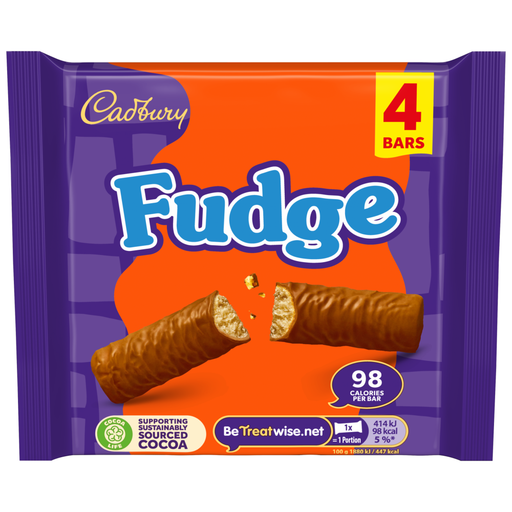
This Cadbury multipack is an option for riders considering a conventional fudge bar as one part of their planned ride food. Check the pack for the portion and wrapping details you need.
 No image available
The four-bar pack lets you consider fudge as part of a longer-ride food plan. Joybuy lists 75 g available carbohydrate per 100 g and milk among the ingredients; check the pack for carbohydrate per individual bar, its wrapping and current allergen information before relying on a particular portion.
Not as a complete hourly carbohydrate plan. British Cycling advises 30–60 g carbohydrate per hour for rides over 90 minutes; a 22 g Cadbury Fudge bar has 17 g, while a 36 g M&S Vanilla Fudge Bar has about 23.8 g. Plan other food or drink if you are using either bar within that guidance.
For long, fairly high-intensity riding, British Cycling points towards easily tolerated, fast-acting options such as carbohydrate drinks and gels. Choose what fits your planned intake and practise using it before an important ride; a fudge bar may instead form part of a lower-intensity food plan if you tolerate it.
Check the carbohydrate per bar before treating them as interchangeable ride food. The 55 g Huel Chocolate Fudge Brownie bar provides about 17.1 g carbohydrate, and the 60 g Grenade Fudged Up bar about 19.2 g; their protein and sweetener information may also matter to your snack choice.
Read the wrapper of the specific bar you will eat. M&S lists milk and soya for its Vanilla Fudge Bar and marks it unsuitable for people with nut, peanut or egg allergy; the Cadbury Fudge bar contains milk ingredients. Check the full current declaration against your own requirements.
Use it to compare products, then confirm the figures on the pack you buy. A multipack’s total weight or per-100 g carbohydrate figure does not, by itself, tell you the declared carbohydrate in each individual bar or whether each one is separately wrapped.