Choose conventional fudge or a boxed assortment for gifting, sharing or an occasional treat, not simply because it fits in a gym bag. If you want a protein-containing snack, compare a fudge-flavoured bar’s serving information, ingredients and warnings; if you need food before exercise, let the timing and demands of the session guide the choice. The British Dietetic Association advises a regular eating pattern and suggests a low-fat, high-carbohydrate snack or light meal two to three hours before exercise.
Who is this choice for?
Gym-goers choosing a snack for a particular purpose
A portable sweet treat, a protein-containing snack and food before exercise serve different purposes. Consider when you will eat and what the session involves before choosing by flavour or pack size.
Fudge gift buyers carrying a portion
A sharing carton can work as a gift while a separately packed portion can be carried as a treat. Check the serving information rather than treating the whole box as one gym-bag snack.
Parents and school-food organisers in England
A personal gym-bag purchase and food supplied at school are different decisions. For school provision, check the applicable school-food standards and local policy rather than relying on rules about retail promotions.
What should you check before choosing?
Decide whether you are packing food for exercise, a protein-containing snack or confectionery to enjoy later. Then compare the serving and label information that matters for that purpose.
| Priority | What to check | Your needs |
|---|
| Exercise timing |
Consider the session’s timing and demands. The British Dietetic Association suggests a low-fat, high-carbohydrate snack or light meal two to three hours before exercise. |
If I am choosing food before training, I want its timing and composition to suit the session, rather than assuming portable fudge is exercise fuel. |
| Fudge portions |
Compare sugars per stated serving and check how many servings are in the pack. Tesco lists 14.4g sugars per 25g portion of its Dairy Fudge; that figure does not describe every fudge product. |
A defined portion matters to me if I want some fudge as a treat without carrying an entire sharing carton as my snack. |
| Protein-bar label |
Check protein and sugars per bar alongside ingredients, sweeteners and warnings. Waitrose & Partners lists 22g protein and 1.3g sugars for a 60g Grenade Fudged Up bar and warns that excessive consumption may cause a laxative effect. |
For a protein-containing snack, I want to judge the whole bar’s label, not take its fudge flavour or protein figure as proof that it suits every occasion. |
| Allergens |
Read the current pack for ingredients and possible cross-contact. Waitrose & Partners says its Stem Ginger Crumbly Fudge may contain peanuts and nuts; Thorntons advises checking packaging for nut cross-contamination warnings. |
Where an ingredient or possible trace matters to me, I need the warning for the particular product I am buying. |
| Pack format |
Check whether a pack is intended for sharing, how a serving can be separated and whether individual wrapping matters to you. Thorntons describes its 300g Assorted Fudge Cartonette as a gift or sharing pack. |
I may want a box to give or share, but a portion I can separate is more practical when I am carrying a treat for myself. |
Common buying mistakes
-
Assuming a portable fudge box is sports nutrition
A pack fitting in a bag says nothing about whether it meets a need before or after exercise. For example, Tesco lists 0.3g protein and 14.4g sugars per 25g portion of its Dairy Fudge.
Choose the snack’s purpose first. Keep a fudge box for gifting, sharing or a treat; for food before exercise, consider the timing and composition described by the British Dietetic Association.
-
Looking only at a protein figure
A protein-containing bar can also have ingredients and warnings that affect the choice. The Grenade Fudged Up listing from Waitrose & Partners warns that excessive consumption may cause a laxative effect and says the bar is not suitable for children under 14.
Read the current label for the serving size, ingredients, allergens and warnings before putting a bar in the bag.
-
Carrying a sharing pack without choosing a portion
Thorntons presents its 300g assorted fudge cartonette for gifting or sharing. Its pack size alone does not tell you how much you intend to eat while out.
If the fudge is an occasional treat, decide on a portion and pack it separately before leaving home.
-
Applying school-food rules to a personal gym bag
England’s retail rules on certain foods high in fat, sugar or salt concern promotions and placement by businesses, according to Department of Health and Social Care guidance. School-food standards address a separate setting; neither should be used as a shortcut for choosing a personal snack.
For a personal purchase, check the food and its label. For school provision, check the standards and policy applicable to that school and UK nation.
Brand and product-line references
These examples show how a gifting pack, conventional fudge and a fudge-flavoured bar can call for different label checks; they do not imply that every product from a brand has the same composition.
Thorntons
Thorntons presents its 300g Assorted Fudge Cartonette as a gift or sharing pack.
- The assorted cartonette directly suits a gifting or sharing purchase.
- Thorntons says tree nuts are widely used in its production facility; check the individual pack for cross-contamination information.
M&S
Its Clotted Cream Fudge is a conventional fudge option to consider as confectionery.
- Marks & Spencer lists nutrition per 100g, allowing comparison with other packs on that basis.
- The listed figures are 62.9g sugars and 0.8g protein per 100g; check the portion you intend to have.
Waitrose
Its Stem Ginger Crumbly Fudge has a stated two-piece serving.
- Waitrose & Partners lists 18.1g sugars for that two-piece serving, giving shoppers a serving-based figure to check.
- The product information says it may contain peanuts and nuts; read the current pack if allergens are relevant.
Tesco
Tesco Dairy Fudge is a conventional fudge example with a listed 25g portion.
- Tesco lists both per-100g and per-portion nutrition for this product.
- The listed 25g portion contains 14.4g sugars and 0.3g protein; it is not a substitute for checking what you need from a snack.
Grenade
Fudged Up is a fudge-flavoured protein bar rather than a pack of conventional fudge.
- Waitrose & Partners lists 22g protein and 1.3g sugars for the 60g bar.
- The listing warns of a possible laxative effect from excessive consumption and says it is not suitable for children under 14. Check the full ingredient and allergen information on the pack.
Joybuy fudge options
These Cadbury fudge packs suit the occasional-treat side of the gym-bag decision. Choose between the minis and the four-bar pack by the portion and pack format you want to carry.
 No image available
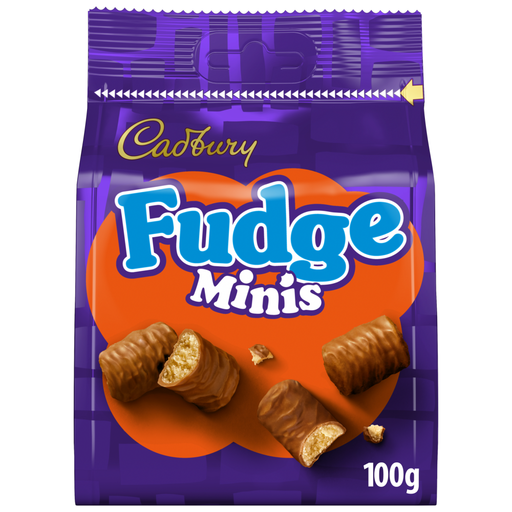
Cadbury Fudge Minis 100g
The minis are an option when you want to carry or share a small fudge treat, rather than pack food specifically for exercise. Check the current pack for portion information, milk and soya, and whether the pieces are individually wrapped if that matters for your bag.
View on Joybuy
 No image available
Cadbury Fudge Bar 4 Pack 88g
This four-bar, 88g pack is another choice for an occasional fudge treat or for sharing. Check the current pack for nutrition per bar, milk information and individual wrapping if you need a separately sealed portion.
View on Joybuy
Questions about fudge and gym-bag snacks
Should I use a box of fudge as my usual pre-exercise snack?
Do not choose a fudge box for that purpose just because it is portable. The British Dietetic Association suggests a regular eating pattern and a low-fat, high-carbohydrate snack or light meal two to three hours before exercise; keep fudge for a treat or sharing unless its serving and timing meet what you are looking for.
When might a fudge-flavoured protein bar make more sense?
Consider one when you specifically want a portable protein-containing snack and its full label suits you. Waitrose & Partners lists 22g protein for a 60g Grenade Fudged Up bar, but its listing also carries a warning about excessive consumption, so the protein figure should not be the only check.
Do I need to pack a special snack for every gym session?
Not necessarily. The British Dietetic Association says people following a general fitness programme can usually meet carbohydrate needs through their usual diet; consider the session’s demands and when you last ate before deciding whether to pack additional food.
How should I check allergens in fudge or a protein bar?
Read the current label for the exact product, including ingredients and possible cross-contact statements. Waitrose & Partners says its Stem Ginger Crumbly Fudge may contain peanuts and nuts, while Thorntons directs shoppers to individual packaging for nut cross-contamination information.
Do England’s HFSS promotion rules ban fudge from a personal gym bag?
No: the retail restrictions described by the Department of Health and Social Care concern promotions and placement of certain foods high in fat, sugar or salt by businesses, not what an individual carries to the gym. Food supplied at school is a separate matter; check the school-food rules and local policy applicable to that setting.


