Organisers selling single portions
If volunteers need to count items and hand them over with little handling, look for a stated number of bars or pieces. A pack weight alone does not tell you how many individual sale portions it contains.


Choose a fudge pack with clearly countable portions if the school permits the product and you plan to sell one item at a time. Loose fudge can work when you have a hygienic serving plan, but a carton’s estimated servings do not establish its piece count. For either format, check the school’s policy and the current pack’s ingredients and precautionary allergen wording before buying and serving.
If volunteers need to count items and hand them over with little handling, look for a stated number of bars or pieces. A pack weight alone does not tell you how many individual sale portions it contains.
Confirm the school’s policy before choosing a pack. Check both the ingredients and any “may contain” or factory-use statement on the physical packaging; the Food Standards Agency explains that precautionary wording communicates possible unintended allergen presence.
A carton may suit a table where volunteers can divide and serve the fudge hygienically. Use its serving guidance for planning, then decide what an individual sale portion will be rather than treating estimated servings as a piece count.
Check the school’s food policy before settling on a flavour or format. Then work out whether the pack gives you countable items or whether you will need to portion it at the table.
| Priority | What to check | When it matters |
|---|---|---|
| Allergen acceptability | Read the current pack’s ingredients and precautionary peanut or nut wording. Ask whether the school permits products carrying that wording. The Food Standards Agency distinguishes precautionary statements from listed ingredients: they signal possible unintended allergen presence. | “I need a product that fits this school’s policy, not one that merely has no nuts listed as ingredients.” Waitrose lists “may contain” peanuts and nuts for its clotted cream fudge; Tesco lists a peanut-, nut- and soya-using factory for the Buttermilk sharing box. |
| Portion planning | Check the number of units, or set a serving method for loose pieces. Sainsbury’s lists a 13.5g bar in its 202g Cadbury Fudge Treatsize bag; Waitrose gives approximately six servings for 150g, and Tesco gives approximately five for the 150g Buttermilk box. Serving estimates are not piece counts. | “If each buyer gets one item, I want to know how many items I can hand out.” For loose fudge, I can plan a serving method before deciding how many cartons to buy. |
| Pack and label at the event | Check the physical packaging when buying and again before serving. Keep its ingredient and allergen information available at the table. Sainsbury’s advises checking packaging because products and ingredients can change. | “I need the information for the packs actually being served, rather than relying on an older product page or a previous purchase.” |
Nuts may be absent from a recipe’s ingredient list while the pack still carries a precautionary statement. Waitrose clotted cream fudge says it may contain peanuts and nuts; Tesco’s Buttermilk sharing box carries a factory-use statement for peanuts, nuts and soya.
Get the school’s policy before purchasing, check the wording on the packs you will use, and keep that information available for the event.
The Waitrose and Buttermilk listings give approximate servings for their 150g packs, not a fixed number of sale pieces. Dividing loose fudge into individual portions requires a separate plan.
If you need one countable item per sale, check for a stated unit count. Otherwise, decide how volunteers will portion and serve the fudge before ordering cartons.
A previous purchase or online listing may not describe the packs used on sale day. Sainsbury’s advises shoppers to check packaging because products and ingredients can change.
Read the label on each batch bought for the event, including familiar products, before buying and serving it.
These retailer listings illustrate different ways fudge is packaged; a brand name or pack format does not establish whether a product meets a particular school’s policy.
Sainsbury’s lists a 202g Cadbury Fudge Treatsize bag with a stated 13.5g bar weight. This is a chocolate-covered fudge format, distinct from a carton of loose traditional fudge.
Waitrose lists a 150g carton of clotted cream fudge with approximately six servings.
Tesco lists the Buttermilk Crumbly Caramel Sea Salt Fudge Sharing Box as a 150g pack with approximately five servings.
M&S lists clotted cream fudge in a 135g pack, a smaller pack format than the 150g cartons described here.
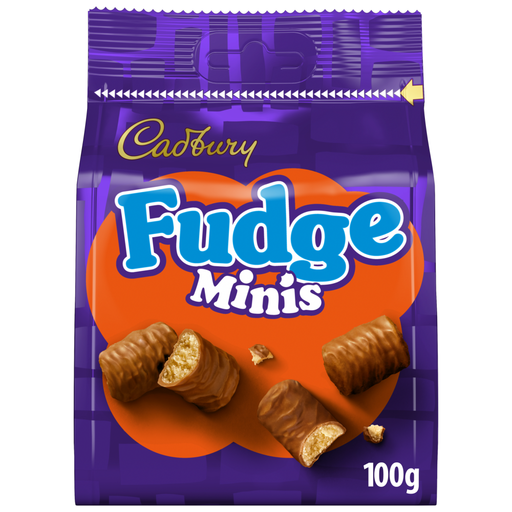
These Joybuy options are a 100g bag of Cadbury Fudge Minis and an 88g four-bar pack. They are different products from the 202g treatsize bag described above, so check their own portion details and packaging against the school’s requirements.
 No image available
This sharing bag is an option when you can check its pieces against your serving plan. The product information lists milk and soya; check the physical pack’s full allergen wording and confirm the piece count if each sale needs a set portion.
 No image available
The stated four-bar count helps plan how many single bars to allocate at a sale. The pack weighs 88g and its product information lists milk; check the physical pack for allergen wording and whether the bars are individually wrapped if that matters to your serving plan.
Not necessarily. The Food Standards Agency describes precautionary allergen labelling as a warning that an allergen could be unintentionally present. Check that wording separately from the ingredients list and ask whether the school permits products carrying it.
A pack with a stated number of bars is simpler when you plan to sell one bar per buyer. Loose-fudge cartons can work with a hygienic serving plan, but the approximate servings listed for the Waitrose and Buttermilk 150g packs are not exact piece counts.
Use the page to help shortlist products, then read the physical packaging before buying and serving. Sainsbury’s advises checking packs because products and ingredients can change; the school’s policy also determines whether a particular allergen statement is acceptable for its event.
No. Vegetarian status addresses a different question from allergen acceptability. Check the product’s ingredients and precautionary statements independently: the Tesco-listed Buttermilk fudge carries a factory-use statement for peanuts, nuts and soya, while Waitrose clotted cream fudge says it may contain peanuts and nuts.