Groups sharing a sweet extra
A bag can be convenient for two or more walkers, provided everyone knows how it will be divided. A stated serving count is a starting point, not an allocation for each person.


Take a fudge sharing bag as a sweet extra rather than the only food for a longer or more demanding hike. For a group, check the pack’s serving information or divide loose pieces before setting off; in warm weather, protect chocolate-coated fudge from heat and check the current label for allergens before sharing.
A bag can be convenient for two or more walkers, provided everyone knows how it will be divided. A stated serving count is a starting point, not an allocation for each person.
Chocolate-coated fudge needs more care in a warm rucksack. Much Better Adventures notes that chocolate bars can soften in heat, while the Cadbury bag’s Waitrose listing says to protect it from heat.
Anyone sharing fudge with others needs to read the exact pack first. The cited products have different milk, soya, nut and peanut information, including precautionary statements.
Start with how the group will share the bag, then check whether its label and storage instructions suit the walk.
| Priority | What to check | Your needs |
|---|---|---|
| Portions | Compare bag weight and stated servings with the number of walkers. Confirm the pieces or serving guidance on the current pack before dividing it. | We want to share a sweet without treating the whole bag as one person’s portion. Waitrose lists 15 servings for its 202g Cadbury Treatsize Bag and approximately six for its 150g Clotted Cream Fudge. |
| Food for the walk | Read energy and sugars on the same per-100g basis when comparing labels. Plan other food for a longer or more demanding walk rather than relying on confectionery alone. | I’m choosing a treat alongside the rest of my hiking food. Sainsbury’s lists 447 kcal and 65g sugars per 100g for its Cadbury Fudge Treatsize Chocolate Bag. |
| Temperature and carrying | Check whether the product calls for cool, dry storage or protection from heat. Consider how you will keep an opened bag contained in the rucksack. | On a warm walk, I need the fudge to remain manageable when we stop to share it. Much Better Adventures warns that chocolate can soften in heat, and Waitrose says to protect its Cadbury bag from heat. |
| Allergens | Read the current ingredients and precautionary allergen statement on the exact pack. Check them against every person who may eat from the bag. | Before we pass food around, everyone needs to know whether they can have it. Waitrose says its Clotted Cream Fudge may contain peanuts and nuts; other cited fudge products contain milk ingredients. |
A serving declaration describes the product, not how a hiking group will divide it. Waitrose lists 15 servings for the 202g Cadbury Treatsize Bag but approximately six for its 150g Clotted Cream Fudge.
Agree how much each person will take before the walk. If you choose loose fudge, divide the pieces into containers before opening them on the trail.
Ingredients and allergen information can change; Tesco cautions shoppers about changes to food product information. An earlier listing may not describe the bag in your hand.
Read the current physical label for ingredients, allergens and serving information, particularly when buying for someone with an allergy.
Chocolate can soften in heat, making a bag messier to open and share. The Waitrose listing for Cadbury Fudge Chocolate Treatsize Bag says to store it dry and protect it from heat.
Keep the bag out of direct sun and consider a cooler compartment or pouch. Take a separate main snack if warm conditions make this treat impractical.
England’s Requirements for School Food Regulations 2014 state that confectionery must not be provided where those school-food rules apply. This is a rule about school food, not a UK-wide restriction on personally packed fudge based solely on an HFSS label.
For an organised school hike, establish which nation’s school-food rules and which provision arrangements apply. The Department for Education identifies England’s standards as a legal requirement for state-funded schools.
These examples illustrate different fudge and fudge-flavoured formats; the named products are not all sharing bags.
Its 202g Fudge Chocolate Treatsize Bag is a chocolate-coated fudge format to compare with loose pieces.
Its own-label Clotted Cream Fudge is a 150g traditional-fudge option rather than a confirmed individually wrapped format.
The cited Vanilla Fudge Bar is a 36g single bar, not a sharing bag.
Its listing for Munchies Salted Caramel Fudge Sharing Bag shows a 97g chocolate-and-caramel-style sharing format.
Its fudge-bag range lists clotted-cream and caramel-and-sea-salt varieties in 150g bags.
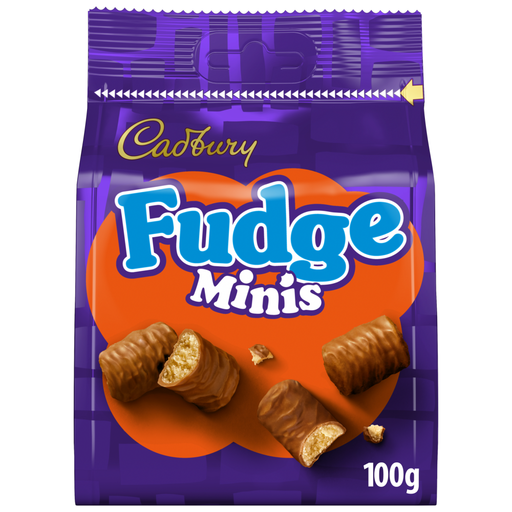
This Cadbury Fudge Minis bag is an option for carrying a sweet extra to share on a group hike. Check portions and the current pack label before deciding how it fits your food plan.
 No image available
This 100g bag of bite-sized fudge minis offers pieces to share as a sweet extra on a group walk. Check the current pack to decide portions and confirm its milk and soya allergen information; store it cool and dry, away from direct sunlight.
Plan other food for a longer or more demanding hike and treat the fudge as a sweet extra. Much Better Adventures advises taking small snacks across a walk; the cited fudge labels also show substantial sugar per 100g, so a sharing bag is not a complete food plan.
Keep it out of direct sun and follow the pack’s storage instructions. Much Better Adventures notes that chocolate can soften in heat, while the Waitrose listing for Cadbury Fudge Chocolate Treatsize Bag says to store it dry and protect it from heat.
Read the ingredients and precautionary allergen statement on the exact current pack before offering it. The cited products differ: Waitrose Clotted Cream Fudge may contain peanuts and nuts, while M&S lists milk and soya for its Vanilla Fudge Bar and warns that it is unsuitable for people with nut, peanut or egg allergies.
Not where England’s school-food rules apply: the Requirements for School Food Regulations 2014 state that confectionery must not be provided and include non-chocolate confectionery and chocolate-coated products in that category. The Department for Education describes the standards as a legal requirement for state-funded schools. This does not establish the rules for other UK nations or for food packed privately by families.