
24/7 Customer Support

Free returns

Same-day & Next-day Delivery

Quality Guaranteed

Unlock Your Welcome Offers: FREE Delivery | Up to 80% OFF | Free 30-day JoyPlus trial
Download the APP
Mounting your television on the wall is a fantastic way to save space, modernise your living area and create a more comfortable viewing experience. However, with so many options available, finding the right full motion TV wall bracket can feel complicated. Whether you're trying to eliminate afternoon glare, fit a screen into a tight corner, or simply achieve a cleaner look, the right mount makes all the difference.
This guide is designed to help you understand the key features to look for. We'll walk through essential compatibility checks and highlight a few recommended models that cater to different needs, helping you make a confident choice for your home.
Choosing a bracket isn't just about screen size. To ensure a secure fit and the flexibility you need, consider these three points.
Before anything else, you need to confirm three specifications for your television: its weight, screen size and VESA pattern.
The type of wall you plan to mount your TV on is just as important as the bracket itself. In the UK, most homes have either solid walls (brick, concrete block) or stud walls (a wooden frame covered with plasterboard).
A full motion TV wall bracket offers the greatest flexibility, but the degree of movement varies.
Here are a few options that address common household needs, from straightforward installations to more complex room layouts.
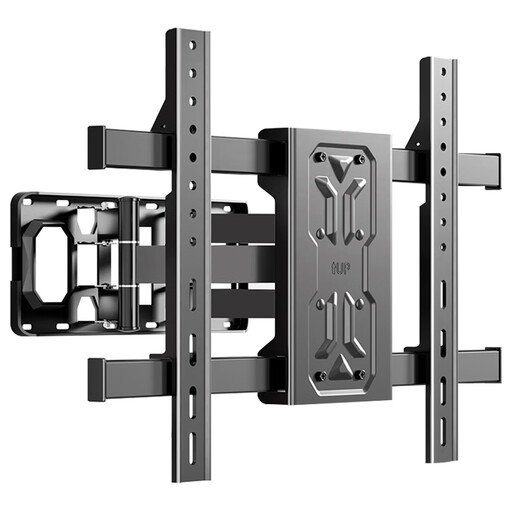
Why It Stands Out: This Zootude mount is a solid and reliable all-rounder. Its dual-arm construction provides stability, while its impressive load capacity makes it suitable for a wide range of televisions. It offers a good balance of extension and a slim retracted profile.
Pros:
Who is it for? This is an excellent choice for anyone with a mid-sized TV (up to 55 inches) seeking a dependable swivel TV mount for a primary living room or bedroom without needing extreme extension or height adjustment.
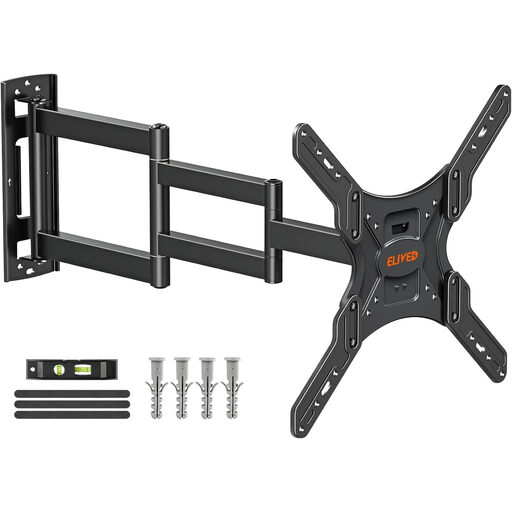
Why It Stands Out: The standout feature here is the exceptional extension. This long reach TV arm can pull your screen out to nearly 75 cm from the wall, making it a superb problem-solver for awkward spaces and corner mounting.
Pros:
Who is it for? This mount is designed for those with challenging room layouts. If you need to mount your TV in a deep corner, centre it in a large alcove, or view it from an adjacent room, this bracket's reach is the solution.
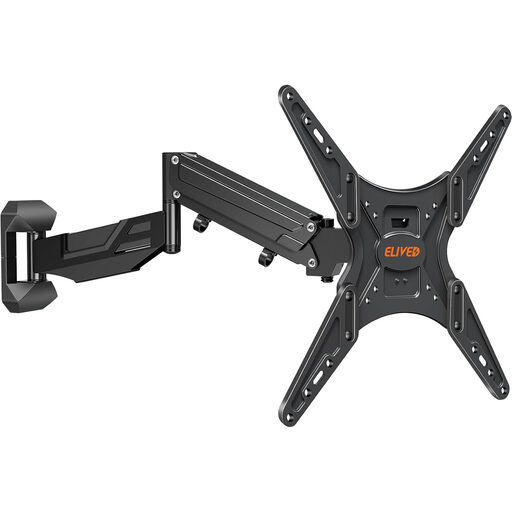
Why It Stands Out: The integrated gas spring mechanism allows for smooth, tool-free height adjustment. This height adjustable TV mount brings a level of dynamic positioning that standard mounts can't match, and it's compatible with both flat and curved screens.
Pros:
Who is it for? This is for the user who needs ultimate control over their TV's position. It's ideal for multi-purpose rooms, home offices where you might switch between sitting and standing or for families wanting to easily adjust the screen height for adults and children.
If these specific models don't quite match your requirements, there are many other styles and sizes available. You can explore a wider selection to find the perfect fit for your screen and space.
Browse our full range of TV wall mounting brackets to see more choices.
VESA is a set of standards established by the Video Electronics Standards Association for mounting flat-panel displays. The VESA size corresponds to the distance in millimetres between the four mounting holes on the back of your TV, in a Horizontal x Vertical format. You can find this information in your TV's manual, on the manufacturer's website or by simply measuring it with a tape measure.
No, you should never mount a TV bracket, especially a full motion one, directly onto plasterboard (drywall) alone. Plasterboard is not a structural material and cannot support the weight and leverage of a modern television. You must locate the wooden studs behind the plasterboard and securely fix the wall plate of the bracket into at least one, preferably two, of these studs. For solid brick or concrete walls, the supplied wall plugs are typically sufficient.
For a corner installation, you need a bracket with two key features: a long extension arm and a wide swivel range. The long arm allows the TV to clear the corner and sit flat against the angled wall, while a wide swivel (ideally 90° or more) lets you angle the screen towards your viewing area. The "Long Reach TV Wall Bracket" mentioned above is a prime example of a suitable corner TV bracket.