Buyers planning substantial portions
If staff will cut or tear naan for the display, compare the number of full-size breads per pack with the portions you intend to serve. A pack’s weight cannot tell you how thick a cut piece will be.


Choose full-size plain naans if staff will cut or tear substantial buffet portions; choose mini naans if individually sized breads better fit the serving plan. Pack counts and weights help you plan quantities, but neither format establishes a measured ‘thick-cut’ slice. Check the selected pack’s storage, heating and allergen information before service.
If staff will cut or tear naan for the display, compare the number of full-size breads per pack with the portions you intend to serve. A pack’s weight cannot tell you how thick a cut piece will be.
Mini naans offer separate breads without cutting a full-size naan. Compare the pack count with the planned number of servings, rather than treating ‘mini’ as a thickness description.
When naan is served unpackaged, keep the ingredient information for the exact product and any additions made during preparation or service. Guests need accurate information about the regulated allergens used as ingredients.
Start with the portion you want to put on the buffet, then check whether the kitchen can follow the selected bread’s preparation and storage directions.
| Priority | What to check | Your needs |
|---|---|---|
| Portion format | Compare breads per pack and total pack weight. Sainsbury’s lists two Indian Plain Naans at 260 g and four Mini Plain Naans at 188 g; neither figure measures slice thickness. | I want substantial pieces that staff can portion, or separate small breads that can go straight onto the serving plan. |
| Preparation and storage | Read the exact pack’s heating and storage directions, including instructions after opening. Sainsbury’s says to refrigerate its Indian Plain Naan after opening; Waitrose says to store its unopened Plain Naan in a cool, dry place. | Our kitchen needs a preparation and replenishment plan it can follow throughout breakfast service. |
| Allergen information | Check the current ingredients and allergen statement for each naan and anything added to it. For loose buffet food, make information about regulated allergens used as ingredients available to guests, as required by Food Standards Agency guidance for England, Wales and Northern Ireland and Food Standards Scotland guidance. | I need to communicate what is actually served, rather than relying on the details of a different naan or on a vegan label. |
| Flavour | Decide whether plain bread or a named flavoured or filled variety fits the dishes. M&S lists garlic-and-coriander and peshwari naans; check each chosen product’s own ingredients. | Plain naan leaves the bread choice open across different accompaniments. If a flavoured naan is part of the menu, I need its specific ingredient information. |
Pack weight describes the contents of the pack, not the thickness of an individual naan or a piece cut for the buffet.
Choose the whole-bread format first, then decide what size pieces staff will cut or tear. If a particular thickness matters, check the bread itself rather than relying on the pack weight.
Vegan suitability does not establish that a naan is free from wheat or other allergens. Sainsbury’s listing for Patak’s Plain Naan Breads identifies wheat and carries may-contain warnings for peanuts, nuts and milk.
Read the current pack for the exact product served and keep its allergen information accurate when the naan is put out loose.
The checked Sainsbury’s Indian Plain Naan and Waitrose Plain Naan have different storage directions. A routine suitable for one pack may not follow the other’s instructions.
Plan when packs will be opened, heated and replenished using the directions on each selected product.
These named products illustrate pack formats and handling details; a brand name alone does not establish thickness or suitability for a particular buffet.
Its Indian Plain Naan is listed as two breads in a 260 g pack, while its Mini Plain Naan is listed as four breads in a 188 g pack.
Waitrose Plain Naan is listed as two plain naans weighing 220 g in total.
M&S lists plain naan alongside garlic-and-coriander and peshwari varieties, giving menu planners distinct flavour options to consider.
Tesco’s naan category lists an own-label two-pack of plain naan and a six-pack of mini plain naans weighing 282 g.
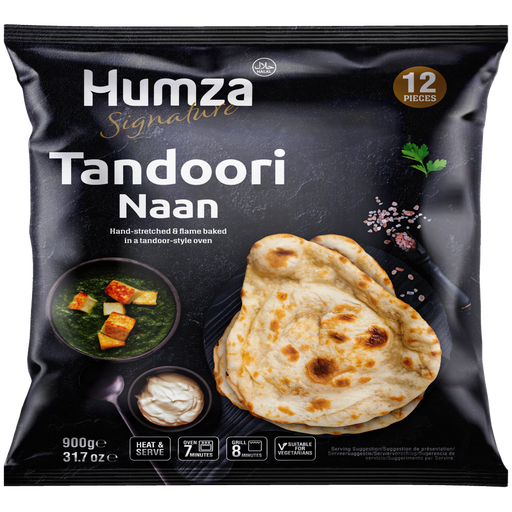
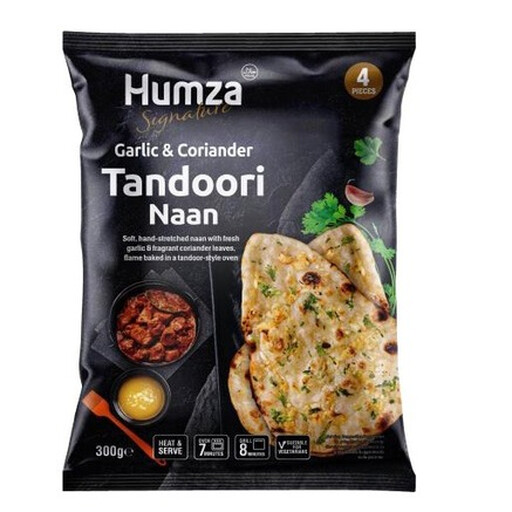
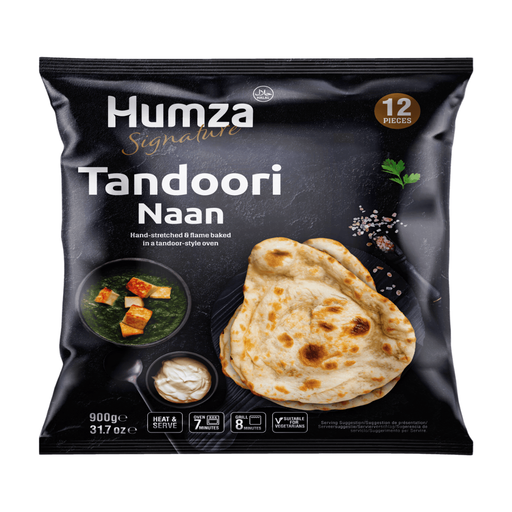
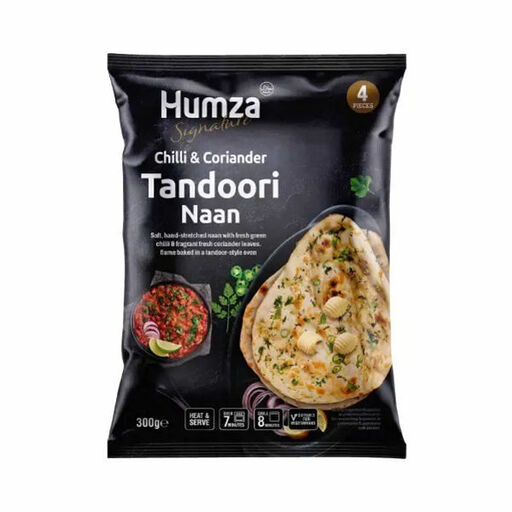
These Humza packs offer plain or garlic-and-coriander naan in four-piece and 12-piece formats for a buffet where staff plan the portions. Their stated weights and counts help with quantity planning; they do not specify thick-cut pieces.
 No image available
A plain 12-piece pack to consider when staff will portion naan for the buffet. The stated pack weight is 900g; it does not specify the thickness of a served piece. Check the pack’s preparation and allergen information before service.
 No image available
A 12-piece garlic-and-coriander option when that flavour fits the breakfast menu. The stated pack weight is 900gm; decide the portion size separately and check this product’s ingredients and preparation directions.
 No image available
A four-piece plain pack for a serving plan that calls for fewer breads per pack. Its stated weight is 300g; check the size of the portions staff will serve, along with the pack’s preparation and allergen information.
 No image available
A four-piece garlic-and-coriander pack for a menu that calls for flavoured naan. Its stated weight is 300g, not a thickness specification; check the exact product’s ingredients and heating directions before serving.
No. The checked full-size listings give pack counts and weights, not a measured bread or slice thickness. If staff will cut the naans, set the serving size for the buffet rather than treating the pack weight as a thickness measure.
Follow the directions on the exact pack being served. For example, Sainsbury’s Indian Plain Naan gives different oven directions for chilled and frozen bread, says to serve it warm and says not to reheat it; those instructions should not be assumed to apply to another product.
If prepared naan is being held hot rather than served straight away, use suitable equipment and a service plan that follows applicable food-safety requirements. The Food Standards Agency’s caterer guidance says buffet food held hot should be kept above 63°C. Temperature-control requirements differ in some respects in Scotland, so a Scottish hotel should check the rules applicable to its service method.
Check that pack’s storage directions and when it was opened. Sainsbury’s Indian Plain Naan says to refrigerate after opening and use within one day; Waitrose Plain Naan says to consume within one day after opening. Follow the selected product’s instructions rather than applying either example to every naan.
Make information available about any of the 14 specified allergens used as ingredients in the naan and anything added during preparation or service. Food Standards Agency guidance sets out this requirement for non-prepacked food in England, Wales and Northern Ireland; Food Standards Scotland confirms the corresponding requirement in Scotland. Use the current information for the exact food served.