
24/7 Customer Support

Free returns

Same-day & Next-day Delivery

Quality Guaranteed

Unlock Your Welcome Offers: FREE Delivery | Up to 80% OFF | Free 30-day JoyPlus trial
Download the APP
Tired of looking at that dated chest of drawers or a plain-looking side table? Before you consider replacing them, think about the potential hiding just beneath the surface. Furniture upcycling is a creative and affordable way to breathe new life into old pieces, allowing you to personalise your home and reduce waste.
Whether you're a seasoned DIYer or a complete beginner, transforming furniture can be a rewarding project. This guide is designed to cut through the clutter, offering practical advice and highlighting some useful products to help you get started on your next home transformation.
A successful project starts with the right plan and materials. Here are a few key points to think about before you pick up a paintbrush.
The type of furniture paint you choose will define the final look and feel of your piece. Two popular options are satin and chalky finishes.
Many modern formulas are now available as no sanding paint, which can save you significant time and effort on preparation.
If you are upcycling wood furniture for a child's bedroom or play area, safety is paramount. Look for paints that are certified as toy safe. In the UK, this is typically the BS EN 71-3 standard, which ensures the paint is safe from certain toxic elements if a child were to chew on the item. These paints are often water-based and have a low odour, making them more pleasant to use indoors.
Consider the purpose of the furniture. Are you simply giving an old piece a cosmetic update, or are you creating a new functional space? For families, dedicated children's activity furniture can be a fantastic investment. A toddler craft desk or a kids art table provides a designated zone for creativity, keeping mess contained and supplies organised. You can either purchase a ready-made set or find a simple second-hand table to upcycle into a personalised creative station.
Here are a few products that can help you achieve a high-quality finish on your next project, selected for their features and user-friendliness.
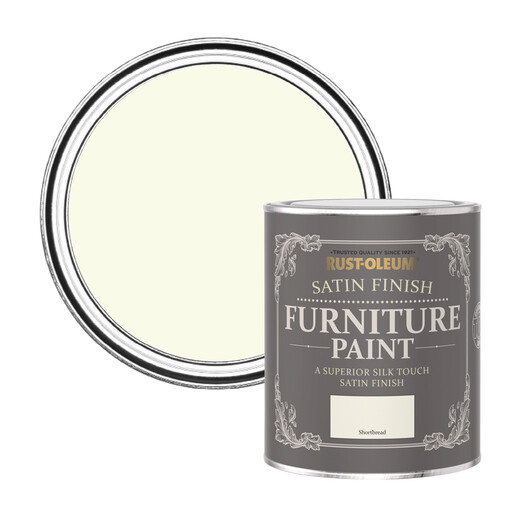
Why It Stands Out This paint provides a sophisticated satin finish that brings a timeless, elegant sheen to furniture. The "Shortbread" shade is a versatile, contemporary neutral that works well in many interior styles. Its formula is designed for ease of use, requiring no priming or sanding on most surfaces, making it an excellent choice for quick and effective transformations on wood, metal and even plastic.
Pros
Who is it for? Anyone looking to give furniture a modern, durable update with a refined sheen. It's particularly well-suited for family homes, as its toy-safe certification makes it a reliable option for customising children’s furniture.
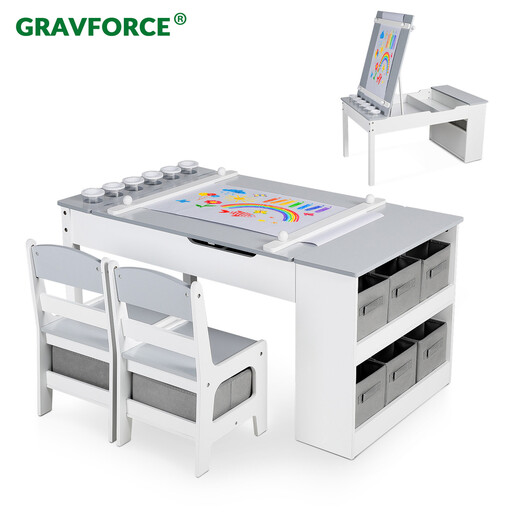
Why It Stands Out This set is a complete, purpose-built solution for a child's creative corner. It functions as a kids art table, a toddler craft desk and a storage unit all in one. It includes a chair, a built-in paper roll holder, paint cup slots and removable storage bins. The corners are rounded for safety, and the neutral grey finish makes it a perfect blank canvas for personalisation or a stylish addition to a playroom as is.
Pros
Who is it for? Parents and guardians looking to create a dedicated and organised activity space for young children. It's a practical piece of children's activity furniture that encourages creativity while helping to keep art supplies tidy.
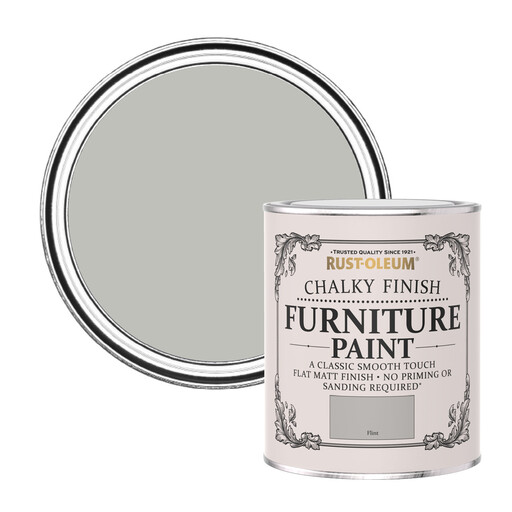
Why It Stands Out For those who love the classic, velvety matte look, this chalky furniture paint is an excellent option. The "Flint" colour is a sophisticated, deep grey that can create a dramatic or a calming effect depending on the surrounding decor. Like its satin counterpart, it is designed for direct application to most surfaces without the need for extensive prep work, making upcycling wood furniture straightforward.
Pros
Who is it for? DIY enthusiasts aiming to achieve a rustic or vintage aesthetic. It's ideal for transforming old dressers, bookcases and picture frames into character-filled statement pieces.
The neutral shades of Shortbread and Flint are wonderfully versatile, but sometimes a project calls for a bolder splash of colour. If you're envisioning a vibrant statement piece, you can find a shade that perfectly matches your vision.
Explore our range of red furniture paint to find the perfect hue for your project.
1. Do I always need to sand furniture before painting? While sanding is a traditional step for ensuring good paint adhesion, it is not always necessary with modern furniture paints. Many chalky furniture paint and satin furniture paint formulas are designed as no sanding paint that can be applied directly to clean, dry surfaces, including those previously painted or varnished. However, for very glossy, smooth or uneven surfaces, a light scuff with sandpaper can still improve the final result.
2. What makes a paint 'toy safe'? A toy safe paint is one that has been independently tested and certified to a specific safety standard, such as BS EN 71-3 in the UK. This standard confirms that the levels of certain potentially toxic elements (like lead, cadmium or mercury) in the dry paint film are below a strict, safe limit. This is an important consideration when painting items that children may come into close contact with, such as cots, toys or children's activity furniture.
3. Can I paint directly over varnished wood? Yes, you often can, provided you use the right type of paint. Products specifically formulated for furniture upcycling are designed to adhere well to a variety of surfaces, including varnish. For best results, always ensure the surface is thoroughly cleaned with a mild detergent to remove any grease or grime. While many paints don't require it, a quick, light sanding can help create a better "key" for the paint to grip onto. Always check the paint manufacturer's instructions.