Students with a Dolce Gusto machine
If you can use a Nescafé Dolce Gusto machine before leaving for a lecture, Tesco lists Galaxy as a one-pod drink. NESCAFÉ Dolce Gusto Chococino instead uses a chocolate pod and a milk pod for each mug.


Choose hot chocolate pods for a university lunch break only if you can use the matching machine before your lecture: Galaxy pods are labelled for Nescafé Dolce Gusto machines, while Cadbury T DISCs need a TASSIMO machine. Check servings as well as pod count—Dolce Gusto Chococino uses two pods per mug, so its 16-pod pack makes eight drinks. If a kettle is your only available equipment, compare powder or sachets instead.
If you can use a Nescafé Dolce Gusto machine before leaving for a lecture, Tesco lists Galaxy as a one-pod drink. NESCAFÉ Dolce Gusto Chococino instead uses a chocolate pod and a milk pod for each mug.
Look for TASSIMO T DISCs rather than Dolce Gusto-compatible capsules. TASSIMO lists Cadbury hot chocolate in its T DISC format; check the machine name before buying a pack.
If you cannot use a pod machine before class, compare hot chocolate powders or sachets that can be prepared with the equipment available. Check each product’s directions, as preparation can differ.
Start with the machine you can actually use, then compare drinks per pack, ingredients and the care a shared machine needs.
| Priority | What to check | Your needs |
|---|---|---|
| Machine access | Read the machine name and the pod’s compatibility wording. Tesco labels Galaxy pods for Nescafé Dolce Gusto machines; TASSIMO identifies Cadbury hot chocolate as a T DISC product. | I need to be able to make the drink before my lecture, not just carry pods to a kitchen with a different machine. |
| Drinks per pack | Tesco lists one Galaxy 17 g pod with 180 ml water per drink. TASSIMO lists 10 cups at 225 ml per serving for its Cadbury pack. NESCAFÉ Dolce Gusto lists eight chocolate and eight milk pods for eight Chococino mugs. | For several lunch breaks, I want to count the drinks the pack makes rather than assume every capsule is a serving. |
| Ingredients and allergens | Read the current label for the exact pack. Tesco identifies milk and soya in its Galaxy listing and in a Cadbury TASSIMO 8-pack listing; NESCAFÉ Dolce Gusto lists milk powder and soya lecithin in Chococino. | If I must avoid milk or soya, the ingredients and allergen statement matter more than the flavour or brand name. |
| Shared-machine care | Check who will clean the machine and follow its model instructions. NESCAFÉ Dolce Gusto recommends flushing after use and descaling every three to four months; TASSIMO recommends a cleaning cycle at least monthly and descaling when needed. | A shared kitchen works better for my routine when someone can take responsibility for cleaning the machine. |
| Kettle preparation | If there is no compatible pod machine, compare powder or sachet directions, ingredients and the equipment needed to prepare them. | When I only have a kettle near campus, I need a format I can prepare without a pod machine. |
Cadbury TASSIMO T DISCs and Dolce Gusto-compatible Galaxy pods use different machine systems. The flavour name alone will not tell you whether a pod fits.
Read the badge on the machine and the compatibility wording on the pack before choosing a flavour or pack size.
NESCAFÉ Dolce Gusto specifies a chocolate pod and a milk pod for each Chococino mug. Its 16-pod pack therefore makes eight drinks.
Use the labelled serving count when planning how many lunches a pack will cover.
The reviewed Galaxy, Cadbury TASSIMO and Chococino listings identify milk ingredients or milk as an allergen; they also identify soya for the relevant packs.
If you need to avoid either ingredient, check the current ingredients and allergen statement on the exact pack before consuming it.
NESCAFÉ Dolce Gusto and TASSIMO both provide routine cleaning and descaling instructions. A pod-based lunch routine also depends on access to a machine that someone maintains.
Agree who will follow the instructions for the shared model. If that is impractical, compare a kettle-prepared powder or sachet instead.
Routine cleaning takes time and may require descaling materials.
A hot chocolate option in the Nescafé Dolce Gusto-compatible capsule format.
A hot chocolate option for shoppers with a TASSIMO machine.
The machine system used by Chococino and compatible products such as the listed Galaxy pods.
A powdered hot chocolate reference for comparing kettle-prepared drinks with pods.
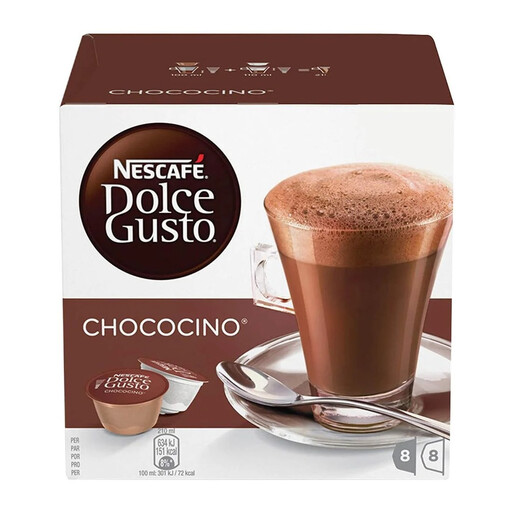
This Chococino option is relevant if you can use a Nescafé Dolce Gusto machine before your lecture and want to plan lunches by servings rather than pod count.
 No image available
For a lunch break with access to a Nescafé Dolce Gusto machine, this pack provides eight servings using a chocolate pod and a milk pod for each drink.
The 256 g pack contains 16 pods. It contains milk and soya; check the current pack label if you need to avoid either ingredient. The pods cannot be prepared with a kettle alone.
No. Check the machine system before buying: Tesco labels Galaxy Hot Chocolate pods as compatible with Nescafé Dolce Gusto machines, while Cadbury Hot Chocolate T DISCs are for TASSIMO machines.
No. NESCAFÉ Dolce Gusto lists eight chocolate pods and eight milk pods, used in pairs to make eight mugs. Count servings, not individual capsules, when planning how long the pack will last.
Check the ingredients and allergen statement on the current pack of the exact product. Tesco’s Galaxy and Cadbury TASSIMO listings declare milk and soya, while NESCAFÉ Dolce Gusto lists milk powder and soya lecithin in Chococino.
Agree who will follow the instructions for the machine in your kitchen. NESCAFÉ Dolce Gusto recommends flushing after every use and descaling every three to four months; TASSIMO recommends a cleaning cycle at least monthly and descaling when needed.
Compare hot chocolate powders or sachets instead of buying pods that require a matching machine. Check the chosen product’s preparation directions and ingredients before taking it to campus.