Fast-turnaround capture deliverers
If you regularly move large capture folders or review files from the handover drive, a portable SSD is worth considering. Samsung’s stated T7 Shield speeds depend on a compatible computer, cable and connection.


Choose a portable USB 3.2 Gen 2 SSD if repeated capture transfers or working from the drive are your priorities; choose a portable HDD for a carryable archive, or a mains-powered desktop HDD for storage kept at a desk. Before copying the files, confirm the project size, the client’s receiving device and the required file format. If the captures contain personal data or confidential material, agree how the client will access them and how long copies will be retained.
If you regularly move large capture folders or review files from the handover drive, a portable SSD is worth considering. Samsung’s stated T7 Shield speeds depend on a compatible computer, cable and connection.
If you retain several sessions or project versions, assess the space needed for the archive separately from the immediate delivery copy. Seagate offers portable Expansion HDDs up to 5TB; its larger Expansion Desktop range needs mains power and suits storage kept at a workspace.
If captures contain personal information or confidential client material, consider access controls alongside capacity and connection requirements. The UK Information Commissioner’s Office advises on encryption for portable media containing personal information and on deleting records in line with an appropriate retention schedule.
Decide whether the drive is primarily for a quick physical handover or a retained archive, then check how the client will connect to and read it.
Choose it when: repeated copying, direct-drive review or compact transport matters most.
Accept: the quoted maximum transfer speed depends on the computer, cable and connection.
Choose it when: you need to carry a larger collection of captures or project versions.
Accept: the cited Seagate Expansion portable route uses USB 3.0 rather than the cited SSDs’ USB 3.2 Gen 2 interface.
Choose it when: the project archive will stay at a fixed workspace.
Accept: Seagate’s Expansion Desktop range needs a power adapter, making it less convenient to hand over as a physical drive.
| Concern | What to check | Who this matters to |
|---|---|---|
| Transfer and review time | Check the sending computer’s port and cable against the drive’s interface; treat advertised speeds as maximums, not expected copy times. | When I need to send large capture folders repeatedly, waiting for each copy can hold up the handover. Around 33% of consumers put transfer and review time first. |
| Archive capacity | Allow for the expected capture package and retained project versions; decide whether the archive itself must travel. | Keeping several sessions and versions together matters more to me than moving one folder quickly. For around 25% of consumers, archive capacity is the primary concern. |
| Confidentiality and retention | Agree a recipient-compatible access method and a retention and deletion plan if files contain personal data or confidential material. | If recordings contain personal or client-confidential material, I need to control access and know when retained copies will be removed. Around 25% of consumers primarily prioritise confidentiality and retention. |
| Recipient compatibility | Confirm the client device’s file-system, capacity, partition and power requirements before formatting the drive. | A drive I can read on my computer is little use if the client’s device cannot open the files. Recipient compatibility is the main concern for around 17% of consumers. |
Samsung quotes up to 1,050MB/s read and 1,000MB/s write for the T7 Shield, but those maximums require USB 3.2 Gen 2 support, a compatible cable and UASP.
Check the sending computer’s port and the cable you will use before making transfer time central to the purchase.
Seagate notes that receiving devices can have different format, capacity, power and partition requirements. Changing the format after copying can erase the deliverables.
Confirm the client’s actual device and required format before the final copy, and keep another copy of the files while preparing the drive.
Seagate’s Expansion Desktop range needs a power adapter, so the client would need a suitable place to connect and use it.
Keep a desktop HDD for a fixed-location archive; consider a portable drive if the physical device must travel to the client.
For the cited Expansion Desktop setup, Seagate’s user manual says a Micro-B-to-USB-C cable is not included; a USB-C-only computer may need a compatible cable.
For files containing personal data, the UK Information Commissioner’s Office says they should not be kept longer than necessary and advises permanent deletion of electronic records in line with a retention schedule.
Agree why a post-handover copy is needed, limit access while it is retained and arrange appropriate deletion or disposal when it is no longer needed.
The portable T7 Shield SSD line is relevant to compact game-capture handovers where connection speed and protection during transport matter.
The Extreme Portable SSD line offers a portable storage route with a password-protection option.
Expansion portable and desktop HDDs provide separate routes for a carryable archive and storage kept at a workspace.
These portable SSD and HDD choices address physical game-capture handovers and carryable archives. Choose the capacity and connection around the capture package and the client’s device; the 5TB HDD is a capacity-led option, not an SSD.
 No image available
Consider this portable SSD when a larger capture package must travel with the client. Its product name specifies a USB Type-C 3.2 Gen 2 connection; confirm the client’s device and required file format before copying.
 No image available
Consider this portable SSD when a 1TB handover drive fits the capture package and repeated transfers matter. Samsung specifies USB 3.2 Gen 2 for the T7 Shield; its quoted maximum speeds require a compatible host, cable and UASP. Confirm the client’s file-format requirements, and do not treat Samsung’s IP65 claim as protection against immersion.
 No image available
This portable SSD is an option for a 2TB capture handover involving the named PlayStation 5 or PC use cases. Before choosing it for delivery, confirm that the client’s actual device and required file format will work with the drive; check the access method separately if the files are sensitive.
 No image available
Consider this 2TB portable SSD when the capture package needs to travel. If copy time is decisive, check the drive’s write-speed and connection details before choosing it; also confirm the client’s file-format and access requirements.
 No image available
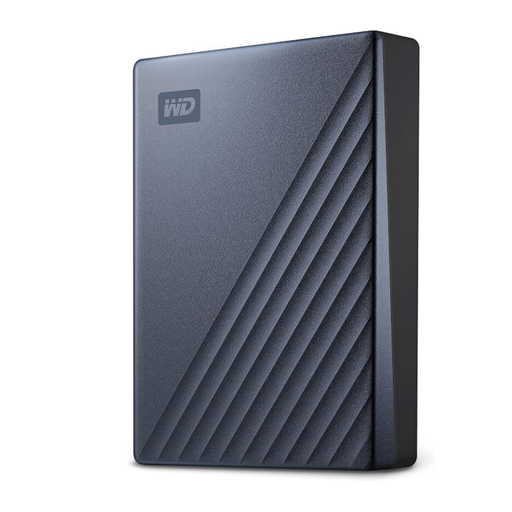
Consider this portable HDD when carrying a larger capture archive matters more than choosing an SSD route. Its name specifies 5TB; confirm that the client can read the chosen file format and allow time for the final copy.
Choose a portable SSD if repeated copying or reviewing captures from the drive is the priority; choose a portable HDD for a carryable archive, or a desktop HDD for an archive kept at a desk. Check the project size and connection before deciding: the cited desktop Expansion range also needs mains power.
Confirm the client’s receiving device, supported file system and any capacity, partition or power requirements before formatting or making the final copy. Seagate warns that non-computer devices can impose these restrictions; its cited Expansion drives require reformatting for Time Machine use.
Assess encryption when the captures contain personal information or confidential material, and agree an access method the client can use. For personal information on USB or backup media, the UK Information Commissioner’s Office explains that encryption can protect against unauthorised access, particularly if media is lost or stolen; the appropriate security measures depend on the material and risk.
Keep a post-handover copy only for a purpose that justifies retaining it. Where the files contain personal data, the UK Information Commissioner’s Office says not to keep it longer than necessary and advises permanent deletion of electronic records in line with a retention schedule.
Check the particular console and its setup requirements rather than relying on the drive’s USB connection alone. Seagate advises checking the console manufacturer’s support information because format, capacity, power and other restrictions can apply.