Choose a portable SSD if editors regularly move active capture folders between workstations; choose a desktop HDD if completed footage mainly needs a larger, stationary archive. If a console supplies the captures, check its capture and formatting requirements before assigning a drive to that job. Whichever drive holds the working files, keep an independent copy of important footage.
Who needs which storage workflow?
Editors moving folders between workstations
Repeated transfers and work directly from a portable drive make connection compatibility and active-project capacity important. Samsung's T7 Shield specifications illustrate why the workstation and cable matter as well as the drive.
Studios keeping a central capture archive
Completed sessions and retained raw footage need space in a drive that can stay at a desk. Western Digital's My Book and Seagate's One Touch Hub ranges illustrate this stationary, capacity-led approach.
Teams capturing from consoles
Copying PS5 clips, recording Xbox captures and storing console games are different tasks. PlayStation and Xbox guidance sets out different workflows, so the intended console job should be settled before a drive is formatted.
What matters when choosing a drive?
Portable SSD for active files
Choose when: Editors frequently hand off large folders or work from the external drive.
Trade-off: Its quoted maximum speed depends on the host and cable, and portability does not replace a backup.
Desktop HDD for the archive
Choose when: Completed sessions and raw footage mainly need a high-capacity home in one workspace.
Trade-off: A stationary drive is less convenient for hand-offs and still needs a separate backup copy.
Drive assigned to console captures
Choose when: A console is the capture source and its particular export or recording requirements are known.
Trade-off: Formatting a drive for one console role can erase files or prevent its use for another role.
| Concern | What to check | Who this matters to |
|---|
| Active-file hand-offs |
Check the drive interface against each workstation's port and cable, then choose capacity for the active projects being moved. |
If I regularly pass large folders to another editor, I want transfers and access from the drive to fit our working day. Around 45% of consumers put this active-file need first. |
| Archive capacity |
Allow space for retained raw clips and exports; plan a separate destination for backup copies. |
When finished sessions must remain available, I need room to keep them without clearing the working drive. For around 33% of consumers, retaining the archive is the primary need. |
| Console capture and formatting |
Identify the console task before formatting: PlayStation describes copying PS5 captures to USB, while Xbox specifies USB 3.0 and NTFS for external capture. |
If our footage starts on a console, I need its capture workflow to work without putting existing files at risk. That console-specific need comes first for around 22% of consumers. |
Mistakes to avoid
-
Treating the archive drive as the only copy
A single drive can be lost, fail or become inaccessible. The National Cyber Security Centre describes a backup as a copy kept in a separate safe location.
Keep an independent copy of important captures away from the active drive, and check that a sample folder can be restored.
-
Reformatting a shared drive before moving its files
Formatting erases existing files, as Apple's Disk Utility guidance warns. Xbox game-storage formatting and external-capture formatting also serve different purposes.
Label drives by role and copy captures to another location before repurposing or formatting one.
-
Choosing an SSD by its maximum speed alone
Samsung's stated T7 Shield maximum read and write speeds depend on a compatible USB 3.2 Gen 2 host and cable, with UASP enabled.
Check the ports on the workstations that will use the drive and keep a suitable cable with it.
-
Confusing PS5 game storage with capture export
PlayStation says PS5 games cannot be played directly from USB extended storage. Copying clips from Media Gallery to a USB drive is a separate task.
Choose for the task you actually need; if you move PS5 games to USB extended storage, allow for copying them back before playing.
Brands relevant to these workflows
Samsung
The T7 Shield portable SSD range is relevant when editors carry active capture folders between workstations.
- Samsung UK lists 1 TB, 2 TB and 4 TB variants and states maximum sequential speeds of 1,050 MB/s read and 1,000 MB/s write under its specified host, cable and UASP conditions.
- Samsung's IP65 and 3 m drop-resistance claims come from controlled internal tests; they do not cover every handling risk or remove the need for backups.
Western Digital
The desktop My Book range is relevant to a fixed workspace storing completed projects and raw footage.
- Western Digital UK lists My Book capacities up to 26 TB and a three-year limited warranty for its cited 18 TB model.
- Those range details do not establish direct-editing performance or console-capture suitability for every variant.
Seagate
One Touch Hub is a desktop archive option for a drive that stays in a shared workspace.
- Seagate lists One Touch Hub capacities from 4 TB to 20 TB and describes computer backup through its Toolkit software.
- Check the particular model, power supply and ports. Software on an archive drive does not make files on that drive an independent backup copy.
LaCie
Rugged SSD4 addresses a mobile workflow where the crew carries capture files between locations.
- LaCie states up to 4,000 MB/s with support for USB 40 Gbps and Thunderbolt 5; its IP54 and physical-resistance claims describe specific protection features.
- Maximum transfer speed depends on a compatible host, physical protection has limits, and availability should be checked before planning around this model.
Joybuy drives for capture-file storage
These Joybuy choices cover portable SSDs for moving active capture folders and a portable HDD for retaining larger folders. Choose a console capture drive by its specific console workflow rather than treating general device compatibility as confirmation that its required formatting will work.
 No image available
Samsung Portable SSD T7, 4 TB, grey
For moving active capture folders while keeping 4 TB of storage on the portable drive.
The product name specifies USB Type-C 3.2 Gen 2. Check workstation ports and cables before relying on a quoted maximum transfer speed, and keep another copy of important footage.
View on Joybuy
 No image available
Samsung T7 Shield MU-PE1T0S, 1 TB, black
For hand-offs of active files when 1 TB covers the folders the team needs to carry.
The product name specifies USB Type-C 3.2 Gen 2. Samsung's T7 Shield maximum-speed and physical-resistance claims have stated test conditions; check the workstation connection and do not treat the drive as a backup on its own.
View on Joybuy
 No image available
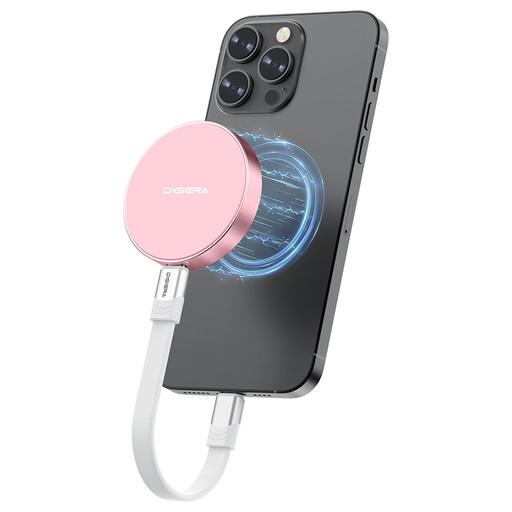
DigiEra LPS2000M-3 magnetic portable SSD, 1 TB, pink
For moving active folders between workstations when its 1 TB capacity meets the team's needs.
The product name specifies USB 3.2 Gen 2×2 and advertises up to 2,000 MB/s. Check that the workstations support that interface before relying on the advertised speed.
View on Joybuy
 No image available
Lexar ES4 portable SSD with magnetic set, 2 TB
For carrying active capture folders when the team needs 2 TB on a portable drive.
The product name specifies USB 3.2 Gen 2 and advertises up to 1,050 MB/s read and 1,000 MB/s write. Check the workstation and cable for those speeds, and confirm the required workflow before formatting it for console captures.
View on Joybuy
 No image available
Western Digital My Passport Ultra portable hard drive, 5 TB, blue
For retaining larger capture folders on a portable 5 TB hard drive rather than choosing a drive solely for active editing.
Check transfer requirements before planning to edit directly from it. Keep a separate copy of important captures.
View on Joybuy
Common questions
Can one external drive hold Xbox games and record Xbox captures?
Not in the same formatted role: Xbox Support says external capture uses a USB 3.0, NTFS-formatted drive, while storage formatted for Xbox games will not work for captures. Use a separate capture drive, or move existing files before repurposing and formatting one.
Can a PS5 copy game clips to an external USB drive?
Yes. PlayStation UK says captures can be copied from Media Gallery to a connected USB drive. That clip-export task is distinct from using USB extended storage for games.
Can PS5 games run directly from USB extended storage?
No. PlayStation says PS5 games stored there must be copied back to console storage before playing; the restriction does not mean you cannot export capture clips to USB.
What format should a drive shared between Windows PCs and Macs use?
For a disk over 32 GB used with both, Apple's Disk Utility guidance points to ExFAT. Move existing captures elsewhere before formatting, and check console requirements separately if the drive will also have a console task.
Is one archive drive enough to protect the studio's captures?
No. The National Cyber Security Centre describes a backup as a separate copy stored in a safe location. Keep another independent copy of important captures and check that files can be restored from it.


