Hosts prioritising organic production
If the organic status of the finished milkshake matters, check its label and certification information. Organic milk in a recipe, local sourcing and a returnable bottle are different claims.


For a UK board game night, choose an organic-labelled milkshake if organic production matters to you and you can check the finished drink’s label and certification information. Otherwise, choose between a shareable container and individual drinks according to how many people you are serving, then check the exact flavour’s allergens, total sugars and storage instructions. An organic claim does not answer those other questions.
If the organic status of the finished milkshake matters, check its label and certification information. Organic milk in a recipe, local sourcing and a returnable bottle are different claims.
A shareable container calls for cups and a plan for anything left after opening. Separate drinks make portions and flavour choices easier to organise, but each guest still needs a suitable ingredient and allergen label.
Use the “of which sugars” figure per 100ml to compare flavours, then consider the amount each person will drink. Neither “organic” nor “No Added Sugar” tells you the total sugars in a serving.
Choose it when: Organic production is your priority and you can check the claim for the finished drink. Milk Club describes a 750ml strawberry milkshake made with organic milk; Woodhorn Farm says it sells organic milkshakes at its Oving Cow Shed.
Bear in mind: A statement about organic milk alone does not establish the organic status of every ingredient or settle the finished drink’s allergen and nutrition questions.
Choose it when: Several players want the same flavour and you have cups and fridge space. ASDA lists a 950ml Müller Frijj Cookie Dough bottle, while The Real Milkshake Company describes one-litre cartons.
Bear in mind: Someone needs to pour the drinks and follow the exact pack’s instructions once it is opened.
Choose them when: Players want separate portions or different flavours. Tesco lists a 400ml Yazoo Chocolate bottle, and Müller lists a 330ml Frijj Chocolate bottle.
Bear in mind: More separate containers need managing, and each flavour needs its own ingredient, allergen and nutrition check.
| Priority | What to check | Your needs |
|---|---|---|
| Organic status | Check the finished product’s organic wording and certification information, rather than relying on an organic dairy ingredient or local sourcing alone. Defra’s UK organic-labelling guidance says a food marketed as organic must meet production and certification requirements, including at least 95% organic agricultural ingredients. | Organic production matters to me, so I want the claim to apply to the milkshake I am actually buying. |
| Allergens | Read the current ingredients and allergen declaration for the exact flavour. The cited Yazoo, Müller Frijj and Mars drinks list milk; Tesco’s Mars listing also lists barley. | Everyone at the table needs a drink that fits their own allergen requirements, not just a flavour they like. |
| Total sugars | Compare “of which sugars” per 100ml, then consider the intended portion. Tesco lists 8.6g per 100ml for Yazoo Chocolate and 6.5g per 100ml for Mars No Added Sugar; ASDA lists 10.8g per 100ml for Frijj Cookie Dough. These figures apply to those specific products. | I want to compare the drinks on the same basis before deciding how much to serve. A front-of-pack claim alone will not give me that figure. |
| Serving and storage | Match pack size to the group and check whether cups are needed. Follow the chosen pack’s storage directions: ASDA’s 950ml Frijj listing says to refrigerate after opening and consume within three days. | Separate drinks would simplify portions; for a shared bottle, I need cups, fridge space and a plan for what remains. |
Defra’s UK organic-labelling guidance concerns how food is produced and certified. It does not tell you how much sugar a particular milkshake contains or whether it contains milk.
Check organic status separately from the exact flavour’s nutrition panel and allergen declaration.
Tesco lists 6.5g sugars per 100ml for its Mars No Added Sugar milk drink. The wording on the front does not replace the total-sugars figure.
Compare “of which sugars” per 100ml, then use the serving size to work out the amount in the drink you plan to pour.
The cited Yazoo, Müller Frijj and Mars drinks list milk, and the cited Mars drink also lists barley. Organic wording and a familiar flavour do not settle an attendee’s allergen requirements.
Ask guests about dietary needs before shopping, read each current pack and arrange a separately suitable drink where needed.
A shared container needs cups and room in the fridge after opening. ASDA’s 950ml Frijj listing specifies refrigeration and consumption within three days once opened.
Choose a larger format when the group can use it in line with its pack instructions; otherwise consider separate drinks or a smaller container.
These examples illustrate different formats and claims; a brand name does not establish the ingredients or organic status of every product it sells.
Milk Club describes a 750ml strawberry milkshake made with organic milk from Berkeley Farm and supplied in a returnable glass bottle.
Woodhorn Farm says it sells organic milkshakes through contactless vending machines at the Oving Cow Shed.
Tesco lists Yazoo Chocolate as a 400ml milk drink containing milk, with 8.6g sugars per 100ml.
Müller describes a 330ml UHT Chocolate milkshake, while ASDA lists a 950ml Cookie Dough milkshake.
Tesco lists a 400ml Mars No Added Sugar milk drink with 6.5g sugars per 100ml.
The Real Milkshake Company describes a range of one-litre cartons sold through Tesco, Morrisons and Asda.
These multipacks offer separate strawberry-and-cream or vanilla portions for a game night. If organic status is your priority, check the finished product’s organic label and certification information before choosing either one.
 No image available
The eight 330ml drinks provide separate portions without pouring from a shared container. This is described as a protein nutrition shake; check its ingredients and allergen label for your guests, and its finished-product organic information if that matters to your choice.
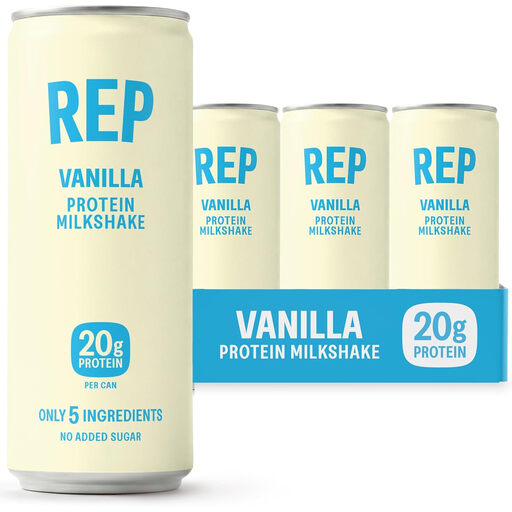 No image available
The eight 250ml cans offer individual portions in a smaller format than the 330ml option above. Check the current ingredients, allergen declaration and total-sugars figure on the can; if you specifically want an organic milkshake, check the finished product’s organic information too.
It needs to apply to the finished food, not just suggest that one ingredient is organic. Defra’s UK organic-labelling guidance says a food marketed as organic must meet the applicable production rules, contain at least 95% organic agricultural ingredients and meet approved-control-body certification requirements. Check the finished product’s label and certification information when that claim drives your purchase.
No: organic status does not remove milk from a dairy drink. Check the exact product’s current ingredients and allergen declaration. The Food Standards Agency says a “free-from milk” label guarantees that milk is absent; do not infer that status from an organic claim.
No. Tesco’s listing for the 400ml Mars No Added Sugar drink gives 6.5g sugars per 100ml. Compare the “of which sugars” figure and the portion you intend to serve rather than treating the front-of-pack wording as a total-sugars figure.
Check the exact pack’s unopened and post-opening storage instructions. ASDA lists its 950ml Müller Frijj Cookie Dough bottle for ambient storage before opening, then says to refrigerate it and consume it within three days after opening. Other products may have different directions.
No. That wording describes the milk ingredient, not necessarily every ingredient in the finished shake. Defra’s UK guidance sets conditions for marketing a finished food as organic, including an organic-agricultural-ingredient threshold; check the finished drink’s own claim and certification information.