Players using a sunlit TV room
You mainly play on a TV where windows or lamps can reflect in the screen. TV-testing publisher RTINGS notes that brightness can help counter glare, but reflection handling matters too.


Choose a console that runs the open-world quest games you want, then assess your TV or monitor: brightness and reflection handling matter more to daytime visibility than the console’s output specifications alone. PS5 and Xbox Series X offer high-resolution home-console routes, Xbox Series S is a disc-free, 1440p-focused option, and Nintendo Switch 2 suits play both at the TV and away from it. Check the exact model, game and display before relying on disc support, 4K, HDR or high-refresh modes.
You mainly play on a TV where windows or lamps can reflect in the screen. TV-testing publisher RTINGS notes that brightness can help counter glare, but reflection handling matters too.
You want to explore quest games on a large screen and care about resolution, HDR or higher refresh rates where your chosen game and display support them.
You want to continue playing away from the TV as well as use a docked display. That flexibility may matter more to you than choosing a console solely for its home-TV output.
For consumers choosing a console for open-world quests in a bright room, check game availability first and assess the screen you will use. Then decide which output modes, game format and playing locations matter to you.
| Concern | What to check | Who this matters to |
|---|---|---|
| Daytime visibility | Check the TV’s brightness and reflection handling; confirm that its HDR and refresh-rate modes work with the console and game. | If windows or lamps reflect in the screen, I need to see dark scenes and quest text without relying on a console upgrade to solve glare. Around 29% of consumers put screen visibility first. |
| Access to quest games | Check each intended game’s platform and format, plus compatibility with games you already own. | I would rather keep access to the quests and existing games I care about than choose by output specifications alone. For around 29% of consumers, game and library access is the primary concern. |
| Home-TV presentation | Compare the exact console model and each game’s modes with your TV’s resolution, refresh rate and supported inputs. | On a large TV, I want to know which resolution and motion settings my games can actually use. Around 24% of consumers prioritise home-TV presentation. |
| Game format and portable play | Decide whether you need a disc drive or handheld play, and check the storage-expansion format if you plan to add capacity. | I need the way I obtain and play games to fit my routine, whether that means using discs or playing away from the TV. Ownership and portability are the leading concern for around 18% of consumers. |
Light reflected in the TV can obscure dark scenes even when the console supports high-resolution or HDR output. RTINGS identifies both brightness and reflection handling as factors in coping with glare.
Assess the TV or monitor and, where practical, position it to reduce direct reflections before choosing a console for its display features.
A console’s maximum output is not a promise about an individual game. Nintendo specifies up to 4K at 60 fps for Switch 2 in TV mode, with 120 fps output available at 1080p or 1440p.
Check the game’s available modes and your display’s supported inputs before treating high-refresh output as a deciding feature.
Xbox Series S has no disc drive, while PlayStation supplies PS5 Pro without one. Xbox Series X also comes in disc-drive and digital-only variants.
List the physical games you want to use and confirm that the exact console variant has a compatible disc drive.
Playing compatible physical discs on PS5 Pro requires a separately sold Disc Drive.
Nintendo specifies microSD Express for expanding Switch 2 game storage; an ordinary microSD card is not the format for that purpose.
Check for microSD Express compatibility before choosing a card for additional game storage.
If the console’s built-in storage does not meet your needs, a compatible expansion card is an additional item to obtain.
PlayStation offers PS5 home-console models with different disc arrangements, including a PS5 Disc Console and a PS5 Pro supplied without a disc drive.
Xbox offers Series X models aimed at native-4K gaming, including disc-drive and digital-only variants, alongside the disc-free, 1440p-focused Series S.
Nintendo Switch 2 combines handheld play with docked TV play.
These options cover Nintendo Switch 2 for handheld and docked play, a disc-drive PS5, and disc-drive or digital-only Xbox Series X variants. For any of them, check that your intended quest games are available and that your screen handles the light in your room.
 No image available
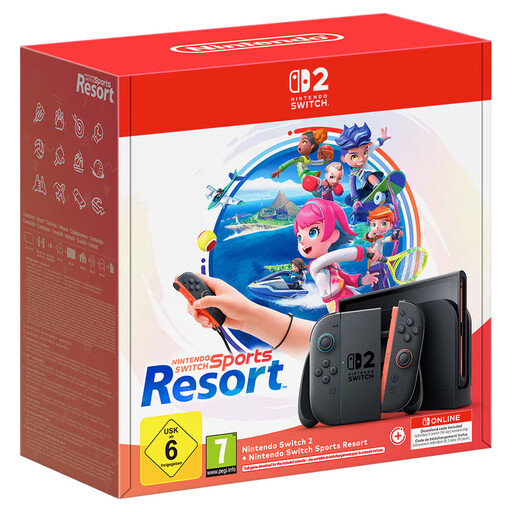
Consider this bundle if you want handheld and docked play and also want the named included game; check your intended open-world titles separately, as Nintendo Switch Sports Resort does not establish access to them.
Nintendo specifies a 7.9-inch 1080p HDR10 handheld display and docked output up to 4K at 60 fps with a compatible game and display.
For play on a bright-room TV, assess the TV’s brightness and reflection handling.
 No image available
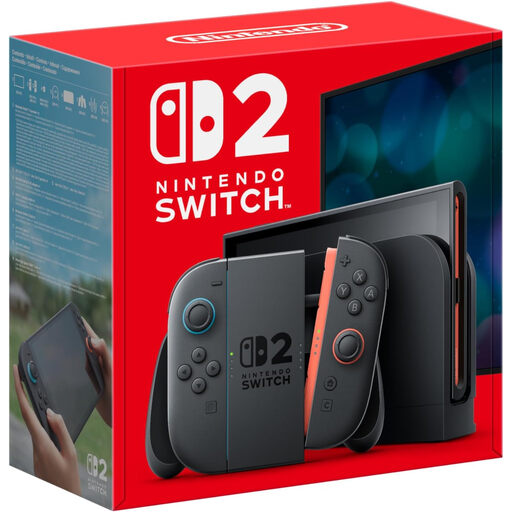
This console suits someone who wants to play both away from the TV and docked, provided their chosen quest games are available on Switch 2.
Nintendo specifies a 7.9-inch 1080p HDR10 handheld display and docked output up to 4K at 60 fps with a compatible game and display.
Check your TV for bright-room visibility; additional game storage requires a compatible microSD Express card.
 No image available
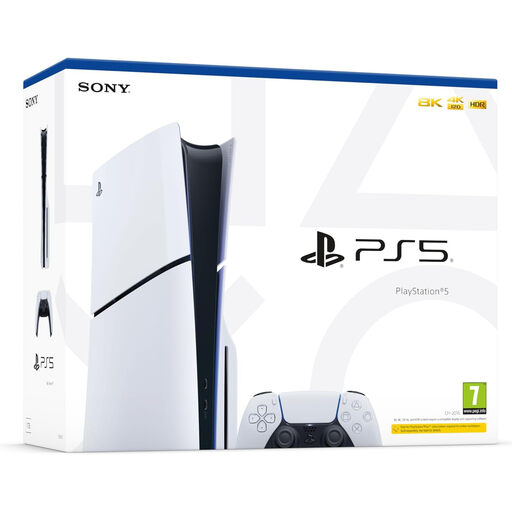
Consider this PS5 if your intended quest games are on PlayStation and you want a built-in disc drive as well as digital purchases.
PlayStation states that PS5 has 4K and HDR capabilities; available output and higher-refresh modes depend on the game and connected display.
The disc drive does not determine how well your TV handles daylight reflections.
 No image available
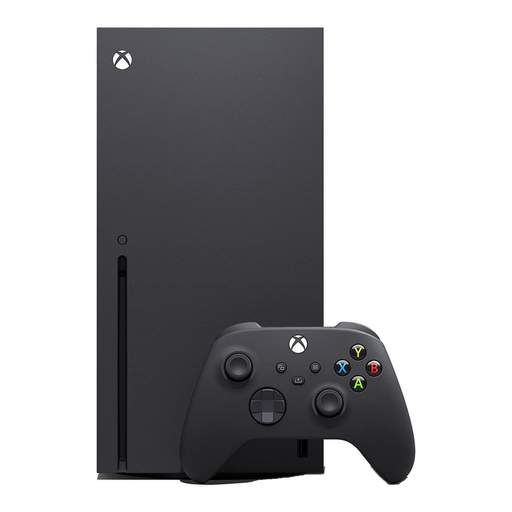
This Series X variant suits Xbox players who want a disc drive and a home-TV console, subject to their chosen quest games being available.
The listed variant has a 4K UHD Blu-ray drive and 1TB storage. Xbox positions Series X for native-4K gaming and states support for up to 120 fps, with actual output varying by game and display.
Check the TV’s reflection handling separately before relying on it for daytime play.
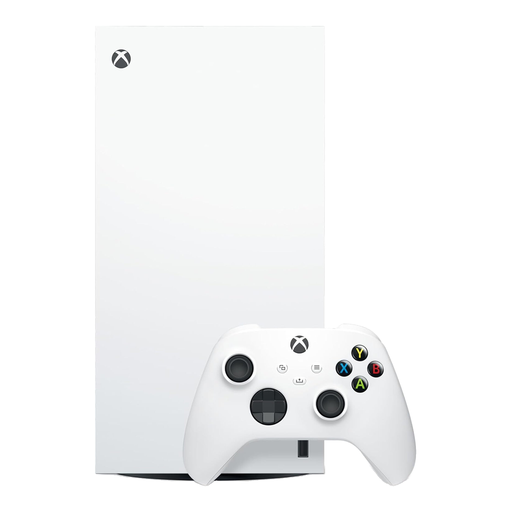 No image available
Consider this variant if your intended quest games are on Xbox and you are comfortable using a console without a disc drive.
It is the 1TB digital-only Series X. Xbox positions Series X for native-4K gaming and states support for up to 120 fps, depending on the game and display.
Physical game discs cannot be used on this variant; for a bright room, also check the TV’s brightness and reflection handling.
No, not by itself. RTINGS notes that TV brightness can help counter glare, but reflection handling also matters; PlayStation likewise says PS5 image quality depends on the connected setup. Assess the screen and room lighting as well as the console.
Only if you want to use a 120 Hz mode supported by your chosen game and console. PlayStation says PS5 enables 120 Hz output for supporting TVs and games; Nintendo specifies that Switch 2 can output up to 120 fps at 1080p or 1440p, while its 4K TV output reaches up to 60 fps. Check the games you plan to play rather than assuming every title has a high-refresh mode.
Choose a disc-drive variant if using compatible physical games matters to you. The PS5 Disc Console has a built-in drive, Xbox Series S is disc-free, and PlayStation supplies PS5 Pro without a drive but offers a separate Disc Drive for compatible discs. Check the exact Xbox Series X variant, since disc-drive and digital-only models both exist.
Nintendo specifies microSD Express for expanding Switch 2 game storage. An ordinary microSD card is not the compatible format for that purpose, so check the card type before choosing additional storage.