Headphone-first quest players
You share a bedroom and need private game audio, with a connection and volume controls that suit your headset rather than relying on TV speakers.


Choose Nintendo Switch 2 if access to the shared TV changes often and you want to continue playing on the console’s own screen. If you mainly play on a TV or monitor, compare PS5 and Xbox Series options by headset use, storage and whether you need a disc drive. Before choosing any console, check that your intended open-world game and edition are available for it and that your headphones work with your planned setup.
You share a bedroom and need private game audio, with a connection and volume controls that suit your headset rather than relying on TV speakers.
You mainly play on a bedroom TV or monitor and want to weigh display capability, storage and whether you can use physical games.
You need to move between a personal screen, tabletop play and a TV when the shared display is not always available.
Start with where you can reliably play, then check how you will listen and buy games. A console’s headline display capability matters only alongside the game and screen you intend to use.
Choose when: You want to continue a supported quest on the console’s own screen or in tabletop mode when the TV is occupied.
Trade-off: Check the exact game’s compatibility and features; storage expansion requires microSD Express, and Bluetooth audio may have latency, according to Nintendo.
Choose when: You mainly use a TV or monitor and want PS5 headset controls, with a disc-capable variant available if physical games matter.
Trade-off: PlayStation 5 Digital Edition has no disc drive; choose its download-only format only if it fits the way you obtain games.
Choose when: You mainly play on a TV or monitor and are comfortable with a disc-free Xbox library and headset audio settings.
Trade-off: Microsoft describes Series S as designed for 1440p gaming with 4K upscaling, not the native 4K capability it identifies for Series X.
| Concern | What to check | Who this matters to |
|---|---|---|
| Private listening | Headset connection and audio-output controls; Bluetooth limitations if applicable. | If I play while someone else rests, I need sound I can keep to myself without losing control of the game audio. Around 40% of consumers put private listening first. |
| TV play and game format | Disc drive, available storage and the intended display’s resolution and refresh rate. | I mainly use a TV or monitor and want the console to suit both my screen and the way I keep games; for around 30% of consumers, that is the primary concern. |
| Flexible play | Handheld and tabletop options, plus the exact game’s platform compatibility. | When the shared TV is occupied, I want to carry on with a supported game without taking over the display. Personal-screen flexibility comes first for around 30% of consumers. |
A maximum resolution or frame-rate capability does not describe every game’s output. Microsoft distinguishes Series S’s 1440p design and possible 4K upscaling from Series X’s native 4K capability; Nintendo specifies conditions for Switch 2’s TV output.
Check the intended game’s supported modes alongside your TV or monitor’s inputs, resolution and refresh rate.
PlayStation 5 Digital Edition has no disc drive, and Microsoft describes Xbox Series S as disc-free. Neither will play a game from a physical disc.
Check which games you own or expect to borrow on disc before settling on a console variant.
Nintendo cautions that Switch 2 Bluetooth audio may have latency, allows one paired Bluetooth-audio device at a time and does not support Bluetooth microphones.
Check how your headset connects and, if you need voice chat, confirm the requirements of the game and your planned setup.
A TV-first PS5 route with disc and Digital Edition variants. PlayStation Support describes controls for selecting audio output and adjusting headphone volume.
A TV-console route that includes the disc-free Series S. Microsoft Xbox Support describes headset spatial-audio settings, including Windows Sonic.
Switch 2 offers handheld, tabletop and TV play for a room where access to the shared display changes.
These Switch 2 and PS5 options cover play on a personal screen and TV-first setups. Compare the exact bundle and disc format you want, and confirm that your intended game and edition work on the console before ordering.
 No image available
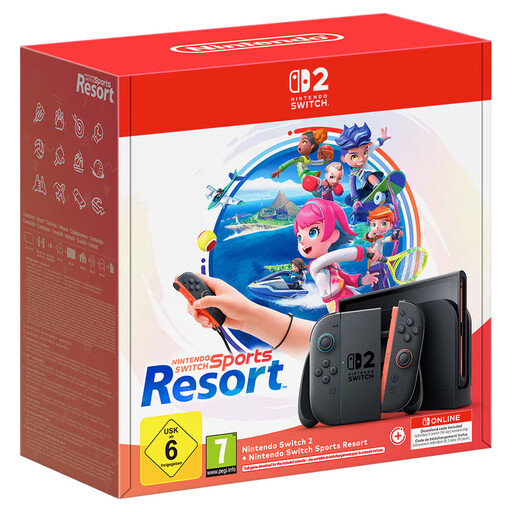
Consider this bundle if you want handheld or tabletop play when the shared TV is occupied. Nintendo specifies a 7.9-inch screen, 256 GB storage and a 3.5 mm audio jack for Switch 2; expansion requires microSD Express. Check the bundle contents and your intended quest game’s compatibility.
 No image available
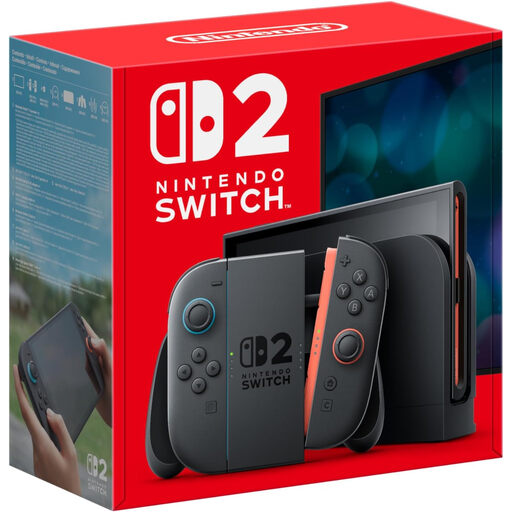
This console suits a player who needs to move between handheld, tabletop and TV play. Nintendo specifies a 7.9-inch screen, 256 GB storage and a 3.5 mm audio jack for Switch 2; storage expansion requires microSD Express. Check that your chosen quest game is compatible and that your headset connection suits shared-room play.
 No image available
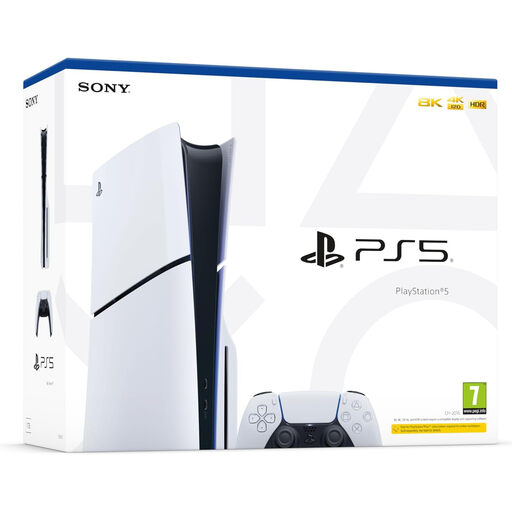
Consider this TV-connected PS5 if using compatible physical game discs matters to you. Its listing specifies a built-in disc drive and up-to-120-fps output in supported games and displays; PlayStation Support describes headphone-output and volume controls. Check the intended game’s availability and supported display modes.
 No image available
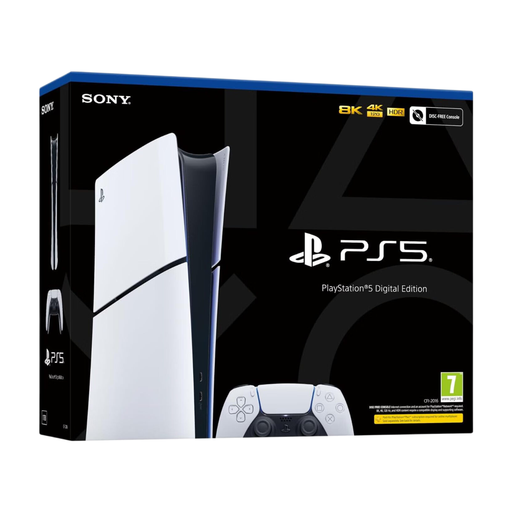
This TV-first PS5 suits players who plan to obtain games digitally and use headset controls for private listening. The listing identifies an 825 GB Digital Edition with no disc drive and an account requirement for game purchases. Check your intended game’s availability and storage needs before choosing the download-only variant.
You do not need one to operate the console, but headphones let you keep game audio private. PlayStation Support describes PS5 headphone-volume and output controls, Microsoft Xbox Support describes Xbox headset audio settings, and Nintendo specifies a 3.5 mm jack and Bluetooth audio for Switch 2. Check the connection you plan to use; Nintendo cautions that Switch 2 Bluetooth audio may have latency and does not support Bluetooth microphones.
Choose a disc-capable variant if you need to use compatible physical games. PlayStation Direct identifies a disc drive on the PS5 1 TB disc console, while PlayStation says the PS5 Digital Edition has none; Microsoft describes Xbox Series S as disc-free. For a digital-only model, check account access and how much storage your intended games will need.
No: Nintendo specifies compatible microSD Express cards for Switch 2 storage expansion. Check the card type before choosing one for games; an ordinary non-Express microSD card is not an equivalent expansion option.