
24/7 Customer Support

Free returns

Same-day & Next-day Delivery

Quality Guaranteed

Unlock Your Welcome Offers: FREE Delivery | Up to 80% OFF | Free 30-day JoyPlus trial
Download the APP
A gaming controller is your primary connection to virtual worlds, but when it starts to fail—whether through stick drift, unresponsive buttons or a dwindling battery life—it can disrupt your entire experience. Perhaps you are not replacing a faulty unit but are looking for a competitive edge, an extra controller for local multiplayer or simply a design that better matches your setup.
Navigating the market for gaming controllers can be confusing. With terms like "pro," "customisable" and "haptic" being used frequently, it is important to understand what these features mean for your gameplay. This guide offers practical advice to help you choose a suitable controller for your PlayStation 5 or Nintendo Switch, focusing on the features that matter.
Before looking at specific models, consider these key factors to narrow down your options.
The choice between a wired and a wireless gamepad often comes down to convenience versus performance. A wired controller connects directly to your console via a USB cable, eliminating concerns about battery life and input lag. This makes it a reliable option for competitive players or anyone who primarily plays in one location. In contrast, a wireless controller offers the freedom to play from anywhere in the room without cable clutter, though it requires regular charging.
A standard official PS5 controller or Nintendo Switch controller is designed to provide an excellent all-round experience for the vast majority of games and players. However, if you are serious about performance, a pro controller might be a worthwhile consideration. These advanced gamepads often feature extra, customisable controller options, such as remappable back buttons, adjustable trigger sensitivity and interchangeable thumbsticks. These features can provide a tangible advantage in fast-paced games by allowing you to perform actions more quickly and comfortably.
How a controller feels in your hands is crucial, especially during long gaming sessions. Ergonomics, weight and button placement all contribute to overall comfort. Beyond the basics, look for features that enhance immersion, such as the advanced haptic feedback and adaptive triggers found in the PS5 controller. For others, aesthetics are paramount, with special editions like a themed Zelda controller offering a way to celebrate a favourite franchise.
Based on features, user needs and platform compatibility, here are our recommendations for players in 2026.
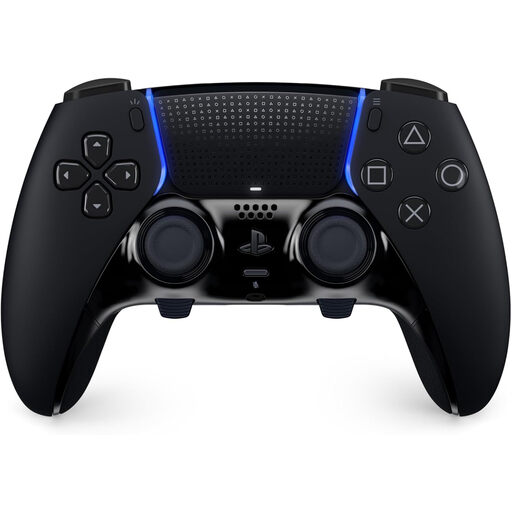
Why It Stands Out The DualSense Edge is Sony's answer for the competitive PS5 player. It takes the foundational excellence of the standard DualSense and adds a deep layer of personalisation. With this pro controller, you can remap any button, fine-tune stick sensitivity and dead zones and adjust the travel distance of the triggers. The inclusion of two swappable back buttons provides a significant performance advantage, allowing you to keep your thumbs on the sticks while accessing crucial actions. A standout feature is the replaceable stick modules (sold separately), which offers a practical solution to the long-term issue of stick drift.
Pros
Who is it for? This is for the serious PS5 gamer who wants to fine-tune their equipment for peak performance and gain a competitive advantage in their favourite titles.
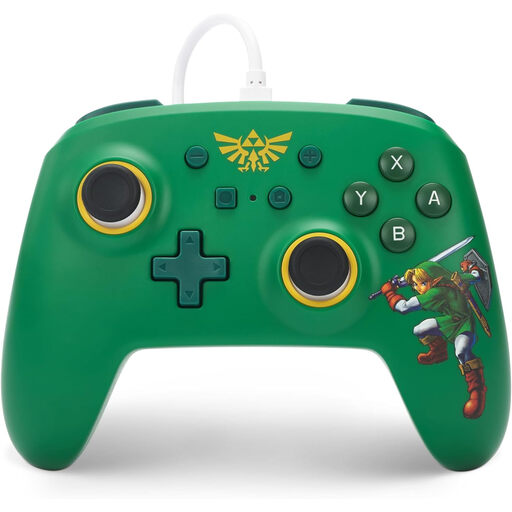
Why It Stands Out As an officially licensed Nintendo Switch controller, this PowerA controller offers a reliable and comfortable alternative to the standard Joy-Cons. Its traditional ergonomic shape is well-suited for longer play sessions, and the wired connection ensures a stable, lag-free experience without any battery concerns. The striking Legend of Zelda design is a clear highlight for fans, but the controller also delivers on performance. It includes two mappable Advanced Gaming Buttons on the back for custom inputs and features anti-friction rings around the thumbsticks for smooth, precise movements.
Pros
Who is it for? Nintendo Switch players seeking a dependable, feature-rich wired controller for home use, especially those who prefer a traditional gamepad and appreciate themed designs.
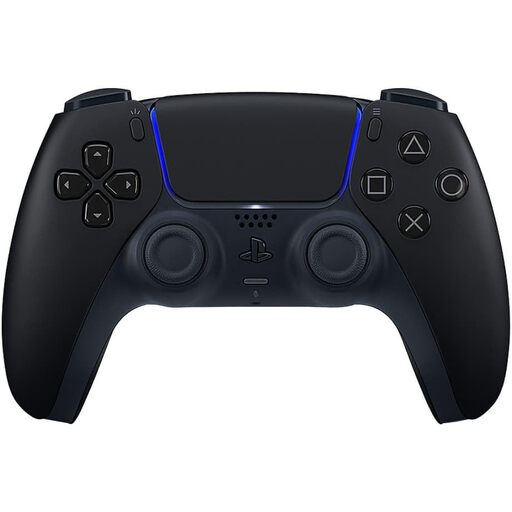
Why It Stands Out The standard DualSense wireless gamepad remains the definitive controller for the PlayStation 5. Its groundbreaking features—haptic feedback that simulates environmental textures and impacts, and adaptive triggers that create realistic tension—provide a level of immersion that is unmatched by most third-party alternatives. This model comes in a sleek Midnight Black finish, offering a sophisticated look that resists fingerprints better than the original white. It is the perfect choice for anyone needing a reliable spare, a replacement or simply a stylish second controller for couch co-op.
Pros
Who is it for? Any PS5 owner who needs a high-quality, reliable official PS5 controller for any type of game, whether as a replacement or an addition for multiplayer sessions.
The recommendations above cover a range of needs, but the right controller is also a matter of personal taste. If you're looking for a different aesthetic or more options, explore our full collection of coloured game controllers to find the perfect style for your setup.
1. Can I use a PS5 controller on a PC? Yes, both the standard DualSense PS5 controller and the DualSense Edge can connect to a PC via a USB-C cable or Bluetooth. Many games on platforms like Steam offer native support. However, advanced features like adaptive triggers and full haptic feedback are only available in a select number of PC titles that have been specifically developed to support them.
2. Is a wired controller better for a Nintendo Switch? A wired controller can be a better choice depending on your play style. It eliminates input lag, which is beneficial for competitive games, and you never have to worry about charging it. This makes options like the PowerA controller ideal for dedicated home gaming setups. If you value the freedom to move around or play in different rooms, a wireless controller may be more suitable.
3. What is the main benefit of a pro controller? A pro controller is designed to offer enhanced performance and personalisation. The primary benefits come from features like mappable back paddles or buttons, which let you perform actions without taking your thumbs off the analogue sticks. Additionally, adjustable trigger stops, swappable components and customisable sensitivity profiles allow you to tailor the controller's response to your exact preferences, potentially improving reaction time and comfort.