Counter-strafing and peeking practisers
If you practise stopping to shoot, jiggle peeks or quick directional reversals, controllable movement-key release matters more to your choice than a polling-rate claim alone.


For counter-strafing, peeking and quick changes of direction, look for Rapid Trigger and adjustable actuation so you can tune movement-key release and re-press behaviour. Choose a compact layout if mouse room matters, but avoid making every key highly sensitive; check the rules for your game, server or tournament before enabling separate directional-priority features.
If you practise stopping to shoot, jiggle peeks or quick directional reversals, controllable movement-key release matters more to your choice than a polling-rate claim alone.
If broad mouse movements compete with keyboard space, a compact board may fit your desk better. Check which arrow and navigation keys you still need within reach.
If you use one keyboard across games or organised events, separate profiles and an accessible way to disable directional-priority features can help you follow the rules of each setting.
Start with movement-key control, then decide how much sensitivity you can use consistently. Check layout and game-specific input rules before settling on a model.
| Concern | What to check | Who this matters to |
|---|---|---|
| Movement-key response | Check the exact model for Rapid Trigger and adjustable actuation, including whether movement keys can be tuned individually. | If I am practising counter-strafing, I want to release and press a movement key repeatedly without losing control of the timing. Around 40% of consumers put controllable movement response first. |
| Consistent inputs | Check the adjustment range and whether you can keep other keys less sensitive; follow any model-specific setup guidance. | Very shallow settings could turn an uncertain finger movement into an unwanted input, so I need settings I can repeat reliably. Consistency is the primary need for around 30% of consumers. |
| Game rules and profiles | Identify any separate SOCD or latest-input feature, how to disable it and the current rules for your game and event. | When I switch games or enter organised play, I need to know which directional settings are permitted and change them without confusion. Around 20% of consumers put rule-aware configuration first. |
| Layout for daily use | Check the physical ISO or ANSI layout, printed legends and whether you need dedicated arrows, navigation keys or a numpad. | I still type and use shortcuts away from games, so the keys and legends must suit those tasks as well as my desk space. Layout fit comes first for around 10% of consumers. |
An overly sensitive setting can cause unintended presses and make movement practice less repeatable.
Begin with a conservative setting on movement keys, then shorten the travel gradually if your inputs remain consistent. Keep other keys less sensitive where the keyboard allows it.
Rapid Trigger changes how a key activates and resets as it moves. SOCD or latest-input features instead affect how opposing directions are resolved, and may face different game rules.
Check the feature names and controls on your chosen model. Leave directional-priority settings off unless the current rules for your game, server and tournament permit them.
ISO and ANSI keyboards differ physically. Changing your operating-system language does not change the characters printed on the keycaps.
Check photos and specifications for the precise physical layout and legends you want; an ISO label alone does not establish UK legends.
If the supplied legends do not suit you, changing them may require compatible replacement keycaps.
A model shown by its manufacturer may have a different variant or availability on a retailer's product page.
Before ordering, check the retailer page for the exact model, layout, switch type, availability and applicable warranty terms.
Wooting's 80HE is an 80% analogue Hall-effect model with Rapid Trigger and adjustable actuation.
Razer's Huntsman V3 Pro 8KHz line uses analogue optical switches, Rapid Trigger and adjustable actuation.
The Apex Pro TKL Gen 3 pairs a TKL layout with adjustable OmniPoint magnetic switches and Rapid Trigger.
Corsair's wired K70 PRO TKL Hall Effect model has magnetic switches, Rapid Trigger and adjustable actuation.
These compact keyboards are options to examine if you want to tune movement-key inputs while keeping space for your mouse. Compare each model's stated layout and settings against the keys you need for play and everyday use.
 No image available
Consider its compact layout if movement practice and mouse room both matter to you. The product name identifies an analogue gaming keyboard with a UK layout; check how its movement-key settings and separate Speed Tap feature are configured before play.
 No image available
Its 60% format suits a desk where mouse room takes priority over dedicated navigation keys. The product name identifies an analogue optical keyboard; check its physical layout and printed legends if you need a particular UK key arrangement, and review the rules before enabling its separate Snap Tap feature.
 No image available
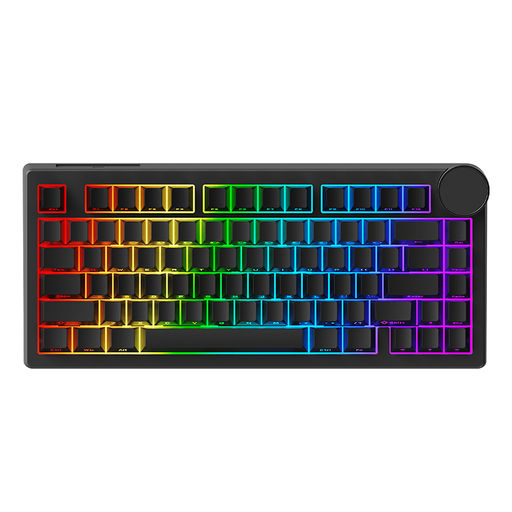
Consider the 75% format if you want a compact board without choosing a 60% arrangement. The named variant has magnetic switches, side-engraved black keycaps and a metal knob; confirm its physical layout and legends before ordering.
 No image available
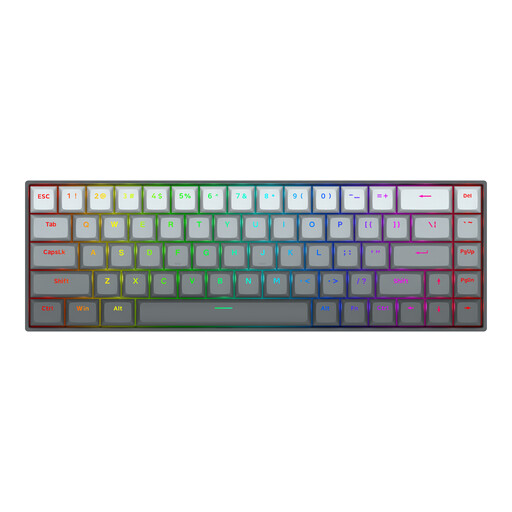
Its compact format may suit movement practice where desk space is tight. The product name specifies magnetic switches, Rapid Trigger, a metal top plate and an 8,000 Hz polling rate; that rate alone does not establish a gameplay benefit. Check whether the US layout and its legends suit your other tasks.
 No image available
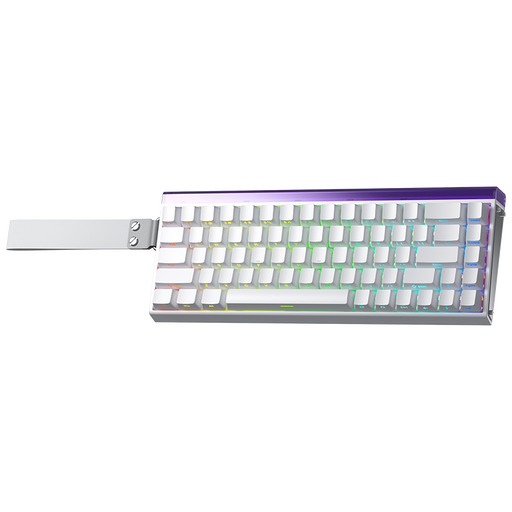
The named 60% wired variant is worth considering if you prioritise mouse room and can work with fewer dedicated keys. Its product name specifies Hall-effect magnetic switches, Rapid Trigger, adjustable actuation, 8K polling and a US layout; check the usable actuation range and physical key arrangement before buying.
No. Rapid Trigger concerns activation and reset as a key moves; SOCD or latest-input features resolve overlapping opposing directions. Check and configure them separately.
Wooting's April 2026 Counter-Strike 2 guidance says Valve prohibited hardware-assisted SOCD resolution on Valve servers in August 2024, including Wooting's Snappy Tappy and Rappy Snappy features. Check the current rules for your server and tournament before using any directional-priority setting.
Usually not: begin with controllable settings on movement keys and keep other keys less sensitive if the model allows it. For its K70 PRO TKL, Corsair recommends 0.3–3.6 mm for accuracy and warns that settings outside that range can affect consistency.
UK legends are not inherently required for movement practice, but the physical layout and printed keys may matter for typing and shortcuts. Wooting's layout guidance distinguishes ISO from ANSI; check the exact variant rather than relying on an operating-system language setting.
Not necessarily. Rapid Trigger and controllable actuation address movement-key release and repeat presses more directly. Treat a manufacturer's polling or latency figure within its stated configuration, and weigh it alongside layout, settings and game-rule compatibility.