What matters when choosing
Decide how much mouse room you need, then check which keys you can comfortably use through shortcuts. Treat configurable switch behaviour as a separate choice from keyboard size.
| Concern |
What to check |
Who this matters to |
| Mouse room |
Compare the keyboard’s footprint and check which arrows, function keys and navigation controls move to shortcuts on a 60% layout. |
If wide mouse swipes feel cramped at my desk, I would give up some dedicated keys for more room to aim; around 40% of consumers put mouse space first. |
| Movement-input tuning |
Check whether the exact model offers adjustable actuation or rapid trigger, and how its settings are changed and saved. |
I want to adjust how my movement keys respond without making accidental presses more likely; around 40% of consumers would make input tuning their primary concern. |
| Dedicated-key access |
List the arrows, function keys and navigation commands you use frequently, then compare 65%, 75% and TKL layouts. |
If I use the keyboard for work or games with many secondary commands, I would accept a wider board to keep those keys close at hand; around 20% of consumers prioritise dedicated-key access. |
Joybuy product choices
These compact keyboards cover 60% choices that favour mouse room and smaller layouts for players considering more dedicated keys. Check each variant’s keycap layout and input controls against your own setup.
 No image available
Razer Huntsman V3 Pro Mini 60% analogue optical keyboard
Consider this model if mouse room and configurable movement inputs matter more to you than dedicated keys.
Razer specifies rapid trigger and 0.1–4.0 mm adjustable actuation for the Huntsman V3 Pro Mini. Confirm that the selected keycap layout suits your typing needs, and check event rules before using configurable input features in a tournament.
Joybuy
 No image available
ASUS ROG Falchion Ace HFX 65 analogue keyboard, UK layout
Consider this compact-keyboard route if retaining dedicated controls matters enough to give up some mouse room.
The product name specifies an analogue keyboard and UK layout. Check its dimensions against your available desk space and confirm that its key arrangement covers the commands you use.
Joybuy
 No image available
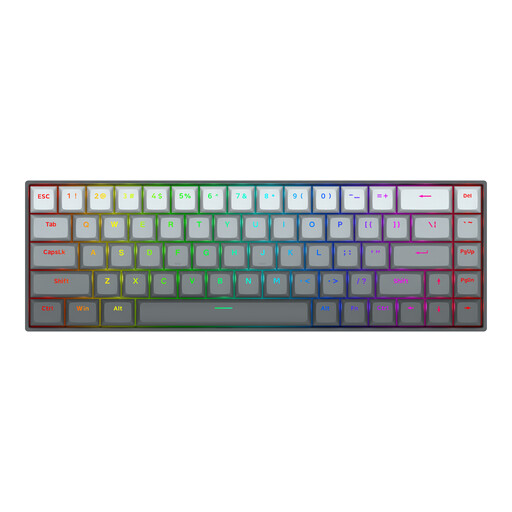
Redragon M68 68-key magnetic-switch keyboard, US layout
The 68-key format is worth considering if you want a compact desk setup while keeping more keys available than on a 60% board.
Its product name specifies magnetic switches, rapid trigger, a metal top plate and an 8000 Hz polling-rate claim. Check that the stated US layout suits your typing needs.
Joybuy
 No image available
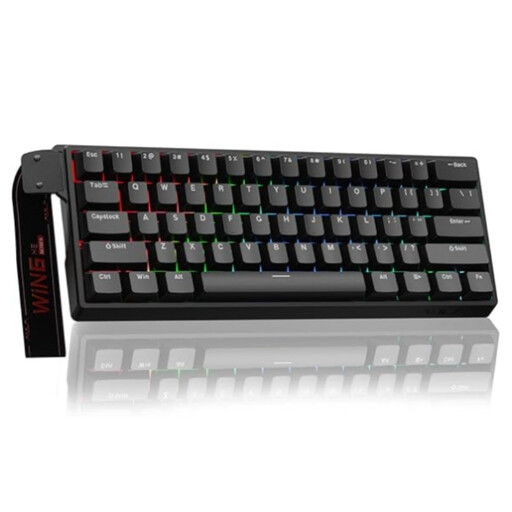
AULA WIN60HE 60% wired magnetic-switch keyboard, Black/Graywood Magnetic Switch
This 60% wired option is for players who put mouse space first and want to configure movement-key inputs.
The product name specifies hot-swappable magnetic switches, adjustable actuation, rapid trigger and an 8000 Hz polling-rate claim. Check the selected keycap layout and how to access your secondary commands.
Joybuy
 No image available
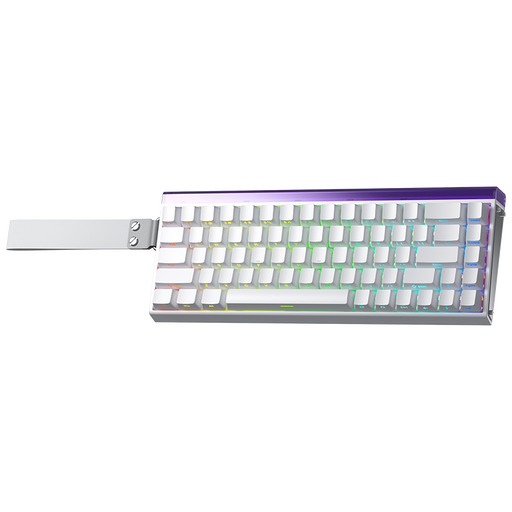
AULA Hero 68 60% magnetic-switch keyboard, White&Black King Magnetic Switch, US layout
Consider this 60% model if a small footprint and adjustable movement-key inputs are your priorities.
The product name specifies Hall Effect magnetic switches, adjustable actuation, rapid trigger and a US layout. Check that its key arrangement and US-layout legends work for your other tasks.
Joybuy
Common questions
Should I choose 60%, 65%, 75% or TKL for arena matches at a small desk?
Choose 60% when maximum mouse room matters more than dedicated arrows, function keys and navigation controls. Logitech’s layout guidance describes 65% as retaining arrows and some navigation keys, 75% as adding a function row, and TKL as keeping those key groups while omitting the numpad; check which arrangement fits both your bindings and your desk.
Do rapid trigger and adjustable actuation make a keyboard better for every player?
No: they let you configure when supported keys actuate or reset, rather than guaranteeing better results. If movement-input tuning matters to you, check the exact model’s controls and begin with settings that do not cause unwanted presses.
Can I use configurable input features in an online tournament?
Check the rules for the exact game, organiser and event before using them; ordinary online play does not establish tournament permission. Epic Games directs Fortnite competitors to its event-specific Online Tournament Rules Library for eligibility requirements.
How do I avoid ordering the wrong keyboard layout?
Check the selected product variant for an explicitly stated UK layout if you need UK QWERTY, then inspect its key legends. Razer’s EU Huntsman V3 Pro Mini listing, for example, presents UK layout as a selectable option rather than the only layout.
What should I do with an old gaming keyboard?
Check local electrical-waste collection or applicable retailer take-back options rather than putting it in general waste. GOV.UK’s guidance on waste electrical and electronic equipment explains the role of collection, reuse and recycling.


