Players who need mouse room
If you make broad mouse movements during arena matches, a narrower board can free desk space. A TKL layout removes the number pad while keeping the arrow and function keys you may need after the match, as RTINGS explains.


Start with a tenkeyless (TKL) or 80% keyboard if wide mouse movements matter but you still use arrow, function and navigation keys for work. A smaller board gives the mouse more space at the cost of convenient key access; adjustable actuation and Rapid Trigger are worth considering if you will tune them for matches and keep typing comfort in mind.
If you make broad mouse movements during arena matches, a narrower board can free desk space. A TKL layout removes the number pad while keeping the arrow and function keys you may need after the match, as RTINGS explains.
If you are willing to adjust key sensitivity and Rapid Trigger behaviour, look for controls that let you set up match inputs without making everyday typing too sensitive. Wooting, Razer and SteelSeries document adjustment features on the relevant keyboard lines.
If the same desk is used for work, consider typing height, key access and how the keyboard sounds in your room alongside its gaming features. Construction details and switch settings can help narrow the choice, but they do not establish how quiet a board will sound at your desk.
For one keyboard used in arena matches and at work, settle the layout and everyday key access before deciding how much switch adjustment you will use.
| Concern | What to check | Who this matters to |
|---|---|---|
| Controllable movement inputs | Check for documented Rapid Trigger support and whether actuation can be adjusted per key or only through a shared setting. | If I repeatedly change direction in matches, I want movement keys I can tune without making the whole board too sensitive for typing. Around 36% of consumers put controllable movement input first. |
| Mouse room and key access | Compare the keyboard width with your available mouse space, then check for the arrow, function and navigation keys you use. | Wide mouse movements matter to me, but I still need familiar keys for work rather than a layout built solely for the smallest footprint. Mouse room with practical key access comes first for around 29% of consumers. |
| Comfort and sound | Look at front height and typing angle; assess sound in your own space rather than treating damping materials as a quietness rating. | After a match, I need a board I can keep typing on in a shared workspace without its feel or sound becoming a distraction. Around 21% of consumers make home-office comfort and sound their main concern. |
| Work and game use | Confirm the physical layout and legends, operating-system software support and access to separate typing and gaming settings. | I move between documents, shortcuts and games, so unfamiliar key positions or awkward profile changes would affect me every day. Keeping those tasks straightforward is the priority for around 14% of consumers. |
A polling-rate figure does not tell you whether the layout fits your desk or the keys suit both matches and typing. RTINGS says the real-world benefit of the Wooting 80HE’s 8 kHz capability over lower polling rates is small.
Choose the key layout and switch behaviour you will use first; treat polling rate as a secondary specification.
Very shallow actuation can lead to unintended presses during ordinary typing. For its K70 PRO TKL, CORSAIR recommends a 0.3–3.6 mm range for accuracy and warns that settings outside it may affect consistency.
Begin with a moderate setting, test movement keys separately where the keyboard allows it, and keep a more deliberate typing profile if needed.
An ANSI or US physical layout can change the positions and shapes of keys you use for office typing. The Joybuy listing for the Redragon M68, for example, identifies a US layout.
Check the stated physical layout, legends and product photographs before ordering, particularly on compact models.
Foam, mounting design and switch construction describe parts of a keyboard, not how quiet it will sound in your room. Do not assume that a board described as damped will suit a shared workspace.
If sound is decisive, assess the keyboard in your own setting and check the retailer’s applicable change-of-mind return terms before buying.
These keyboard lines illustrate different layout and adjustment choices; a brand name alone does not establish typing comfort, sound or suitability for a particular game.
The 80HE is an 80% option for players who want adjustable inputs without moving to a very small layout.
The Huntsman V3 Pro Tenkeyless combines a work-friendlier TKL format with adjustable analogue optical inputs.
Its documented TKL choices include the standard-height PRO X TKL RAPID and the lower-profile G515 RAPID TKL.
The Apex Pro Gen 3 line is relevant if adjustable actuation and saved game settings are central to your choice.
The K70 PRO TKL is a wired Hall Effect option with documented layout variants and actuation guidance.
These compact keyboards are options for giving a mouse more desk space during matches. Their key layouts differ, so compare the controls you need for home-office work before choosing one.
 No image available
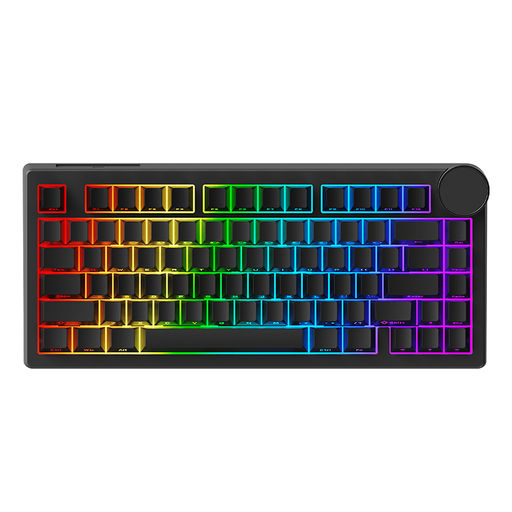
The 75% format is worth considering if mouse clearance matters but you still want an F-row for work; check the physical layout and legends against your typing needs.
This wired magnetic-switch variant has side-engraved black keycaps and a control knob. Assess its sound in your workspace rather than relying on construction claims alone.
 No image available
Consider this 65% model if a smaller board and a stated UK layout matter to you; check that its key arrangement covers the shortcuts you use at work.
If individual key sensitivity is important, confirm the available adjustment controls before ordering.
 No image available
The 60% layout suits a decision to prioritise mouse space over a conventional set of dedicated keys. Check how you will access arrows and navigation commands during office work.
Confirm the physical layout and legends you need, and check the rules of any game or competition in which you plan to use directional-input features.
 No image available
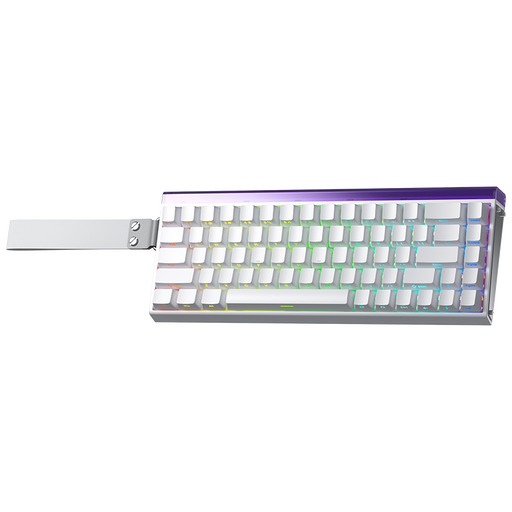
This compact 60% option may appeal if mouse clearance is your priority. Its stated US layout may require an adjustment for office typing, so check the physical keys and legends.
The product name lists adjustable actuation and Rapid Trigger; confirm the arrow and navigation-key access you need before choosing this format.
 No image available
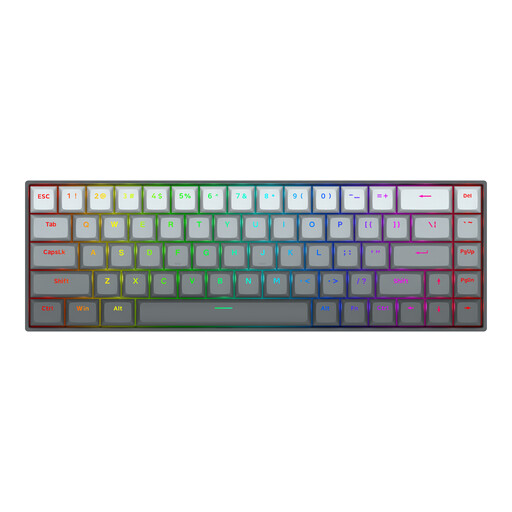
A 68-key layout is worth considering when desk space takes priority; check its arrow and navigation-key arrangement against the tasks you do after gaming.
The product name specifies a US layout and Rapid Trigger. Check the physical legends before buying it for UK office typing, and do not treat its listed 8,000 Hz polling rate as a measured advantage in play.
Yes, if you want more mouse room while keeping dedicated arrow and function keys. As RTINGS explains, a TKL board removes the number pad, so consider another layout if your work relies heavily on it.
No; a very sensitive setting can make ordinary typing less consistent. Adjust movement keys separately where supported and keep a more deliberate typing profile if useful. CORSAIR recommends 0.3–3.6 mm for accuracy on its K70 PRO TKL and warns that settings outside that range may affect consistency.
No. Check the physical layout and legends on the particular variant: the Joybuy Redragon M68 listing, for instance, specifies a US layout.
Contact the retailer, describe the fault and keep your order details. GOV.UK notes that consumer rights protect goods bought online and in person; a retailer’s change-of-mind policy is separate from remedies for faulty goods.
Check your local authority’s electrical-waste collection options or the retailer’s take-back arrangements rather than putting the keyboard in ordinary household waste. GOV.UK identifies the UK Waste Electrical and Electronic Equipment regulations as the framework for electrical and electronic waste.