What to check before choosing
Decide which controls need their own keys, then check desk width and the USB connection available at your setup. Treat switch-response settings as an optional choice after those basics.
| Concern |
What to check |
Who this matters to |
| Direct-access controls |
Compare the arrow, function and navigation keys on the actual 75%, TKL or 60% layout. |
While learning bindings and menus, I would rather press familiar keys than recall another layer. Roughly 33% of consumers put direct-access controls first. |
| Mouse room |
Check the board’s dimensions and whether you can use the secondary controls on a smaller layout. |
On a crowded desk, I need space for broad mouse movement and can adapt to layered keys. For around 27% of consumers, mouse room is the primary concern. |
| Connection upkeep |
Check for a compatible spare USB data port; for wireless, check receiver and charging requirements. |
With few spare wall sockets, I want a keyboard connection that does not add a charging task. Avoiding that upkeep comes first for roughly 27% of consumers. |
| Input tuning |
Check the exact model’s actuation settings and the rules for your game or competition. |
If I want to adjust when movement-key presses register, I am willing to spend time testing the settings. Around 13% of consumers make input tuning their main priority. |
Gaming keyboard options on Joybuy
These options cover wired and wireless approaches to the map-practice setup, from smaller keyboards for mouse room to models that retain more keys. Check each listing’s layout and connection against your own controls and available USB ports.
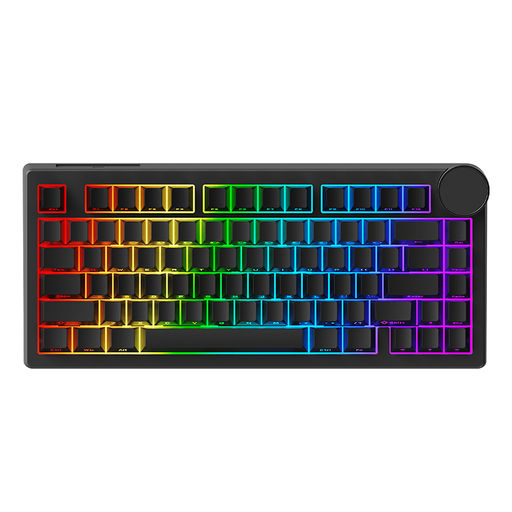 Image unavailable
AJAZZ AK820 V2 Starry Sparkle 75% wired magnetic-switch keyboard
Consider this wired 75% option if you want to compare a compact layout with the controls you use for maps and menus.
The listed variant has black side-engraved keycaps and a metal knob. Confirm its physical key layout and host-side USB connector against your setup.
View on Joybuy
 Image unavailable
ASUS ROG Falchion Ace HFX 65 Analog Gaming Keyboard, UK Layout
This is an option to examine if a compact keyboard with a specified UK layout appeals to you while learning controls.
Check the pictured key arrangement against the arrows, function keys and menu controls you need; the Analog name alone does not establish a benefit for learning a map.
View on Joybuy
 Image unavailable
HyperX Alloy Rise 75 Wireless Keyboard UK
Consider this wireless model if reducing desk cabling matters more to you than avoiding a charging routine.
Check its key arrangement for the controls you use, and account for charging and any receiver connection your setup requires.
View on Joybuy
 Image unavailable
Razer Huntsman V3 Pro Mini 60% Analog Optical Keyboard
Consider this 60% model if mouse room outweighs direct access to every control you use during practice.
Razer’s Huntsman V3 Pro Mini has adjustable actuation; check that the selected listing has your preferred physical layout and that its layered controls suit your bindings.
View on Joybuy
 Image unavailable
ASUS ROG Strix Scope II 96 Wireless Gaming Keyboard, White, UK Layout
Consider this UK-layout wireless model if retaining room for a broader key arrangement matters more than choosing the smallest keyboard.
Measure the space available beside your mouse, and check the charging and connection requirements before buying.
View on Joybuy
Common questions
Does a wired gaming keyboard need a spare wall socket?
Usually not: SCAN UK describes wired gaming keyboards as connecting to a USB port. Check that your computer, console or dock has a compatible spare USB data port; that is a different requirement from a mains socket.
Should I choose 60%, 75% or TKL while learning map controls?
Start by checking a 75% or TKL arrangement if you want to save desk space without giving up as many direct-access controls. Choose 60% when mouse room takes priority and you are comfortable reaching omitted keys through secondary layers.
Will wireless solve a shortage of plug sockets?
Wireless can remove a keyboard cable from your desk, but it does not remove charging or connection needs. SCAN UK notes that wireless keyboards use USB charging and commonly connect through a USB receiver; compare those requirements with the ports you have available.
Will adjustable actuation help me learn a map?
Adjustable actuation lets you change when a key press registers; it does not teach routes, callouts or map mechanics. If you want to experiment with key response, check the exact model’s controls and your game’s rules, then practise with settings you can use consistently.


