What matters when choosing?
Start with the movement settings you intend to use, then decide whether desk cabling or access to dedicated keys changes which layout and connection suit you.
Compact wired board
Choose it when: Mouse-side room and a small keyboard footprint matter more than dedicated function and navigation keys.
Trade-off: A 60% layout moves some keys to modifier layers, and the keyboard still needs a suitable computer connection.
Wired TKL board
Choose it when: You want movement-focused settings alongside dedicated arrows and an F-row. Logitech G lists rapid trigger on its wired PRO X TKL RAPID; Razer lists it on the Huntsman V3 Pro Tenkeyless.
Trade-off: TKL takes more desk width than a 60% board and keeps a cable at the desk.
Wireless board
Choose it when: Removing the keyboard cable during use matters most and you can accommodate charging. Logitech G offers the 60% PRO X 60; SteelSeries lists 2.4 GHz and Bluetooth on the Apex Pro TKL Wireless Gen 3.
Trade-off: Check the receiver or Bluetooth arrangement and the exact model’s movement features rather than assuming all wireless boards have rapid trigger.
| Concern |
What to check |
Who this matters to |
| Movement control |
Confirm rapid trigger and adjustable actuation on the exact model; test settings for unintended inputs. |
If repeated movement drills are my focus, I want keys that reset and register at settings I can control. Roughly 42% of consumers put movement response and tuning first. |
| Cables and connections |
Check spare computer ports, receiver or Bluetooth requirements, and how a wireless board will be charged. |
With a crowded desk, I would rather remove a cable than assume a keyboard needs another mains socket. Around 33% of consumers primarily care about cable and connection management. |
| Layout and key access |
Map the keys you use; compare a 60% board’s modifier layers with the dedicated keys on TKL or 80% layouts. |
If I use arrows or function keys for tasks beyond a match, reaching them easily matters as much as mouse room. About 25% of consumers place layout and everyday key access first. |
Compact keyboards on Joybuy
These compact choices suit players considering movement-focused practice without adding a separate mains-powered keyboard setup. Compare their exact layouts and movement controls; the wired TKL and wireless routes discussed above remain separate choices.
 No image available
ASUS ROG Falchion Ace HFX 65, UK layout
Consider this analogue keyboard if you want a compact layout while retaining a UK key arrangement. The product name specifies a 65% layout; check its connection and movement-setting options against your setup.
View on Joybuy
 No image available
Razer Huntsman V3 Pro Mini, 60%
For players prioritising mouse-side room, this wired 60% model offers rapid trigger and adjustable actuation. Razer lists a 0.1–4.0 mm actuation range; arrow-key access uses a modifier, so check whether that suits your other tasks. Confirm the regional key layout before buying.
View on Joybuy
 No image available
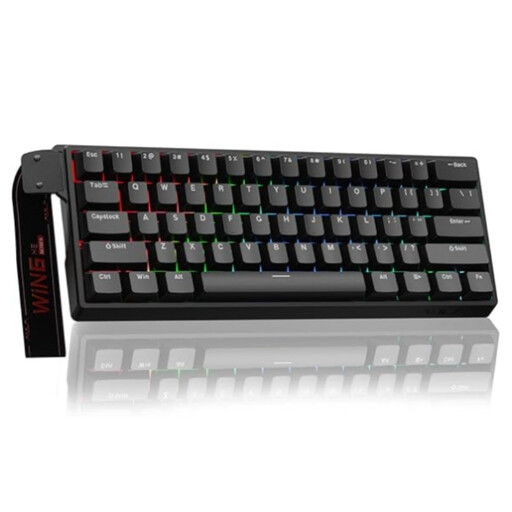
AULA WIN60HE, 60%, Black/Graywood magnetic switch
Consider this wired compact board if movement settings and a smaller footprint matter more than dedicated keys. Its name lists rapid trigger, adjustable actuation and an 8000 Hz polling rate. Check the actuation range, key access and regional layout if those details affect your choice.
View on Joybuy
 No image available
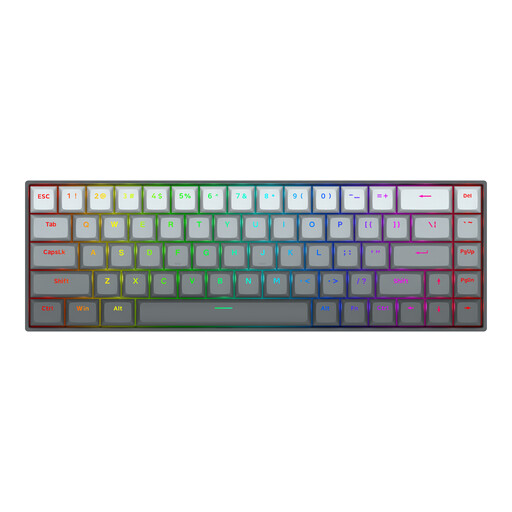
Redragon M68, 68 keys, US layout
This compact magnetic-switch model is worth considering for repeated movement inputs if its key arrangement suits you. Its name lists rapid trigger and an 8000 Hz polling rate. Check dedicated-key access and whether the specified US layout fits your typing needs.
View on Joybuy
 No image available
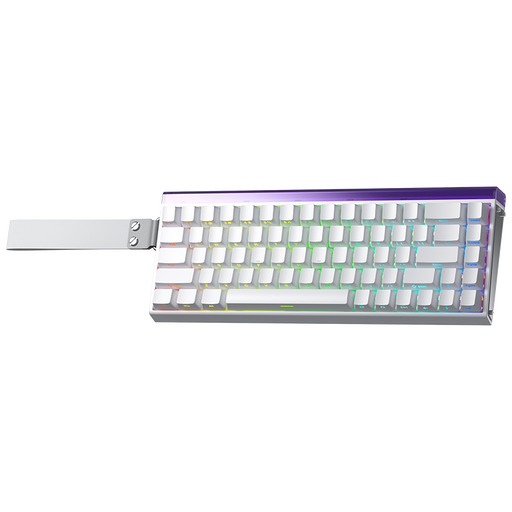
AULA Hero 68, 60%, US layout, White&Black King magnetic switch
This cable-connected 60% board suits a setup where a compact footprint matters. Its name lists rapid trigger, 0.01 mm adjustable actuation and 8K polling; check the full actuation range and key map if you need particular settings or dedicated keys. The specified layout is US.
View on Joybuy
Frequently asked questions
Will a wireless keyboard solve a shortage of plug sockets?
It can remove the keyboard cable during use, but a wired keyboard connected to your computer does not inherently need another mains socket either. Check the wireless model’s receiver or Bluetooth connection and where you will charge it.
How should I set actuation for movement practice?
Start at a setting you can control, then adjust it gradually while checking for unintended movement. Razer lists 0.1–4.0 mm actuation adjustment on its cited Huntsman V3 Pro models, but the shortest setting is not automatically the easiest to use accurately.
Will 8 kHz polling work without issues on every computer?
Not necessarily. Wooting’s support guidance describes startup detection problems with USB Hi-Speed on some motherboard USB controllers when 8 kHz polling is enabled; it suggests trying 1,000 Hz and another USB port if the issue occurs.
Can advanced keyboard settings affect competitive play?
Yes, depending on the software and competitive environment. FACEIT Support warns that programs which modify keys can interfere with keyboard operation in-game; check the rules for your game, platform and event before using those features in a match.
What should I do with an old keyboard?
Use an appropriate electrical-waste collection or recycling route rather than putting it in household rubbish. GOV.UK advises that electrical products and batteries bearing the crossed-out wheelie-bin symbol should not go into household rubbish.


