Choose a tenkeyless (TKL) or 80% keyboard if you want more room for broad mouse movements while keeping dedicated function and navigation keys for office work. Adjustable actuation and Rapid Trigger are worth considering when you want to tune repeated movement-key inputs, but they do not improve mouse aim on their own. Check the physical layout, typing feel, noise and desk fit before prioritising polling-rate claims.
Who is this choice for?
Regular shooter players
If you practise direction changes and counter-strafing, configurable movement keys may matter more to you than lighting. Compare the controls you can adjust, then decide whether you will use separate settings for games and typing.
People sharing a desk between work and play
When the same keyboard handles office tasks and games, key feel, sound, height and familiar shortcuts matter alongside movement controls. The Health and Safety Executive also advises leaving space in front of a keyboard to rest your hands and wrists when you are not typing.
Players who need mouse space
Broad mouse movements make desk width important. A compact keyboard can create room, but check which arrows, function keys and navigation commands you use during the working day before choosing the smallest format.
What matters when choosing?
For a desk used for both shooter practice and office work, decide which need takes priority, then check what the keyboard format asks you to give up. TKL and 80% layouts retain more dedicated work keys; a 60% or 68-key board calls for a closer look at shortcuts and physical layout.
| Concern |
What to check |
Who this matters to |
| Movement-key tuning |
Check the exact variant for adjustable actuation and Rapid Trigger. Test game settings for accidental presses before using them for everyday typing. |
If I practise repeated starts, stops and direction changes, I want movement keys I can tune without making office typing unreliable. Around 45% of consumers put movement-key tuning first. |
| Workday comfort and sound |
Consider keyboard height, key feel and switch sound alongside the space available to rest your hands when not typing. |
At a desk used for work and calls, I need a keyboard that feels manageable through routine typing and does not disrupt a shared room. Workday fit comes first for around 33% of consumers. |
| Mouse room and work keys |
Compare the board’s width with your mouse area; inspect access to arrows, function and navigation keys, plus the physical UK or US layout. |
If broad mouse movements compete with my keyboard for space, I can accept some shortcut changes, but only after checking the keys I use at work. Around 22% of consumers prioritise mouse room. |
Buying pitfalls
-
Assuming a UK listing means a UK keyboard layout
A US physical layout can change key shapes and symbol positions for someone accustomed to a UK keyboard. The Redragon M68 listing, for example, specifies a US layout.
Check the layout description and product photographs for the exact variant, including the Enter key and symbol placement. Do not infer the physical layout from the storefront.
-
Using the shortest actuation setting for every task
Adjustable actuation lets you change when a key press registers. A very sensitive setting chosen for game movement can also make accidental presses more troublesome while typing.
If the keyboard supports profiles, keep a more conservative office setting and tune a separate game setting. Change one control at a time so you can spot unintended inputs.
-
Expecting a keyboard to train mouse aim
Rapid Trigger and adjustable actuation concern keyboard input, including repeated movement-key presses. They do not change mouse tracking or replace practice at acquiring targets.
Buy these controls for the movement behaviour you want to practise; assess mouse settings and aim practice separately.
-
Overlooking how the keyboard fits the desk
A smaller board may free mouse space without resolving an awkward typing position. The Health and Safety Executive advises considering the workstation as a whole, including room to rest your hands when you are not typing.
Position the keyboard for your usual work, leave space in front of it and review the chair, desk and screen arrangement during longer sessions.
Relevant keyboard brands
These ranges illustrate different approaches to compact layouts and adjustable inputs. Check the exact model and switch variant rather than assuming every keyboard from a brand has the same controls or sound.
Wooting
Wooting’s 80HE is an 80% analogue keyboard aimed at configurable movement inputs while retaining a function row and navigation controls.
- Wooting states that the 80HE offers Rapid Trigger, 0.1 mm actuation adjustment and 8 kHz polling. Its construction is designed to reduce impact noise; that is not an independent sound measurement.
- Wooting’s setup guide includes a United Kingdom keycap-language option for applicable ISO configurations. Select the physical layout and keycap option you actually need.
Logitech G
Logitech G’s referenced range covers conventional mechanical TKL boards and analogue TKL models, giving buyers different choices of key feel and configuration.
- Logitech G lists magnetic analogue switches, Rapid Trigger and adjustable actuation for the PRO X TKL RAPID. It describes the G515 RAPID TKL as a 22 mm-high, low-profile alternative with 0.1 mm to 2.5 mm actuation adjustment.
- Its conventional PRO TKL illustrates the mouse-room benefit of losing the number pad, but the GX Blue Clicky switch variant is audible and may not suit a quiet shared room.
SteelSeries
The Apex Pro TKL Gen 3 combines a TKL layout with magnetic-switch controls for buyers who want to configure movement inputs.
- SteelSeries lists Rapid Trigger, Protection Mode, Rapid Tap and 0.1 mm to 4.0 mm adjustable actuation for the UK-version model.
- SteelSeries describes per-key lubrication and dampening foam, but those features alone do not establish how quiet the keyboard will sound at your desk. Consider key feel and sound before choosing it for a shared room.
Compact keyboards on Joybuy
These 60% and 68-key keyboards are options when mouse room takes priority over a larger work-key layout. They do not represent the TKL and 80% choices discussed above, so check shortcut access and physical key placement before selecting one for a shared office desk.
 No image available
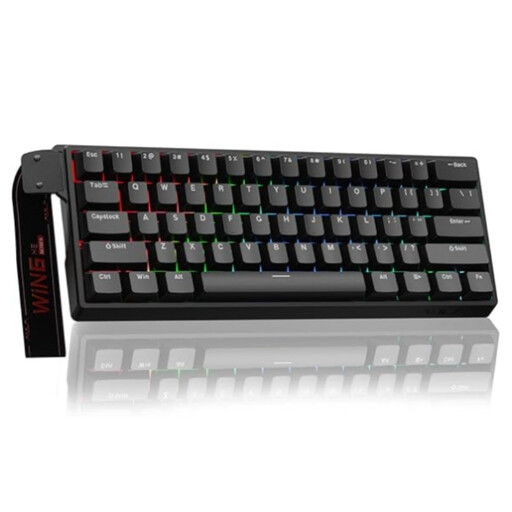
AULA WIN60HE 60% Keyboard, Black/Graywood Magnetic Switch
Consider this compact wired model if you want to configure movement-key input while leaving more room for your mouse.
The product title specifies magnetic hot-swappable switches, adjustable actuation, Rapid Trigger and an 8000 Hz polling rate. Check the physical layout and access to office shortcuts for this variant.
View on Joybuy
 No image available
Razer Huntsman V3 Pro Mini 60% Analog Optical Keyboard
The 60% format is worth considering if available mouse space matters more to you than having a larger set of dedicated work keys.
Its title identifies an analog optical keyboard. Before using it at a shared work desk, check the exact physical layout, shortcut access and whether the key feel suits everyday typing.
View on Joybuy
 No image available
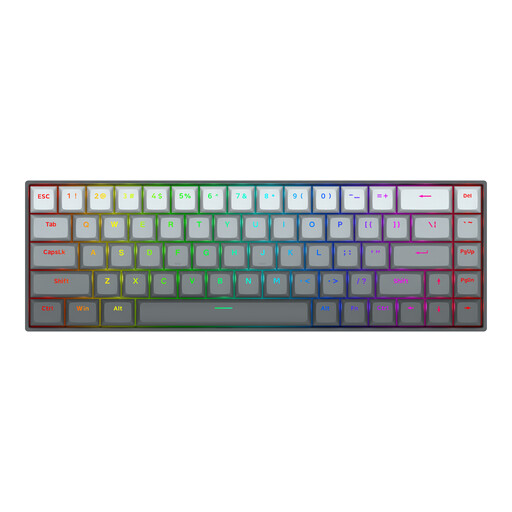
Redragon M68 68-Key Magnetic-Switch Keyboard, US Layout
Consider this 68-key model if mouse space and a compact board matter more to you than familiar UK key placement.
The title specifies magnetic switches, Rapid Trigger, an 8000 Hz polling rate and a metal top plate. It explicitly specifies a US layout, so inspect its symbols and key arrangement before relying on it for office typing.
View on Joybuy
 No image available
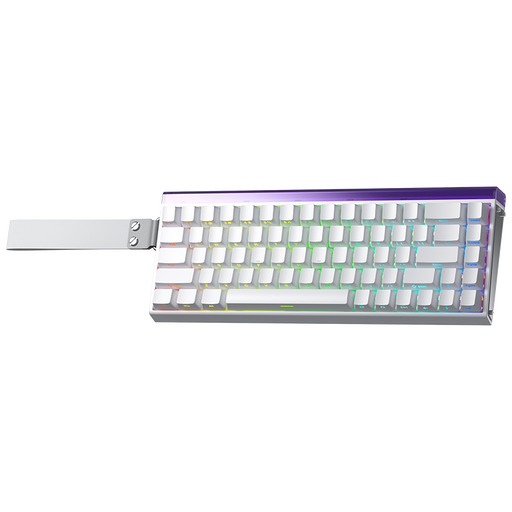
AULA Hero 68 60% Keyboard, White&Black King Magnetic Switch
This compact option suits consumers who want to adjust movement-key input and are comfortable checking how a US layout fits their workday shortcuts.
The title lists Hall Effect magnetic switches, 0.01 mm adjustable actuation, Rapid Trigger, 8K polling, side-engraved keys and a US layout. Treat those figures as listed settings and features, not measured improvements to game performance.
View on Joybuy
Common questions
Do I need Rapid Trigger to practise shooter aim?
No. Rapid Trigger is a keyboard-movement control that may be useful when practising repeated strafing or stop-start inputs; it does not change mouse tracking or replace aim practice. Choose it if you intend to tune movement keys, and keep typing comfort in mind when selecting a sensitive setting.
Should I choose TKL, 80% or a smaller keyboard for one work-and-play desk?
Start with TKL or 80% if you want mouse room while retaining dedicated function and navigation controls for work. A 60% or 68-key board makes more sense when desk width is the stronger priority and its shortcut arrangement works for your office tasks.
How should I position a gaming keyboard when I also work at the desk?
Position it for comfortable everyday typing and leave room in front to rest your hands and wrists when you are not using the keys, as the Health and Safety Executive advises. Review the keyboard together with your chair, desk and screen position rather than treating its compact size as a complete workstation adjustment.
How can I tell whether a keyboard has a UK layout?
Check the exact variant’s physical layout and photographs for its Enter-key shape, symbol positions and UK legends or keycaps. A UK storefront does not establish that a board is ISO UK: the Redragon M68 listing specifies a US layout, while Wooting’s 80HE guide includes a United Kingdom keycap-language option for applicable ISO configurations.


