Players practising movement timing
If you work on counter-strafing, stopping and repeated direction changes, adjustable actuation and Rapid Trigger are more relevant to your keyboard choice than decorative features.


Choose adjustable actuation and Rapid Trigger if you want to practise movement timing and repeated key inputs; a keyboard will not directly improve mouse aim. For a dark room, check lighting controls and legend readability as well as the switch settings, then choose a layout that leaves enough mouse space without losing keys you use.
If you work on counter-strafing, stopping and repeated direction changes, adjustable actuation and Rapid Trigger are more relevant to your keyboard choice than decorative features.
If you locate movement, utility and communication keys by sight, look beyond the presence of RGB lighting: readable legends and controls you can adjust for the room matter too.
A smaller keyboard may leave more room for mouse movement, but the layout still needs the keys you use. Adjustable sensitivity also matters if unintended presses interrupt general use.
For dark-room shooter practice, decide whether movement-key response or key visibility is your main priority, then check sensitivity and layout against the way you use the desk.
| Concern | What to check | Who this matters to |
|---|---|---|
| Movement-key response | Check the exact model for adjustable actuation and Rapid Trigger; test whether your chosen setting causes unintended inputs. | When I practise counter-strafing, I want movement keys that activate and reset in a way I can control. Around 42% of consumers put movement-key response first. |
| Visibility in the dark | Inspect the legends and confirm whether lighting brightness and profiles can be controlled. | If I play with little ambient light, I need to find utility and communication keys without struggling to read them. Roughly 25% of consumers prioritise key visibility. |
| Unintended presses and comfort | Try a less sensitive actuation setting if available, and consider typing noise and wrist support for longer sessions. | I need deliberate inputs when practising and a keyboard I can also use comfortably afterwards. Around 17% of consumers place input control and comfort first. |
| Layout and mouse space | Compare compact layouts with the dedicated keys you need for communication, shortcuts and other work. | With limited desk space, I want room to move my mouse without giving up essential keys. Roughly 16% of consumers make layout their primary concern. |
Rapid Trigger and actuation settings affect keyboard inputs, not mouse tracking or crosshair placement. They are relevant when movement timing is the part of shooter practice you want to work on.
Assess your mouse setup and aim practice separately; choose adjustable switches for the movement-key behaviour you want to configure.
A very sensitive setting can cause unintended movement or utility-key inputs for some players.
Begin at a moderate setting, test the keys you use in-game and make them shallower only if you can still control each press.
Lighting alone does not tell you whether legends will be readable or whether the brightness will suit a dark room. A compact layout may also remove keys you rely on.
Inspect photos of the exact layout and keycaps, and check how its lighting can be adjusted before choosing a size.
The layout, supplied connection and product documentation affect whether a keyboard is practical for your use. Conformity-marking requirements can also differ between Great Britain and Northern Ireland.
Check the exact product version, seller support and applicable conformity information. GOV.UK’s guidance for Great Britain explains that CE marking continues to be recognised alongside or in place of UKCA marking where the applicable product rules allow it.
The 80HE is an 80% wired magnetic keyboard for players who want detailed movement-key configuration.
The Huntsman V3 Pro range includes Mini and tenkeyless options with configurable analog optical switches.
The Apex Pro TKL Gen 3 combines adjustable magnetic switches with per-key lighting and onboard controls.
These compact magnetic-switch keyboards list Rapid Trigger for movement-key practice. Compare their layouts and stated lighting features with the keys and visibility you need in a dark room.
 No image available
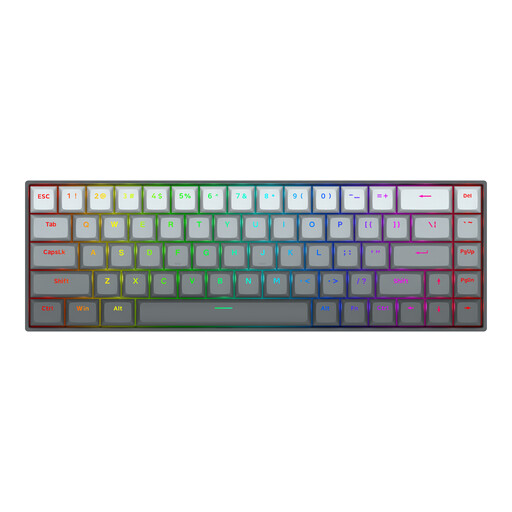
The 68-key layout may suit movement practice where mouse space matters. The listing names Rapid Trigger, 8000 Hz polling and a metal top plate; check the US key positions, lighting controls and legend readability for your setup.
 No image available
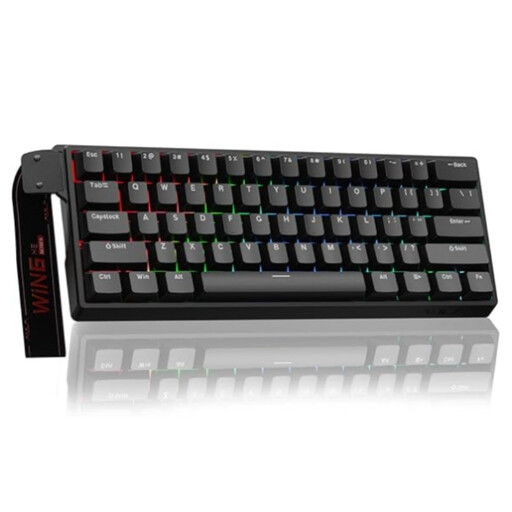
For a compact wired setup, the title lists magnetic switches, adjustable actuation, Rapid Trigger, 8000 Hz polling and RGB lighting. Check the exact key layout, legend visibility and lighting controls before relying on it in a dark room.
 No image available
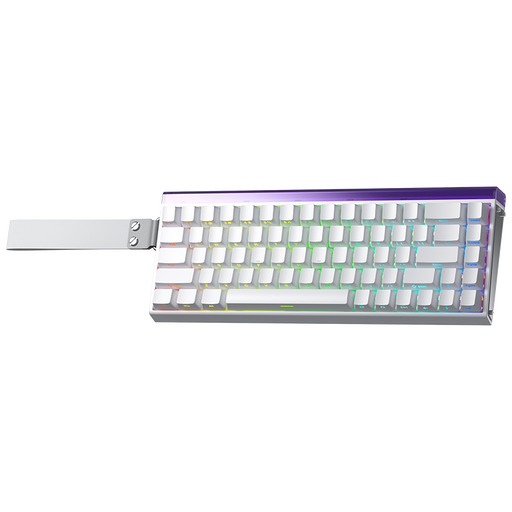
This US-layout model lists Hall Effect magnetic switches, adjustable actuation, Rapid Trigger, 8K polling and RGB lighting for a compact movement-practice setup. Its keycaps have side-engraved legends, so check how clearly you can read them under the lighting you intend to use.
Not directly: adjustable actuation and Rapid Trigger change keyboard-controlled inputs, making them relevant to movement and counter-strafing practice rather than mouse tracking. Treat mouse sensitivity and crosshair practice as separate decisions.
Start at a moderate setting and test your movement and utility keys for unintended inputs. Move towards a shallower setting only if it helps you make the intended presses consistently; the minimum available setting is not automatically the right one.
Look for legends you can read and lighting you can control, not simply an RGB label. SteelSeries lists per-key RGB for the Apex Pro TKL Gen 3, Wooting documents lighting settings for its keyboards, and RTINGS reports shine-through legends on the reviewed Razer V3 Pro models; check the exact version you plan to buy.
Check the exact product version and its applicable conformity information rather than relying on a listing photo. GOV.UK says Great Britain continues to recognise CE marking alongside or in place of UKCA marking where the relevant product regulations permit it; do not apply that conclusion automatically to Northern Ireland.
Use an appropriate electrical-waste collection route rather than ordinary household rubbish. GOV.UK advises that waste electrical products can be taken to a local household waste recycling centre.