Who these layouts suit

Cable-conscious simulation builders

If you spend long sessions building and managing parks, a wireless TKL or 75% layout can make the keyboard easier to reposition without giving up as many dedicated keys as a 60% layout. You will still need a charging routine.

Shortcut-heavy desktop players

If the keyboard stays at one computer and you rely on a numpad or dedicated controls for repeated commands, a wired full-size layout may be more useful than cable-free positioning.

Small-desk or portable players

If you regularly clear or rearrange the desk, a compact layout takes up less space. A 60% keyboard asks you to use key combinations in place of some dedicated controls.

What to check before choosing

Wireless TKL or 75%

Choose it when: You want to reposition the keyboard while retaining accessible keys for park-building commands.

Trade-off: You give up the numpad on a TKL layout and must make room to charge the keyboard.

Wired full-size

Choose it when: Your keyboard stays at one PC and a numpad or dedicated macro keys matter most.

Trade-off: Its cable needs a route to the computer and occupies a USB connection, though it does not normally need its own wall socket.

Wireless 60%

Choose it when: Clearing desk space matters more than having dedicated navigation keys and a function row.

Trade-off: More commands move to key combinations, which may interrupt a shortcut-heavy building session.

ConcernWhat to checkWho this matters to
Desk flexibility Compare Bluetooth, 2.4 GHz receiver and wired modes; check charging access and any stated battery conditions. I want to move the keyboard around a crowded desk without leaving its cable in place, and I can keep it charged. Around 36% of consumers put that cable flexibility first.
Shortcut access Decide whether your commands need a numpad, dedicated macro keys or remappable keys. When building and managing a park, I want frequently used commands close at hand rather than hidden in key combinations; that is the first priority for around 29% of consumers.
Desk footprint Compare the keys retained by TKL, 75% and 60% layouts, particularly navigation keys and the function row. I need space beside the keyboard or want to put it away between sessions, even if a smaller layout changes how I reach some commands. Around 21% of consumers prioritise that compact footprint.
Key feel Try the switch feel and front height where possible; check switch compatibility if you intend to customise. During a long building session, I care most about how the keys feel and whether their noise suits my space. For around 14% of consumers, feel or customisation comes first.

Buying pitfalls

  • Assuming limited wall sockets require a wireless keyboard

    A wired keyboard normally draws power through the computer’s USB port. Wireless changes desk cabling, but brings charging and, depending on the connection, a receiver into the decision.

    Count available wall sockets and computer USB ports separately. Choose wireless if moving the keyboard or reducing its permanent cable is useful to you.

  • Comparing battery claims without their conditions

    Lighting settings can change quoted runtime. Corsair, for example, states different maximum runtimes for its K70 PRO MINI WIRELESS with RGB lighting on and off.

    Compare claims under the lighting and power settings you expect to use, and leave a practical route for the charging cable.

  • Choosing 60% solely to save space

    A 60% layout moves some navigation and function commands to key combinations. That may matter when you frequently switch between building tools, menus and camera controls.

    Check the exact key layout against the commands you use before giving up dedicated keys; consider TKL or 75% if you want a smaller board without making as many changes.

  • Putting an old rechargeable keyboard in household rubbish

    A wireless keyboard may contain a battery. GOV.UK advises using appropriate electrical-waste and battery collection routes rather than household rubbish.

    Check local collection options and any retailer take-back arrangements when replacing the keyboard.

Relevant brands to consider

Logitech G

Its G515 LIGHTSPEED TKL and G915 X TKL lines are relevant if you want a low-profile wireless TKL keyboard.

  • Logitech G lists 2.4 GHz wireless, Bluetooth and wired modes for both lines.
  • Their TKL layouts omit the numpad, so check whether your park-building shortcuts rely on it.

Razer

Its range offers different routes for buyers choosing between wireless flexibility and dedicated wired controls.

  • Razer lists 2.4 GHz wireless and Bluetooth device switching for the BlackWidow V4 Tenkeyless HyperSpeed; it lists six dedicated macro keys for the wired BlackWidow V4.
  • The wired BlackWidow V4 needs a cable route to the computer. Read the conditions behind the wireless model’s manufacturer-stated battery-life claim before comparing runtimes.

Corsair

The K70 PRO MINI WIRELESS is relevant if a compact, customisable 60% layout is the priority.

  • Corsair lists 2.4 GHz wireless, Bluetooth, a detachable USB-C connection and support for compatible hot-swappable switches.
  • The 60% layout lacks several dedicated controls. Corsair’s stated battery-life figures also differ substantially depending on RGB lighting use.

Joybuy keyboards for a flexible desk

These wireless layouts offer ways to reduce permanent keyboard cabling while designing a theme park. The 75% and 96% choices make different compromises over desk space and access to keys; check the exact layout, connection and charging arrangements that suit your setup.

ASUS ROG Strix Scope II 96 wireless keyboard in white

ASUS ROG Strix Scope II 96 Wireless, White, UK Layout

Consider this 96% layout if you want a wireless keyboard while keeping a numpad for your usual commands.

The product name specifies the white variant and UK layout. Check whether your computer has the Bluetooth capability or available USB port required for your preferred wireless connection.

View on Joybuy

HyperX Alloy Rise 75 wireless keyboard

HyperX Alloy Rise 75 Wireless Keyboard UK

Consider this 75% wireless model if a smaller desk footprint matters but you still want accessible controls for building sessions.

Check the physical key arrangement against the shortcuts you use, and compare battery claims under the lighting settings you expect to use.

View on Joybuy

AULA F99 wireless keyboard in Light Blue with Reaper switches

AULA F99, Light Blue, Reaper Switch, US Layout

Consider its compact, numpad-retaining layout if you want wireless positioning without giving up number-key access.

The named variant has wired, Bluetooth and 2.4 GHz modes and a QWERTY US layout. Check that the US key arrangement suits your typing and shortcuts, and confirm the battery conditions relevant to your use.

View on Joybuy
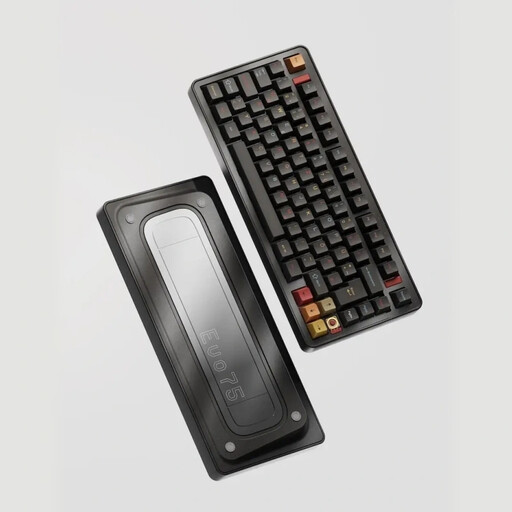
Ticktype EVO75 wireless keyboard in Spray-coated Nebula with Creamy Rye switches

Ticktype EVO75, Creamy Rye Switches, Spray-coated Nebula, US Layout

Consider this 75% wireless layout if you want a compact desk setup and are interested in changing key assignments or switches.

The named variant has an aluminium case, hot-swappable switches, VIA compatibility and an 8000 mAh battery. Battery capacity alone does not tell you how long it will run; check expected runtime and whether the US key layout suits you.

View on Joybuy
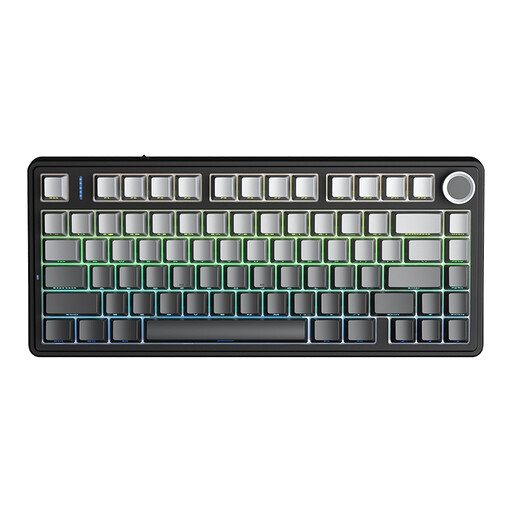
AULA F75 PRO wireless mechanical keyboard

AULA F75 PRO Wireless, 75%, QWERTY US Layout

Consider this 75% model if you want to reposition the keyboard and prefer a compact layout with hot-swappable switches.

Its name specifies Bluetooth, 2.4 GHz and wired modes, RGB lighting and a QWERTY US layout. Check the exact dedicated-key arrangement, whether the US layout suits your shortcuts and the battery conditions for your lighting settings.

View on Joybuy

Frequently asked questions

Will a wireless keyboard free up a wall socket?

Usually not directly: a wired USB keyboard normally draws power from the computer rather than its own wall socket. Wireless can remove a permanent keyboard cable from the desk, but you will still need to charge it and may need a USB port for a receiver.

Should I use Bluetooth or a 2.4 GHz receiver?

Choose based on the connection your computer supports and how you use the desk. A receiver needs an available USB port; Bluetooth can avoid that receiver if both devices support it. If you switch between devices, check the exact keyboard’s switching features.

Do I need a full-size keyboard to build in a simulation game?

Not necessarily: choose full-size if a numpad or dedicated macro controls are central to your shortcuts. TKL or 75% can leave more desk space, while a 60% layout is a more substantial change if you frequently use dedicated navigation or function keys.

What should I check when buying a wireless keyboard for Great Britain?

Check that the product is intended for the market where you will use it and that its identity, instructions and seller support are clear. GOV.UK’s Office for Product Safety and Standards states that the Radio Equipment Regulations 2017 apply when radio equipment is placed on the Great Britain market; Northern Ireland has separately modified rules, so GB-only information should not be assumed to cover it.

How should I dispose of an old rechargeable keyboard?

Use an appropriate electrical-waste or battery collection route rather than household rubbish. GOV.UK advises checking the crossed-out wheelie-bin symbol on electrical products and batteries; local collection and retailer take-back options can help you find a suitable route.