Desk-based co-op players
If you mainly play in your room, compare the exact GPU configuration and screen with your games and settings. Leave room in your storage plans for games, updates and coursework.


If your gaming laptop will usually stay on a desk, start with a configuration whose screen, storage and GPU power suit the co-operative shooters you play. If you carry it to lectures regularly, a compact model may be easier to accommodate, but check its memory upgrade options and charger before choosing. The GPU name alone cannot establish game performance or how disruptive the fans will be in a shared room.
If you mainly play in your room, compare the exact GPU configuration and screen with your games and settings. Leave room in your storage plans for games, updates and coursework.
If the same laptop travels to lectures and study spaces, consider the laptop and charger together. A smaller screen may be worth the change in desk setup, but check memory capacity before committing to a model without an upgrade slot.
If you play near a room-mate, fan behaviour, headset use, ventilation and cable placement matter alongside graphics specifications. Look for exact-model noise measurements if quiet hours will affect when you can play.
Decide how often the laptop must travel before comparing screens and graphics configurations. Then check storage, upgrade options and room setup on the exact model you intend to order.
| Concern | What to check | Who this matters to |
|---|---|---|
| Gameplay and display | Compare the exact GPU power setting and screen resolution and refresh rate; seek tests for your games and settings if you have a frame-rate target. | I want co-op shooters to feel responsive without assuming a high-refresh screen guarantees a particular frame rate. Around 33% of consumers put gameplay and display responsiveness first. |
| Portability | Check laptop and charger dimensions, weight, charging options and whether RAM can be upgraded. | My gaming laptop also needs to travel between my room and lectures, so the whole carrying setup matters. Portability comes first for around 27% of consumers. |
| Shared-room setup | Look for documented cooling modes and exact-model fan-noise tests; plan ventilation, sockets and cable placement. | When someone else is nearby, I need to know how the laptop behaves during play, not just how its game audio sounds through a headset. Around 20% of consumers prioritise shared-room practicality. |
| Storage and ownership | Compare SSD capacity, confirmed expansion options, memory configuration and the named seller's terms. | I want space for games and coursework without discovering later that a needed memory upgrade is impossible. Storage and longer-term ownership are the main concern for around 20% of consumers. |
NVIDIA specifies a 45W–100W GPU subsystem-power range for the RTX 5060 Laptop GPU. Laptops with that GPU name can therefore have different configured power limits; the label alone does not tell you their frame rates in your games.
Compare the exact model's disclosed GPU power and look for tests using the games, resolution and settings you intend to use.
ASUS ROG lists onboard memory and no memory expansion slot for the cited 16GB and 32GB Zephyrus G14 GA403 versions. The capacity you choose matters if you expect to run games alongside study and background applications.
Choose the memory capacity you expect to need before ordering that configuration rather than planning to add RAM later.
The cited Lenovo UK LOQ 15 Gen 11 configuration has a 512GB SSD and a 245W UK three-pin adapter. Both game-library space and a place for the adapter and cables deserve attention in a desk-first setup.
Check the exact configuration's SSD capacity, confirmed expansion options, supplied adapter and access to a suitable socket.
A manufacturer warranty does not replace remedies for faulty or misdescribed goods. GOV.UK distinguishes those obligations from cancellation when an online purchaser changes their mind.
Keep the order details and serial number, check the seller's return instructions and contact the seller if the delivered laptop is faulty or not as described.
These product lines illustrate different configurations to assess for student-room gaming; a brand name is not a substitute for checking the exact model.
The UK LOQ 15 Gen 11 configuration documented by Lenovo is a desk-oriented reference point for a high-refresh screen and replaceable DDR5 SODIMM memory.
Acer's Nitro V 15 line provides a conventional 15.6-inch Full HD format to compare with other gaming laptops.
The cited UK Zephyrus G14 GA403 versions offer a compact, dedicated-GPU route for a laptop that also travels around campus.
These choices cover desk-oriented and conventional gaming-laptop setups for co-operative shooters. Compare each exact configuration with your games, carrying routine and shared-room needs rather than treating its GPU name or screen size as a performance result.
 No image available
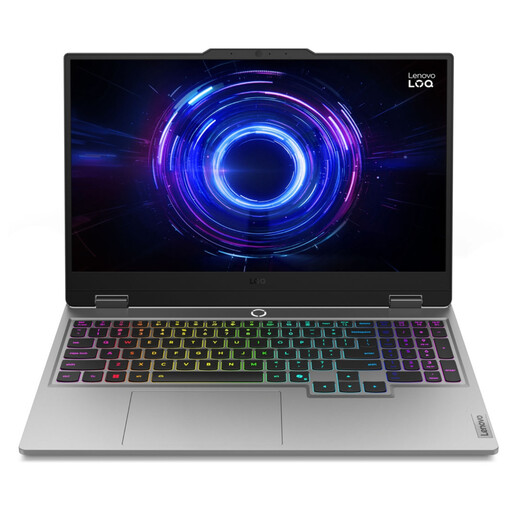
Consider this configuration for a laptop that will mainly stay at your student-room desk. Its name identifies the 15IRX10 and i5-13450HX variant with 24GB, 1TB and W11H; confirm the exact delivered configuration, GPU power and screen against your chosen games. If a room-mate is nearby, seek an exact-model fan-noise test.
 No image available
This is a large-screen route to consider if the laptop will usually stay on a desk. The name identifies the 17IRX10 and i7-13650H variant with 24GB, 1TB and W11H. Check whether the laptop and adapter suit any regular travel, and compare exact-model game and fan-noise tests if you have firm performance or quiet-hours requirements.
 No image available
This configuration is worth comparing for desk-based play when a 15.6-inch screen suits your space. Its name specifies an AMD Ryzen 7 170, GeForce RTX 5050, 16GB RAM, 1TB SSD and a 144Hz Full HD display. Check whether its listed 16GB memory limit suits your games and background applications, and seek game-specific and fan-noise tests where those results matter to you.
 No image available
This 15.6-inch configuration is a conventional gaming-laptop option for room-based play. Its name specifies an Intel Core i5-13420H, RTX 4050, 16GB RAM and a 512GB SSD. The product information gives conflicting 144Hz and 165Hz refresh rates, so confirm the exact panel before ordering; also check whether the SSD capacity suits your game library.
 No image available
This large-screen option suits consideration when the laptop will mostly remain in your room. Its name specifies an AMD Ryzen AI 7 350, RTX 5060, 16GB RAM and 1TB SSD in an OMEN 17 configuration. Check the laptop and adapter dimensions if you need to carry it, and use exact-model tests to assess your games and shared-room noise requirements.
No. NVIDIA specifies a 45W–100W GPU subsystem-power range for the RTX 5060 Laptop GPU, so compare each laptop's configured power and look for game tests at the resolution and settings you want. A screen's refresh rate is not a promise that the laptop will reach the same frame rate.
GOV.UK states that, for an online order, you can tell the seller within 14 days of receiving the item that you want to cancel. Check the seller's return instructions before handling or altering the laptop beyond what you need to inspect it; change-of-mind cancellation is distinct from remedies for faulty or misdescribed goods.
Contact the seller and retain your order details and evidence of the problem. GOV.UK says sellers must offer a refund for faulty goods or goods that are not as described; a manufacturer warranty does not replace those seller obligations.
Check the exact configuration rather than relying on the product-line name. Lenovo UK lists a 245W three-pin UK adapter for the cited LOQ 15 Gen 11 configuration, but that does not establish what comes with a different model. Confirm the plug, adapter specification and included accessories with the seller before ordering.