If one usable wall socket is the main constraint, start by considering a gaming laptop whose built-in screen suits your icon work; a desktop workstation normally needs a separately powered monitor. For mainly 2D icons, check your chosen software’s requirements before paying for 3D capability. If you plan to model or render icons in Blender, its recommended Windows specifications of 32 GB RAM and 8 GB VRAM are useful targets, but the exact configuration and the safe load of everything you plug in still matter.
Who this is for
Gamers with limited sockets
You need a computer for gaming and icon work, but powering a separate monitor may be awkward. A laptop with a built-in screen is worth considering if that screen is sufficient for your work; count its charger and any other powered equipment too.
3D inventory-icon makers
You plan to model or render the icon in Blender rather than only draw it in 2D. Blender Foundation’s recommended Windows specifications make installed RAM and GPU memory relevant checks alongside your available sockets.
2D-first designers who also game
You mainly create vector or raster icons and also want to play games. Check the requirements of the applications and games you will actually use before treating Blender’s 3D recommendations as necessary.
What matters when choosing
Gaming laptop
Consider it when: one socket must serve the basic computer setup and the built-in screen works for your icons.
Trade-off: the integrated screen avoids a separate powered monitor, but you must decide whether its size gives you enough working space.
Desktop PC and monitor
Consider it when: you want a separate display and can accommodate all the powered items safely.
Trade-off: the tower is not the whole workstation: the monitor also needs power, and accessories may add to the load.
| Concern |
What to check |
Who this matters to |
| Powered setup |
Count the sockets needed for the computer, display and accessories; decide whether a built-in screen is enough. |
With one usable socket, I want to avoid a separate powered display if I can work on the laptop screen; roughly 42% of consumers put fewer powered items first. |
| Blender 3D work |
For the exact configuration, compare RAM and GPU memory with Blender Foundation’s recommended Windows figures of 32 GB and 8 GB VRAM. |
When I model or render an icon in Blender, I need to judge the machine by that workload, not its gaming label; around 33% of consumers prioritise 3D headroom. |
| Mainly 2D icons |
Check the chosen design application’s requirements and whether the screen suits drawing and editing. |
If I mostly draw 2D icons and game occasionally, I want a configuration that serves those tasks without assuming I need Blender’s 3D targets; roughly 25% of consumers put 2D-first suitability ahead of 3D headroom. |
Buying pitfalls
-
Assuming any gaming PC will suit Blender rendering
Gaming branding does not tell you whether a particular configuration reaches Blender Foundation’s recommended Windows figures of 32 GB RAM and 8 GB VRAM. The Blender Foundation also notes that GPU memory can limit complex scenes.
Decide whether the icon will be drawn in 2D or modelled and rendered in Blender. For Blender work, check the exact machine’s RAM, GPU memory and supported rendering setup.
-
Counting the desktop tower but not its monitor
A separate display and other powered accessories add to a desktop workstation’s socket needs. London Fire Brigade warns against overloading extension leads.
List everything you intend to plug in before choosing a setup. If you use an extension lead, check its rating and the connected equipment’s instructions rather than stacking adaptors.
-
Buying by product-line name alone
RAM, graphics and displays differ between configurations within gaming-laptop ranges, as the cited HP Victus, Lenovo Legion and Alienware listings illustrate.
Check the precise model and configuration you are buying, including its RAM, GPU memory, display and supplied power equipment.
Relevant brands for reference
HP Victus
HP’s UK Victus gaming-laptop listings include a 15.6-inch FHD display configuration with 16 GB RAM, a 512 GB SSD and RTX 4050 graphics.
- The listed laptop has a built-in screen, which can remove the need for a separate monitor in a basic setup.
- Its 16 GB RAM is below Blender Foundation’s recommended 32 GB Windows figure; check the specification of the Victus configuration you select.
Lenovo Legion
A Lenovo UK Legion Pro 7i configuration lists 32 GB DDR5 memory, an RTX 5070 Ti Laptop GPU with 12 GB GDDR7 memory and a 16-inch display.
- That particular configuration reaches Blender Foundation’s recommended Windows RAM and VRAM figures on paper.
- Those specifications do not apply to every Legion model. Check the exact configuration and its supplied power equipment.
Alienware
Dell UK’s Alienware m16 R2 listing describes RTX 4050, RTX 4060 and RTX 4070 options, with memory options from 16 GB to 64 GB.
- The listed memory options allow a buyer considering Blender to look for a configuration with 32 GB RAM.
- GPU and memory options vary. Check the exact configuration and availability before making a decision.
Gaming laptops on Joybuy
These laptops have built-in displays, making them relevant if you want to avoid a separate monitor in the basic setup. If your icon work involves Blender rendering, compare each exact configuration with Blender Foundation’s recommended specifications as well as checking the power equipment you will use.
 No image available
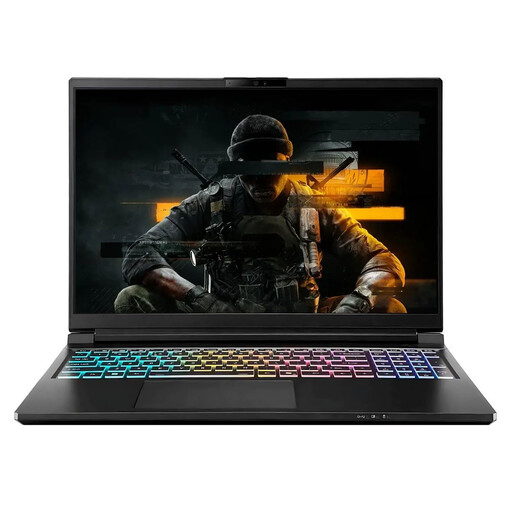
Stormforce Exobook 16 QHD+ Ultra 9, 32 GB, 4 TB, 5080
Consider this laptop if its built-in display gives you enough room for icon work without a separate monitor.
The product name specifies a 16-inch QHD+ display, Ultra 9, 32 GB RAM, 4 TB storage and 5080 graphics. The stated RAM reaches Blender Foundation’s recommended Windows figure; check the exact GPU memory if 3D rendering is planned.
Confirm the supplied power adapter and the load of everything connected to your socket or extension lead.
View on Joybuy
 No image available
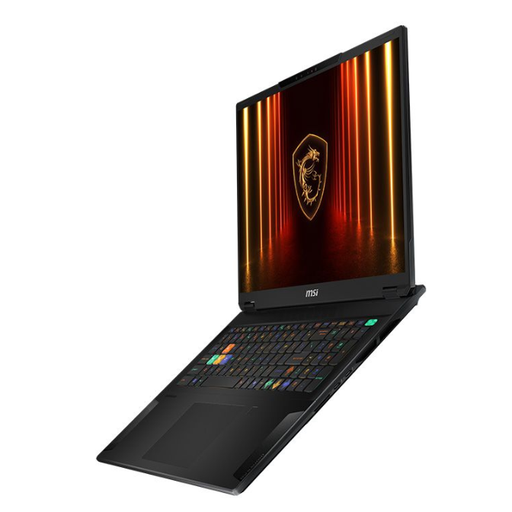
MSI Stealth 18 AI Studio A1VGG-001UK, Black
Consider its built-in 18-inch screen if you want a larger laptop display without adding a separate monitor.
The product name specifies an Intel Core Ultra 9, 32 GB RAM, a 2 TB SSD and NVIDIA GeForce RTX 4070 graphics. Its stated RAM reaches Blender Foundation’s recommended Windows figure; check the exact GPU memory for Blender work.
Confirm the supplied power adapter and the total load of the equipment you intend to connect.
View on Joybuy
 No image available
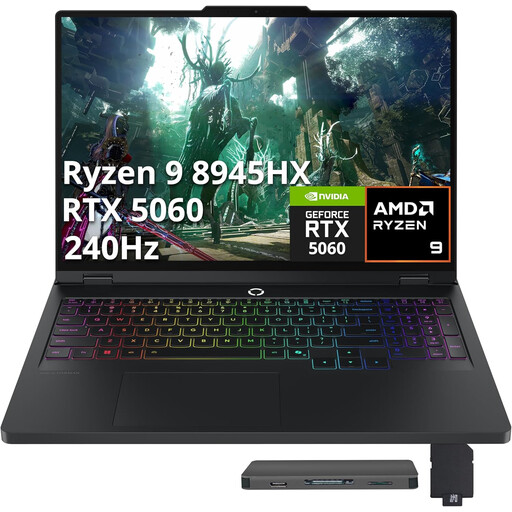
Lenovo Legion Pro 5 LEG P5 R9, 32 GB, 2 TB, 5060
This is another built-in-screen option to assess if a separate powered monitor would complicate your workspace.
The product name specifies 32 GB RAM, 2 TB storage and 5060 graphics. For Blender rendering, check the exact GPU memory as well as whether the screen suits your editing work.
Confirm the supplied power adapter before assessing the load on your socket or extension lead.
View on Joybuy
 No image available
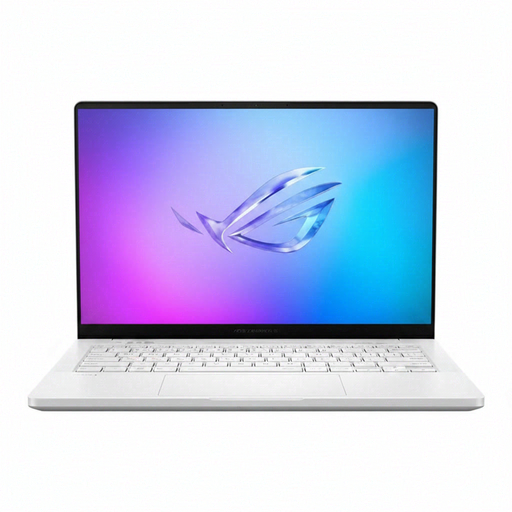
ASUS ROG Zephyrus G14 GA403WR-QS088W, German Grey
Consider this built-in-screen laptop if a 14-inch display is sufficient for your icon workflow.
The product name specifies a WQXGA+ display, AMD Ryzen AI 9 HX 370, 32 GB LPDDR5x memory, a 2 TB SSD and NVIDIA GeForce RTX 5070 Ti graphics. Check the exact GPU memory before judging it against Blender Foundation’s recommended 8 GB VRAM figure.
Confirm the supplied power adapter and the load of any other equipment sharing your socket or extension lead.
View on Joybuy
Common questions
Is a gaming laptop a better starting point if I have only one convenient socket?
A gaming laptop can simplify the basic setup if you can work on its built-in screen; it is not inherently safer merely because it is a laptop. A desktop workstation normally needs a separately powered monitor, so count the charger or PC, display and any other powered items before choosing.
Do inventory icons require 32 GB RAM and 8 GB VRAM?
No, those are Blender Foundation’s recommended Windows specifications, not universal requirements for drawing a 2D icon. They are useful figures to compare with a configuration if your work involves Blender-based 3D modelling or rendering; check the requirements of the application you will use.
Can I plug a gaming PC and monitor into an extension lead?
That depends on the lead’s rating and the total connected load, not just the number of sockets on it. London Fire Brigade advises using a fused inline extension lead rather than a plug-in cube type and warns against overloading it; check the lead and equipment instructions before connecting your setup.
What electrical-product checks matter when buying the PC and its power accessories?
For products placed on the Great Britain market, the Office for Product Safety and Standards’ guidance describes requirements under the Electrical Equipment (Safety) Regulations 2016. Check the documentation and compatible power equipment for the exact products you buy. If delivery is to Northern Ireland, check the requirements applicable there separately.


