Players with limited sockets
If one reachable outlet has to serve the play area, a laptop’s built-in screen lets you avoid a separately powered monitor. Using fewer devices does not remove the need to check the rating of any extension lead you use.


Choose a gaming laptop if the main difficulty is powering a PC and a separate monitor from the available sockets: you can use its built-in screen instead. A compact desktop or tower makes more sense if you want an external display or later upgrades and can power the whole setup without overloading an outlet or extension lead. Whichever form you choose, compare its exact configuration with the requirements of the games you intend to play.
If one reachable outlet has to serve the play area, a laptop’s built-in screen lets you avoid a separately powered monitor. Using fewer devices does not remove the need to check the rating of any extension lead you use.
If you want to play newer titles rather than rely on the requirements of older tactics games, check a named game’s target. Civilization Support lists 16 GB RAM and RTX 2060, RX 6600 or Arc A750 graphics among its recommended Windows requirements for Civilization VII at 1080p, 60 FPS and High graphics.
If a larger external display or later component changes matter more than portability, a desktop is worth considering. Plan power for the PC and monitor together; Electrical Safety First warns that overloaded sockets create a fire risk.
Choose when: You can play on the built-in screen and want to avoid powering a separate PC and monitor at the desk.
Trade-off: Adding an external monitor reduces that socket-saving advantage, and the exact laptop configuration still determines game suitability.
Choose when: You want an external screen, do not need portability and have a safe way to power both devices.
Trade-off: A smaller PC does not make the monitor’s power connection disappear.
Choose when: Documented options for later component changes matter more to you than a compact or movable setup.
Trade-off: Allow desk space and power for the tower and a separate display; upgrade options depend on the specific model.
| Concern | What to check | Who this matters to |
|---|---|---|
| Powered devices | Count everything sharing the outlet and check the extension lead’s stated rating. Decide whether you will use a laptop’s built-in screen. | If I have one practical socket at my desk, I want to play without adding a separate monitor’s power lead; roughly 46% of consumers would put minimising powered desk equipment first. |
| Game requirements | Match the exact CPU, graphics hardware, RAM and available storage to your chosen game’s requirements and intended settings. | For a newer strategy game, I want to buy for my intended graphics target rather than assume any gaming PC will do; around 36% of consumers would prioritise meeting that target. |
| Screen and upgrades | Check the space and power needed for an external monitor, plus the specific desktop’s documented upgrade options. | I would accept a separately powered screen if it gave me the display size I want, or choose a tower for later component changes; roughly 18% of consumers would make that flexibility their primary concern. |
Turn-based play does not tell you which graphics target a game requires. Civilization Support gives Civilization VII different minimum and recommended Windows targets: the former is for 1080p at 30 FPS on Low graphics, while the latter is for 1080p at 60 FPS on High graphics.
Choose the game and settings you want first, then compare the complete PC configuration with the publisher’s relevant requirements.
A multi-socket adaptor or extension lead adds connection points, not permission to exceed its rating. Electrical Safety First warns that overloading sockets creates a fire risk.
Check the rating printed on your particular lead and account for every connected device. Electrical Safety First says extension leads are normally rated at 13A, while some older ones may be rated at 10A.
A laptop’s named GPU does not, on its own, establish how that exact configuration will perform against a game publisher’s desktop reference hardware.
Check the configured laptop CPU, GPU, RAM and storage, then consult the publisher’s compatibility guidance or documented performance for your intended game and settings.
Lenovo’s Legion laptop range is relevant if you want a built-in display and a choice of configurations.
ASUS’s Zephyrus laptop range is relevant when a built-in screen and a smaller machine are priorities.
HP’s gaming range includes laptops and desktops, making it relevant to the laptop-versus-tower decision.
MSI’s laptop families span different sizes and hardware configurations.
These laptops have built-in screens, so they suit a socket-limited setup if you are happy to play without an external monitor. Their screen sizes and stated hardware differ; compare the exact configuration with your game’s requirements rather than treating the laptop label as a performance guarantee.
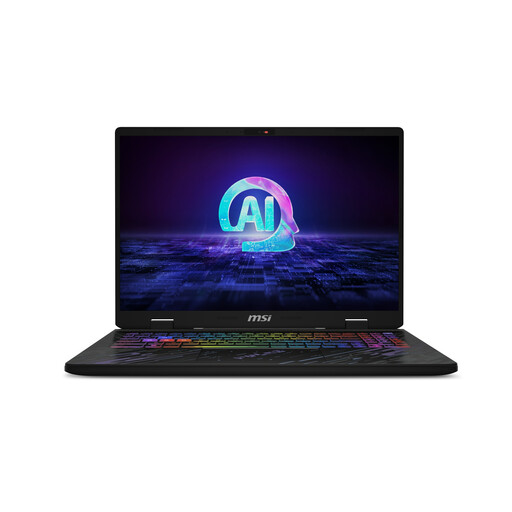 Image unavailable
Consider this if you want to use a 16-inch built-in screen instead of powering a separate monitor.
The stated configuration includes a 240Hz display, Intel Core Ultra 7 155H, GeForce RTX 4060, 16GB DDR5 RAM and a 1TB SSD.
Confirm the supplied Windows edition and check game-specific performance and available storage for your intended title.
 Image unavailable
Its built-in screen suits play without a separately powered monitor.
The stated configuration has a 144Hz FHD display, AMD Ryzen 7 170, GeForce RTX 5050, 16GB RAM and a 1TB SSD.
Check performance against your chosen game and confirm how much storage will be available for it.
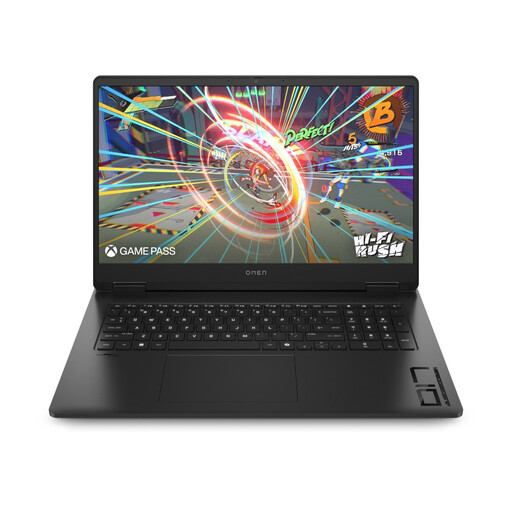 Image unavailable
The larger built-in screen may suit you if you want more display space without adding an external monitor.
The product name specifies an AMD Ryzen AI 7 350, 16GB RAM, a 1TB SSD, RTX 5060 graphics and Windows 11 Home.
Make sure a 17-inch laptop fits your play space, and check game-specific performance and available storage.
 Image unavailable
This 16-inch laptop lets you use its own display rather than add a separately powered monitor.
The stated configuration includes an Intel Core Ultra 9, 64GB RAM, a 2TB SSD, GeForce RTX 5090 graphics and Windows 11 Home.
Compare game-specific performance and available storage with the requirements of the titles you plan to play.
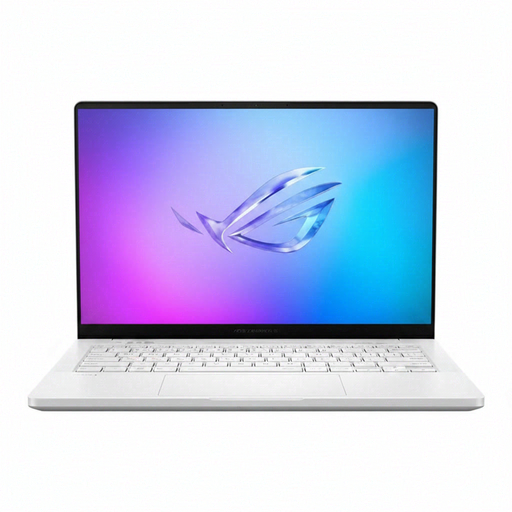 Image unavailable
Consider the 14-inch built-in screen if you want a smaller laptop and do not need an external monitor for play.
The product name specifies a WQXGA+ display, AMD Ryzen AI 9 HX 370, 32GB LPDDR5x memory, a 2TB SSD, GeForce RTX 5070 Ti graphics and Windows 11 Home.
Check that the screen size suits you, confirm the colour variant if it matters, and compare game-specific performance and available storage with your chosen title.
Yes, if you are comfortable using its built-in screen: a laptop avoids the separate power connections of a desktop PC and monitor. You may still need to plug in its charger, and any extension lead must remain within its stated rating.
Start with the requirements for the game and settings you actually want. For example, Civilization Support’s recommended Windows target for Civilization VII at 1080p, 60 FPS and High graphics names a Core i5-10400 or Ryzen 5 3600X, 16 GB RAM, RTX 2060, RX 6600 or Arc A750 graphics, DirectX 12 and 20 GB of available storage.
They can share a suitable lead only if the total connected load stays within its stated rating and the socket is not overloaded. Electrical Safety First says extension leads are normally rated at 13A, though some older ones may be rated at 10A; check your own lead rather than assuming its capacity.
No: models within a gaming range can have different components. Check the exact CPU, GPU, RAM and storage configuration against the game publisher’s requirements for your intended settings.