Choose a gaming laptop around the railway simulator, routes and editing tools you intend to use, and check that simulator’s current PC requirements before buying. A 15–16-inch model with dedicated graphics, at least 16GB RAM, SSD storage and a backlit keyboard is a starting point for a desk-based setup; consider more memory for heavier multitasking, or a smaller screen if you will carry the laptop regularly.
Who is this setup for?
Detailed-simulation builders
If your sessions involve a railway simulator, route-building tools and browser references at the same time, compare the exact game requirements with the laptop’s graphics, memory and storage rather than relying on its gaming label.
Dark-room evening players
If you build or play in low light, check that the exact keyboard has backlighting you can control. Screen placement and room lighting also matter when reflections make the display harder to view.
Portable rail-sim users
If the laptop moves between rooms or locations, a 14-inch design may be easier to accommodate. Consider whether its smaller workspace and the memory configuration will still suit your route-building sessions.
What matters when choosing?
Start with the requirements of your particular simulator, then decide whether your main compromise is desk space, carrying size or room for future projects. Dovetail Games Support Center distinguishes minimum hardware for its lowest settings from recommended hardware for higher settings; neither category establishes how an unspecified laptop will run every route or add-on.
Balanced 15–16-inch setup
Consider it when: The laptop will mainly sit on a desk for simulation, route building and everyday multitasking.
Trade-off: A graphics model name alone cannot establish performance in your chosen simulator; compare the full configuration and its requirements.
Higher-capacity desk setup
Consider it when: A larger, higher-resolution workspace and more memory for simultaneous applications matter more than frequent carrying.
Trade-off: The larger display and power-adapter requirements can make this route less convenient to move; higher specifications do not guarantee a particular frame rate.
Portable 14-inch setup
Consider it when: You often take the laptop away from a fixed desk but still need dedicated graphics and visible controls in low light.
Trade-off: Route-editing panels have less screen space, and memory expansion depends on the exact configuration.
| Concern |
What to check |
Who this matters to |
| Simulation headroom |
Compare the exact simulator’s current requirements with the laptop’s CPU, dedicated GPU and RAM. Check the precise configuration, not just its model family. |
I want detailed routes and building tools to run at settings I can use, rather than buying to a minimum requirement without checking what it means. Around 39% of consumers put simulation headroom first. |
| Dark-room controls and viewing |
Confirm keyboard backlighting and its controls on the exact variant. Position the screen and lighting to avoid reflections and glare. |
When I work in low light, I need to find shortcuts without making the display uncomfortable to view. For around 23% of consumers, dark-room usability is the main concern. |
| Memory and project storage |
Choose RAM and SSD capacity for the applications and route library you plan to keep; check whether either can be expanded. |
My downloaded routes, captures and open reference material need room alongside the simulator. Storage and multitasking come first for around 23% of consumers. |
| Portability |
Compare screen size, charger, ports and memory configuration if the laptop will travel regularly. |
I will carry the machine often enough to accept a smaller route-building workspace. Around 15% of consumers prioritise portability over the other concerns. |
Buying pitfalls
-
Treating a GPU name as the whole specification
Laptops with similarly named graphics can differ in memory, storage, display, keyboard and other configuration details. Those differences affect whether the complete machine suits your simulator and desk setup.
Compare exact model or part numbers and their full specifications, including the keyboard, ports and the simulator’s current requirements.
-
Choosing SSD capacity without considering route files
A 512GB configuration leaves a different amount of local space from a 1TB configuration when you plan to retain games, routes, captures and projects.
Choose capacity for the files you expect to keep, and check the exact model’s expansion options before assuming you can add another drive later.
If local storage runs short, managing files or using additional storage adds another step to your setup.
-
Assuming RGB branding settles dark-room usability
Keyboard lighting and its controls vary by model. Bright room lighting can also create screen reflections.
Check the exact variant’s keyboard-backlight controls, then adjust the screen position and room lighting for your desk.
-
Blocking the laptop’s ventilation
Gaming-laptop air intakes or exhaust vents can be obstructed by bedding or another soft surface. A Joybuy Legion listing specifically advises using a hard, flat surface and keeping vents clear.
Set the laptop on a stable, hard surface with its ventilation unobstructed during longer building or playing sessions.
Relevant brands to consider
These manufacturer ranges illustrate different screen-size and configuration choices. Check the exact part number: a feature listed for one model or as an option across a range does not apply to every laptop bearing the brand.
Lenovo
Lenovo’s LOQ and Legion families are relevant to shoppers comparing desk-based virtual-railway configurations.
- Lenovo UK lists a Legion 5i configuration with RTX 5060 graphics, 16GB RAM, a 1TB SSD and a backlit keyboard; a Legion Pro 7i configuration lists RTX 5070 Ti graphics and 32GB RAM.
- Those specifications belong to particular configurations, so check the part number, keyboard and availability of the model you intend to buy.
ASUS
The ROG Zephyrus G14 offers an example of a compact route, while the TUF family gives shoppers other gaming-laptop configurations to compare.
- ASUS ROG UK lists a 2026 G14 configuration with a 14-inch OLED display, RTX 5060 graphics and a backlit keyboard.
- One listed 16GB G14 configuration has a 16GB maximum memory capacity; verify the memory arrangement and keyboard features of the exact model.
Acer
Acer’s Nitro range is relevant when comparing display sizes for a desk-based setup.
- Acer UK lists Nitro V models across 15-, 16- and 17-inch size classes with differing graphics options.
- Range-level “up to” graphics specifications do not identify the GPU or keyboard supplied in a particular configuration.
Dell Alienware
Alienware models are relevant to buyers comparing higher display specifications alongside dedicated graphics.
- Dell UK lists an Alienware 15 option with a 15.3-inch, 165Hz display and RTX 50-series laptop graphics options across its range.
- Display and graphics options vary by model; the range specifications do not establish results in a particular railway simulator.
Gaming laptops on Joybuy
These laptops cover desk-oriented configurations with different screen sizes, memory and storage capacities. Compare each exact model with your simulator’s requirements and check its keyboard features before choosing it for a dark room.
 No image available
Lenovo LOQ Essential 15ARP11, Ryzen 7 170, RTX 5050
Consider this 15.6-inch model for a primarily desk-based setup where local route storage matters. Its name specifies 16GB RAM, a 1TB SSD and a 144Hz FHD display; check the keyboard-backlight controls and your simulator’s requirements for this exact configuration.
View on Joybuy
 No image available
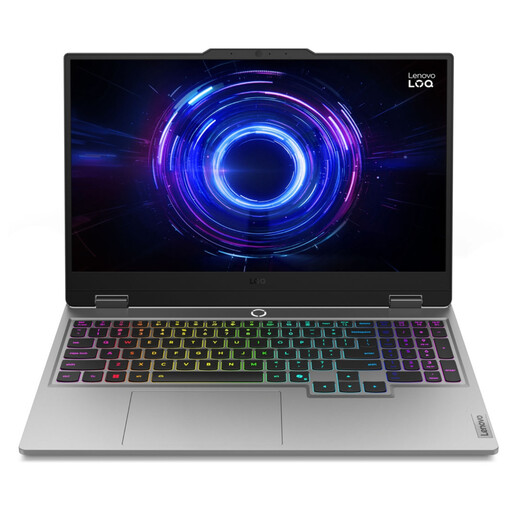
LOQ 15IRX10, i5-13450HX, 24GB RAM, 1TB SSD
Consider this configuration if you want the stated 24GB memory capacity for applications running alongside your simulator. Confirm the exact model number supplied, its complete graphics specification and keyboard-backlight controls before buying.
View on Joybuy
 No image available
Lenovo Legion Pro 7 16IAX10H, RTX 5090, 83F5000UUK
Consider this desk-oriented configuration if you need substantial memory and local storage for simultaneous applications and projects. Its name specifies an Intel Core Ultra 9 processor, 64GB RAM, a 2TB SSD and a 16-inch display; confirm keyboard backlighting and the simulator’s requirements rather than assuming those specifications guarantee particular game performance.
View on Joybuy
 No image available
HP 17-db1000na OMEN 17, Ryzen AI 7 350, RTX 5060
Consider this model if a 17-inch Full HD screen suits your desk-based route-building workspace. Its name specifies 16GB RAM and a 1TB SSD; check keyboard backlighting on the exact variant and compare its specification with your chosen simulator.
View on Joybuy
 No image available
Thunderobot Radiant S16 5060, i7-13650HX, RTX 5060
Consider this 16-inch model if you want the stated RGB-backlit keyboard for low-light use. Its name specifies a QHD+ 240Hz display, 16GB RAM and a 1TB SSD; check how the backlight is adjusted and whether the full configuration meets your simulator’s requirements.
View on Joybuy
Common questions
Should I buy to a railway simulator’s minimum or recommended requirements?
Use the requirements for the exact simulator and edition you plan to run, treating the minimum as a floor rather than a general buying target. Dovetail Games Support Center describes minimum hardware as intended for its lowest settings and recommended hardware as intended for higher settings; check any requirements for the routes or tools you will use as well.
Is a backlit keyboard worth checking for dark-room use?
Yes, if you need to find keys and shortcuts without brightly lighting the room. ASUS UK Support explains that brightness can be adjusted on supported notebooks, so confirm both the presence and controls of the backlight on the exact laptop variant.
How should I set up the screen for long sessions in a dim room?
Position the screen and lighting so that reflections and glare do not interfere with viewing. The Health and Safety Executive gives this advice for display-screen workstations; it is a useful setup check, not a claim that workplace rules impose a special requirement on private gaming.
What should I do with an old laptop when replacing it?
Look for an appropriate electrical-waste collection or retailer take-back route rather than putting the laptop in general household waste. UK government guidance identifies the Waste Electrical and Electronic Equipment Regulations 2013, as amended, as the legislation underpinning measures for recovering, reusing and recycling electrical equipment.


