What matters when buying
Check physical fit and the named game’s requirements first. Treat a larger screen, monitor connection and capability for other games as separate choices.
| Concern | What to check | Who this matters to |
|---|
| Desk footprint |
Measure the chassis, charger and space for a mouse; check that the built-in screen is readable at your viewing distance. |
I need the laptop to serve as my whole gaming setup without crowding the desk. Around 29% of consumers would put usable desk space first. |
| Game compatibility |
Compare the named game’s official requirements with the exact processor, graphics, memory and storage configuration. |
Before choosing hardware, I want to know it suits the game and applications I intend to run. For around 36% of consumers, confirming that fit would be the primary concern. |
| Screen workspace |
Assess the built-in display; if adding a monitor, confirm the laptop’s video output and the desired resolution and refresh rate. |
I want enough room to follow the hospital layout and menus, with a separate screen only if my desk allows it. A larger or more flexible view would come first for around 21% of consumers. |
| Other games |
Identify those games and check their recommended requirements before choosing a higher graphics tier. |
I expect to use this laptop for games beyond hospital management, so that wider library shapes my choice. Around 14% of consumers would prioritise this headroom. |
Joybuy laptops for this setup
These gaming laptops include 15.6-inch built-in-screen choices, 16-inch configurations and a larger 17.3-inch option. Measure the space available for each laptop and check your named game’s requirements before choosing.
 Image unavailable
Lenovo LOQ Essential 15ARP11, Ryzen 7 170, 16GB, 1TB, RTX 5050
The 15.6-inch built-in display makes this a candidate for a desk without a separate monitor; compare the laptop’s dimensions with your available space.
The product name specifies a 144 Hz Full HD screen, 16GB RAM and a 1TB SSD. Check the intended game’s requirements and whether 16GB meets your plans for other applications.
View on Joybuy
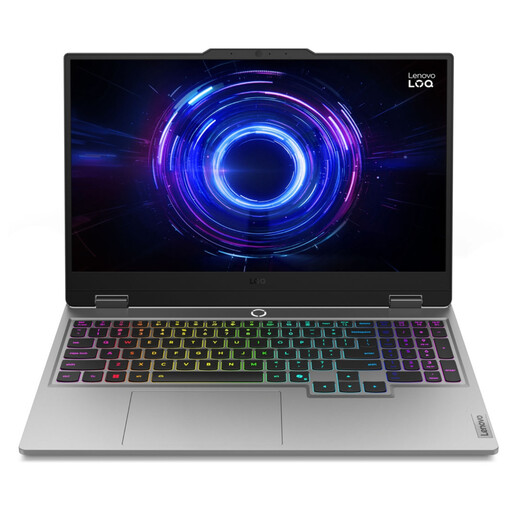 Image unavailable
LOQ 15IRX10, 24GB, 1TB, W11H
This 15.6-inch configuration is worth considering if you want a built-in screen and expect to keep other applications open alongside the game.
The product name identifies 24GB memory and 1TB storage. Confirm the exact processor variant, chassis dimensions and named game’s requirements before ordering.
View on Joybuy
 Image unavailable
HP OMEN 17 17-db1000na, Ryzen AI 7 350, 16GB, 1TB, RTX 5060
Consider the larger built-in screen only if its chassis leaves enough space for your mouse and other desk items.
The product name specifies a 17.3-inch Full HD display, 16GB RAM and a 1TB SSD. Measure the available desk area and check the intended game’s requirements.
View on Joybuy
 Image unavailable
Lenovo Legion Pro 5 LEG P5 R9, 32GB, 2TB, 5060
The 16-inch format may suit you if you want more built-in screen space while keeping a single-display setup.
The product name identifies 32GB memory and 2TB storage. Confirm the chassis footprint against your desk and compare the exact configuration with the games you plan to play.
View on Joybuy
 Image unavailable
Lenovo Legion Pro 7 16IAX10H 83F5000UUK, Core Ultra 9, 64GB, 2TB, RTX 5090
This 16-inch configuration is more relevant if your plans include other demanding games or applications; its graphics tier is not established as necessary for the unnamed hospital game.
The product name specifies 64GB RAM and a 2TB SSD. Check chassis dimensions, any required external-display connections and your games’ requirements before choosing it.
View on Joybuy
Common questions
Do I need a high-refresh display for a hospital-management game?
Not necessarily: start with a screen on which you can read the game interface comfortably and an exact configuration that meets the game’s requirements. A higher refresh rate may matter more to you if you also play games where fast motion is important.
Can I add a monitor to a gaming laptop on a small desk?
Yes, if the monitor fits and the laptop supports the intended connection. Check its HDMI or supported USB-C video output and whether it can drive the display’s chosen resolution and refresh rate; allow room for cables and power connections too.
Should I choose a 15.6-inch or 16-inch laptop?
Choose by chassis fit and screen readability rather than diagonal size alone. A 15.6-inch model is a useful starting point when desk space is tight; consider a 16-inch model if its screen layout appeals to you and the complete laptop still fits.
Are 16GB of memory and a 512GB SSD enough?
They may be enough for your particular setup, but check the named game’s requirements, your other applications and the space needed for installed games and mods. HP Store UK lists Victus configurations with those capacities, while the right capacity for you depends on what you intend to keep and run.


