Desktop-aquarium multitaskers
You want an aquarium visible while you work, study or browse. Check whether your chosen application can run alongside your usual programs before choosing extra graphics headroom.


Choose the laptop against the requirements of the virtual aquarium you intend to run: a desktop overlay and a 3D aquarium application can place different demands on the hardware. If the laptop will also run games and other programs, compare its memory, graphics and screen with those uses, then check the exact configuration for your headphone connection. A higher-tier GPU or display is not automatically necessary for the aquarium alone.
You want an aquarium visible while you work, study or browse. Check whether your chosen application can run alongside your usual programs before choosing extra graphics headroom.
You want a 3D aquarium and other PC games on the same laptop. Steam lists an 8 GB RAM and GeForce GTX 1070 minimum for Sea Aquarium Screensaver, so compare your chosen application’s requirements with the exact laptop configuration rather than assuming every aquarium needs the same hardware.
You plan to wear headphones for long sessions and care about the connection they require and the laptop’s fan behaviour in your room. Check both on the exact model you are considering.
Identify the aquarium application first, then decide how much the screen, other games and quiet listening matter to your setup.
| Concern | What to check | Who this matters to |
|---|---|---|
| Application and multitasking | Compare the exact app’s operating-system, memory, graphics and storage requirements with the laptop configuration. Allow for the other programs you intend to keep open. | I want the aquarium running beside my everyday programs without choosing hardware for an app I will not use. Around 44% of consumers put application and multitasking compatibility first. |
| Visuals and other games | Compare the GPU and the exact panel’s resolution, refresh rate and stated colour coverage; a GPU name does not describe the screen. | If I will also play games or spend time watching a detailed aquarium, I care about both graphics headroom and the display. Visuals and broader gaming are the main priority for roughly 33% of consumers. |
| Headphones and room noise | Check the exact SKU’s required headset jack, USB connection or wireless support, and assess cooling information for that model. | I want to listen privately without discovering that my headset needs a different connection or that fan noise disrupts a quiet room. Headphone setup and room noise come first for around 23% of consumers. |
The GPU does not tell you which display, memory or storage configuration you are getting. Lenovo’s cited LOQ 15IRX9 and ASUS’s cited V16 configurations have different screen specifications, so the graphics label cannot stand in for a panel comparison.
Read the full configuration for the exact variant, including its display, memory, storage and connections.
Steam describes Virtual Aquarium as a desktop overlay, while its listing for Sea Aquarium Screensaver specifies a GeForce GTX 1070 and 8 GB RAM minimum. Neither description establishes the requirements of a different app.
Find your chosen application’s published minimum and recommended requirements, then compare them with the laptop you intend to buy.
A laptop-family name does not establish the ports or wireless features of every configuration. A headset may also need a USB dongle or an adapter, depending on its connection.
Check the exact laptop SKU against your headset’s plug, dongle or wireless requirements before ordering.
The LOQ line is a reference point for comparing conventional gaming-laptop configurations, but specifications vary by model.
The V16 and TUF Gaming lines offer different configurations to examine when graphics, screen specification and cooling matter.
Nitro V 15 AI is relevant if you want to compare gaming-focused configurations against your aquarium app’s requirements.
Victus provides a mainstream gaming-laptop configuration to compare with your chosen application and other games.
These gaming laptops offer different screen sizes, memory configurations and graphics options for an aquarium-and-headphones setup. Compare each one with your chosen app and headset; a product title alone cannot settle compatibility or room-noise preferences.
 No image available
Consider this configuration if you want a 15.6-inch gaming laptop for the aquarium and other PC use. The title specifies a Ryzen 7 170, 1 TB SSD and 144 Hz FHD display; compare the chosen app’s requirements and your headset connection before ordering.
 No image available
Consider this 24 GB RAM variant if you expect to keep other programs open with the aquarium. The title also specifies W11H; confirm whether the supplied processor is the listed i7-13650H or the i7-13650HX named elsewhere in the product description, as well as your app and headset requirements.
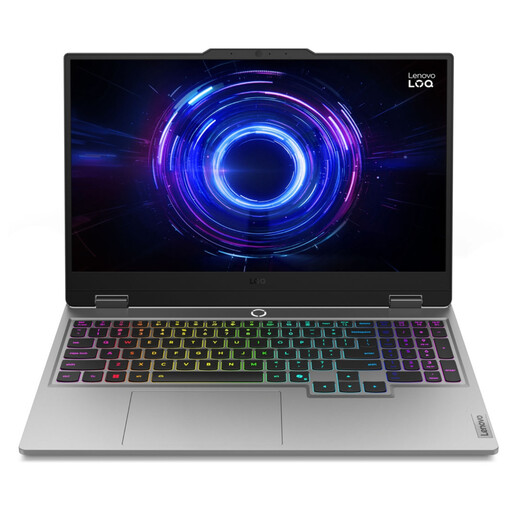 No image available
This 24 GB RAM configuration is worth comparing if you will run the aquarium alongside other tasks. The title specifies W11H, but the listing gives two model numbers, 83JE0017NT and 83JE000JUK; confirm which variant is supplied and check its app and headset compatibility.
 No image available
Consider this model if you want an OMEN 17 for the aquarium and other gaming. Its title specifies 16 GB RAM, a 1 TB SSD and Windows 11 Home; check the chosen app’s requirements and the precise headphone connection you need.
 No image available
Consider this configuration for broader gaming alongside the aquarium, rather than assuming the aquarium itself needs an RTX 5090. The title specifies an Intel Core Ultra 9, 64 GB RAM, a 2 TB SSD and Windows 11 Home; check the app, headset connection and any portability or fan-noise requirements separately.
Not necessarily: choose against the exact app’s requirements and any other games you intend to play. Steam describes Virtual Aquarium as a desktop overlay, while Sea Aquarium Screensaver lists 8 GB RAM, a GeForce GTX 1070, DirectX 12 and 2 GB of available storage as minimum requirements; those are requirements for different applications, not a universal aquarium specification.
Match your headset’s connection to the exact laptop variant. Check for the required jack or USB port if it is wired or uses a dongle, and confirm the relevant wireless compatibility if it connects without one.
Check the exact model’s cooling information and available operating modes, and keep its ventilation unobstructed during use. ASUS describes its TUF Gaming 16 as designed for 40 dB under a full gaming load, but that model-specific brand claim does not predict the noise of another laptop or every mode and workload.
For a UK purchase, the Consumer Rights Act 2015, section 9, requires goods supplied under a contract to be of satisfactory quality; this is distinct from a retailer’s voluntary change-of-mind policy. For disposal, UK government guidance on waste electrical and electronic equipment encourages recovery, reuse and recycling, so check an appropriate collection route for the laptop.