Consumers with one socket at their setup
You want to keep the main gaming setup to a laptop and its built-in display, rather than power a separate tower and monitor.


Choose a gaming laptop if you can use its built-in screen and want the computer and main display in one device. A desktop gives you more scope to choose components, but you must plan power for both the tower and monitor. For either route, compare the exact PC configuration with the requirements of the building games you intend to play.
You want to keep the main gaming setup to a laptop and its built-in display, rather than power a separate tower and monitor.
You need to compare a PC’s processor, graphics, memory and storage with your chosen game’s requirements. Steam’s requirements for Cities: Skylines II provide one game-specific reference.
You can arrange power for a tower and monitor and want to choose components more directly. PCSpecialist, for example, offers configurable processor, graphics, memory and storage choices.
Choose it when: You can play on the laptop screen and want to move the setup without taking a separate monitor.
Trade-off: An external screen or powered accessories can still add to the socket and cable planning.
Choose it when: You can power and accommodate both devices and want to select desktop components around your games.
Trade-off: The monitor adds another powered device at the desk; a desktop does not resolve a socket shortage on its own.
| Concern | Buying checks | Who this matters to |
|---|---|---|
| Powered devices at the desk | Decide whether the laptop screen will be your main display. List any monitor and powered accessories you would add. | If I have little socket space, I want the computer and screen in one device without giving up a display I can comfortably use. Around 50% of consumers put minimising powered devices first. |
| Game requirements | Compare the exact CPU, GPU, RAM and available storage with the official requirements for your most demanding game. | When I play a demanding city builder, I need to judge a specific configuration against that game, not its gaming label. Roughly 33% of consumers make game capability their primary concern. |
| Configuration and upgrades | Check the selected desktop’s components and model-specific upgrade options, alongside the power and space needed for its monitor. | If I can accommodate a tower and display, I would rather choose components now and investigate later upgrades. For around 17% of consumers, that flexibility comes first. |
Connecting too much equipment can exceed the lead’s marked current rating. Electrical Safety First warns against overloading extension leads.
Check the marked rating and the combined load of everything connected. Follow a cable reel’s instructions on unwinding it, and do not connect one extension lead to another.
A desktop normally needs a separately powered monitor, so the full desk setup may use more powered devices than expected.
List the tower, monitor and any powered speakers, network equipment or chargers before deciding whether the desktop route fits your socket space.
Requirements differ between games. Steam lists 16 GB RAM and 60 GB of available storage in its recommended specification for Cities: Skylines II; those figures alone do not establish how a particular PC will perform.
Compare the exact processor, graphics, memory and storage of the configuration you are considering with the official requirements for your own games and planned mods.
A gaming-laptop range to examine if you want a laptop screen and a choice of model configurations.
HP offers OMEN laptops and desktops, making the range relevant to the choice between an integrated screen and a separate desk setup.
A gaming-laptop range with differently positioned Flow, Zephyrus and Strix lines.
These laptops have built-in displays, so each can serve as the computer and main screen when sockets are limited. Compare each exact configuration with your games before choosing; you will still need to plan power for the laptop and any accessories.
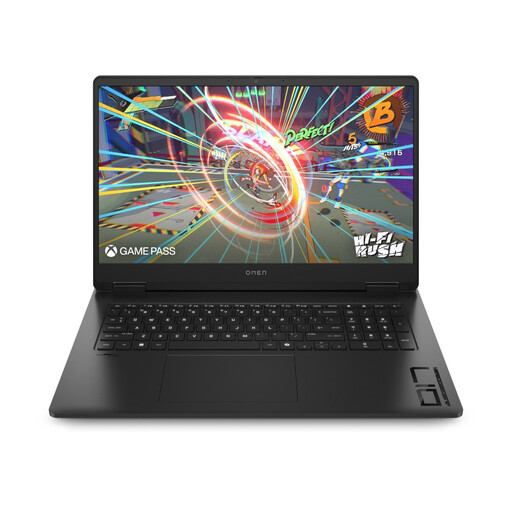 No image available
Consider its built-in screen if you want to play without powering a separate monitor.
The listed configuration has a 17-inch Full HD display, 16 GB RAM, a 1 TB SSD and Windows 11 Home. Compare its processor and graphics with your chosen game’s requirements rather than judging suitability from memory alone.
 No image available
Its built-in screen lets you assess this configuration without adding a monitor to the core setup.
The title identifies a 16-inch display, Intel Core Ultra 9 processor, 64 GB RAM, 2 TB SSD and NVIDIA GeForce RTX 5090. Check the exact processor and graphics against the requirements of the games you intend to play.
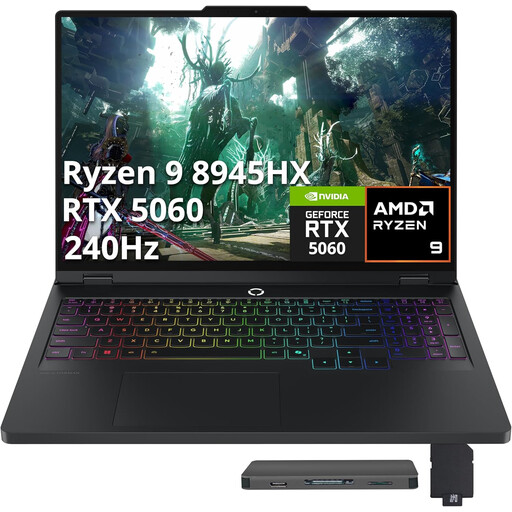 No image available
Use its laptop screen as the main display if avoiding a separately powered monitor is your priority.
The title lists a Ryzen 9 processor, 32 GB RAM, 2 TB storage and 5060 graphics. Confirm the processor’s full model and compare the complete configuration with your game’s requirements.
 No image available
The built-in display can be your main screen where there is no convenient socket for a monitor.
This configuration lists a 15.6-inch Full HD 144 Hz display, 16 GB RAM and a 1 TB SSD. Check the exact game requirements before deciding whether its processor and graphics meet your needs.
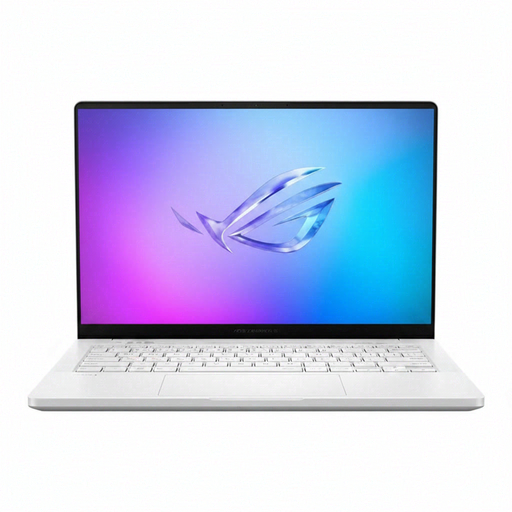 No image available
Its built-in display offers a laptop-screen route when you do not want a separate monitor at the desk.
The title lists a 14-inch WQXGA+ display, Ryzen AI 9 HX 370, 32 GB RAM, a 2 TB SSD and GeForce RTX 5070 Ti. Check game requirements, the keyboard layout and the supplied power adapter before ordering.
Yes, if you can play on its built-in screen and the exact configuration suits your games. The laptop and main display then share one device, although its charger needs power and an external monitor or powered accessories would change the setup.
They can only share a lead if the combined load of every connected device stays within its marked rating. Electrical Safety First advises checking that rating rather than treating spare outlets as spare electrical capacity; do not connect one extension lead to another.
Compare the PC’s full configuration with Steam’s game-specific requirements. Steam lists 16 GB RAM and 60 GB of available storage in its recommended specification for Cities: Skylines II; check the recommended processor and graphics too, as matching the memory figure alone does not establish suitability.
Check the selected retailer’s warranty cover, return conditions, repair process and support contact for the exact configuration. Also confirm what comes in the box, including the charger, so you can plan the powered setup.