
24/7 Customer Support

Free returns

Same-day & Next-day Delivery

Quality Guaranteed

Unlock Your Welcome Offers: FREE Delivery | Up to 80% OFF | Free 30-day JoyPlus trial
Download the APP
Buying a gaming laptop in the UK can become expensive quickly. A high graphics specification may look attractive, but the right choice depends on how you play, where you use the machine and whether it also needs to support study, streaming or creative software.
A few common marketing traps are worth checking before you buy:
For gaming, the dedicated GPU usually has the greatest influence on graphical detail and frame rates. An RTX gaming laptop can support ray tracing and compatible AI-assisted image technologies, but performance varies according to the laptop’s power settings, cooling system and display resolution.
An RTX 4050 or RTX 5050 configuration can suit Full HD gaming at sensible settings. Moving to an RTX 5060, RTX 5070 or RTX 5080 laptop generally targets higher settings, QHD gaming and demanding creative workloads. The gaming laptop with RTX 5070 category is worth considering for users who want a stronger graphics platform without moving to the largest flagship configurations. An RTX 5080 laptop is more relevant to demanding creators, enthusiasts and users who plan to connect high-resolution external displays.
The processor also matters for esports, simulation games, streaming and editing. Check the number of cores, boost frequency and thermal design rather than relying on the “gaming” label alone.
For current multitasking, 16GB RAM is a practical starting point. It can support gaming alongside voice chat, browsers and common productivity applications. A gaming laptop with 32GB RAM is more suitable for streamers, video editors, 3D applications and users who keep several demanding programmes open.
A solid-state drive is preferable to a mechanical hard drive for system responsiveness and game loading. A gaming laptop with 1TB SSD provides useful room for Windows, applications and several large games. Check whether the laptop includes an additional M.2 slot or replaceable drive if you expect your library to grow.
A 15.6-inch model often provides a reasonable compromise between desk space and portability. A 16-inch gaming laptop can offer a taller 16:10 workspace, while a 17-inch gaming laptop is better suited to users who primarily play at home and value a larger viewing area.
For competitive titles, a 144Hz, 165Hz or 240Hz display can make movement appear smoother when the system produces matching frame rates. Resolution should remain aligned with the GPU: Full HD is less demanding, while QHD and 4K require more graphics capability. Also check brightness, colour coverage, adaptive synchronisation and whether the panel is IPS or OLED.

Why This Fits Their Persona: A practical UK-layout option for students and first-time PC gamers who need gaming, study and everyday applications in one machine.
The RTX 5050 is paired with 16GB DDR5 memory and a 1TB SSD, rather than relying on a large storage figure alone. Its 144Hz Full HD display keeps the resolution appropriate for the hardware.
RTX 5050 with 8GB GDDR7 memory; 100% sRGB, 300-nit 15.6-inch IPS display; Gigabit Ethernet and a UK keyboard.
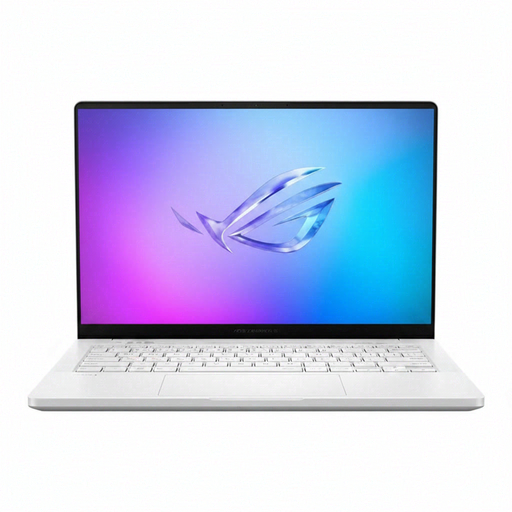
Why This Fits Their Persona: A compact choice for UK commuters, students and professionals who want strong gaming hardware without a 17-inch chassis.
The specification combines a Ryzen AI 9 HX 370 processor, RTX 5070 Ti graphics, 32GB memory and 2TB SSD, so the portable format does not depend on entry-level internals.
14-inch WQXGA+ display; Wi-Fi 7; 32GB LPDDR5x and 2TB SSD in a compact laptop format.
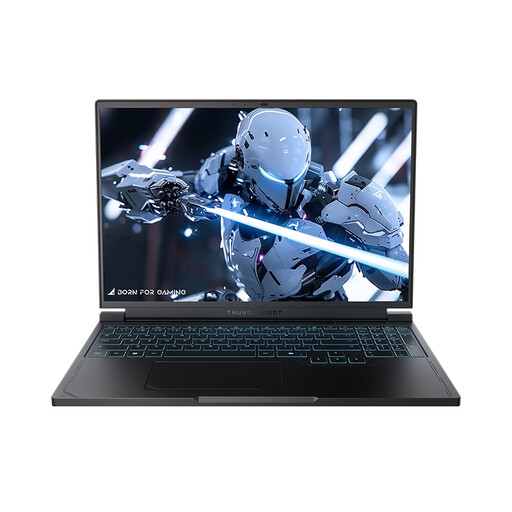
Why This Fits Their Persona: Designed for players who prioritise fast motion, a QHD image and a screen that remains manageable on a gaming desk.
The 240Hz panel is paired with an RTX 5060 and Ryzen 7 7745HX, giving the display a suitable performance platform for competitive games.
16-inch QHD 240Hz display; 1TB SSD, 16GB DDR5, HDMI, Mini DisplayPort and RJ-45 connectivity.
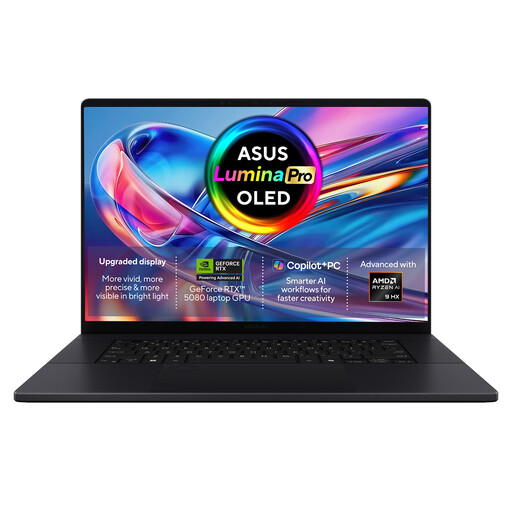
Why This Fits Their Persona: A 16-inch workstation-style option for video editing, 3D rendering, design applications and gaming at home.
Its RTX 5080 Laptop GPU is supported by 64GB LPDDR5X memory and a 2TB SSD, while the 4K OLED touchscreen provides detail for compatible creative workflows.
Ryzen AI 9 HX 370 processor; RTX 5080 with 16GB GDDR7; 4K 120Hz OLED touchscreen and Wi-Fi 7.
We have compiled a complete, real-time list of products that fully satisfy these strict selection criteria and UK safety regulations.
Yes, provided you accept the trade-offs. Gaming laptops often offer powerful processors, dedicated graphics and fast screens, which can help with editing and demanding applications. They are usually heavier than standard productivity laptops, and gaming performance can require the mains adapter. Check weight, battery capacity, webcam quality and keyboard layout before commuting daily.
A reasonable service life depends on the games, settings and upgrade options. A laptop with 16GB or 32GB RAM, an SSD and a suitable dedicated GPU should remain useful for several years, although newer games may require reduced settings over time. Keep vents clear, use the supplied charger and update Windows and graphics drivers. Confirm warranty coverage and whether storage or memory can be upgraded.
Power use is usually noticeably higher during gaming than during web browsing or document work, particularly with RTX 5070, RTX 5080 or similar high-performance hardware. Playing while connected to the mains allows the laptop to use its performance mode. For lower running costs, use balanced mode for everyday tasks, reduce display brightness and avoid leaving demanding applications running unnecessarily.