Hotbar-heavy builders
If you repeatedly change tools, blocks or inventory slots, a thumb-button grid gives you more places to assign those actions. Check that your game accepts the intended bindings and that you can distinguish the buttons by touch.


Choose a gaming mouse for building games by the controls you can comfortably reach and assign, rather than by DPI alone. A thumb-button grid suits a large set of hotbar or tool shortcuts; a smaller multi-button layout may suit frequent cursor movement, while wireless is worth considering if cable freedom matters to you. Check your game’s binding options and the mouse’s fit before relying on either choice.
If you repeatedly change tools, blocks or inventory slots, a thumb-button grid gives you more places to assign those actions. Check that your game accepts the intended bindings and that you can distinguish the buttons by touch.
If you spend more time panning, selecting and placing objects than calling up shortcuts, grip fit and manageable movement may matter more than a large button grid.
If a cable gets in the way or you switch between compatible devices, compare the available connection modes alongside charging, receiver placement and software requirements.
Start with the actions you want on the mouse, then assess hand fit, wheel controls and connection needs.
| Concern | What to check | Who this matters to |
|---|---|---|
| Shortcuts and button placement | Count buttons you can reach distinctly, and check whether your game accepts the intended bindings. | If I repeatedly switch tools and hotbar slots, I want those commands within easy thumb reach without accidental presses. Around 36% of consumers would put shortcut access first. |
| Grip and movement | Compare shape, handedness and stated weight with a mouse you already find comfortable. | During long building sessions, I want a shape that suits my grip while I move and click repeatedly. For around 29% of consumers, fit and movement would be the primary concern. |
| Wheel and navigation | Check for the scroll feel you prefer and whether wheel-tilt controls can be assigned on the exact model. | When I cycle through tools or long menus, I care more about predictable scrolling than a dense thumb grid. Wheel and navigation controls would come first for around 21% of consumers. |
| Wireless flexibility | Compare connection modes, receiver needs and the conditions behind stated battery life. | If a cable interferes with my setup or I change devices, I want a connection arrangement I can manage. Around 14% of consumers would make that flexibility their main priority. |
A sensor figure does not tell you whether the mouse’s controls suit your building actions or whether its shape fits your hand.
List the commands you want to assign, then assess button reach and grip before comparing sensor specifications.
Extra buttons are useful only if you can distinguish and reach them and your game accepts the mappings you intend to use. Corsair specifies a repositionable 12-button side panel on its Scimitar Elite Wireless SE.
Check the game’s binding options and the position of the side buttons on the exact mouse you are considering.
Corsair describes the Scimitar Elite Wireless connection through its 2.4 GHz receiver as intended for gaming, while its guidance positions Bluetooth for everyday computing. Its quoted battery figures depend on RGB being off.
Check which mode you would use for play, the stated battery conditions and how the mouse charges.
A right-handed ergonomic shape can put thumb controls in the wrong place for left-handed use. Razer offers a separate Naga Left-Handed Edition with a 12-button thumb grid.
Confirm the exact edition and side-button placement rather than assuming that an ergonomic mouse is reversible.
Razer’s Naga V2 HyperSpeed is a high-button option, while the Basilisk V3 35K offers a different arrangement of controls and a configurable wheel.
The Scimitar Elite Wireless SE is relevant if you want an MMO-style thumb grid whose position can be adjusted.
The wired G502 X is a multi-control option for players interested in wheel navigation without choosing a dedicated thumb grid.
The wired Rival 5 is relevant if you want several programmable controls in a mouse without a full MMO-style grid.
These mice offer different ways to approach building-game controls, from stated programmable-button counts to lighter wired play and wireless setups. Check each model’s button placement and your game’s binding options against your own shortcut plan.
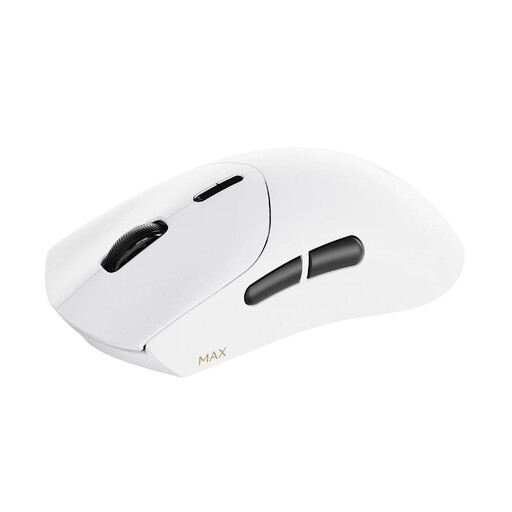 No image available
Consider this if you want several mouse-based commands in a wireless model. Its name specifies 10 programmable buttons and a 53 g weight; check the button layout and whether your game accepts the bindings you need.
 No image available
Consider this if connection flexibility matters alongside a smaller set of remapped commands. The product name lists Bluetooth, 2.4 GHz and USB-C modes; check button placement, game binding support and the exact weight if those affect your choice.
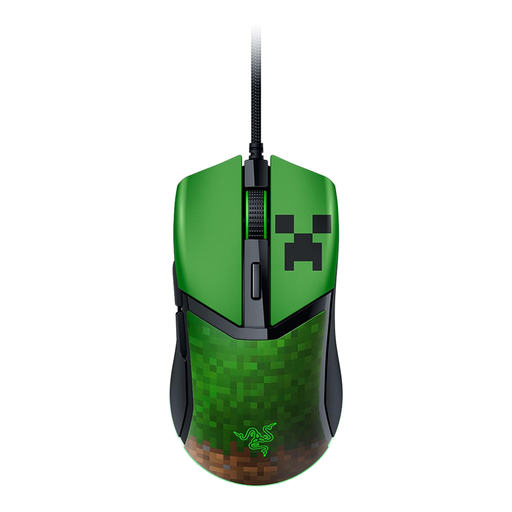 No image available
Consider this Minecraft-themed wired mouse if you prefer playing with a cable. Check how many controls you can assign and whether the cable and shape suit your playing space.
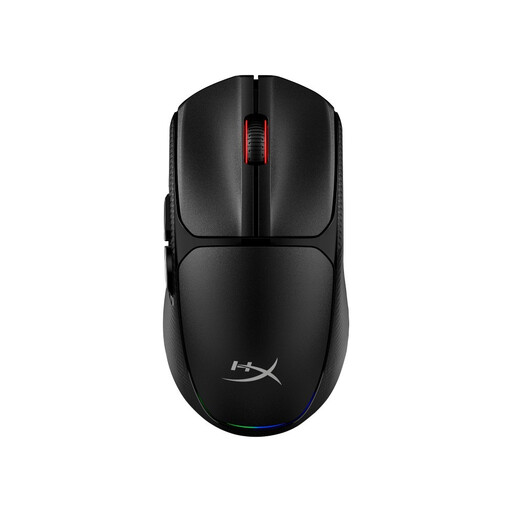 No image available
Consider this if wireless play is a priority. Check its button count and placement against your planned building-game shortcuts, along with the connection and charging arrangement you intend to use.
Choose enough reachable buttons for the actions you regularly want away from the keyboard. Models with fewer controls can suit a small shortcut set, while a thumb grid is worth considering for many separate hotbar or tool commands; either way, check your game’s binding options.
For the Corsair Scimitar Elite Wireless model, Corsair positions its 2.4 GHz receiver connection for gaming and Bluetooth for everyday computing. Follow the guidance for your exact mouse, and check which connection modes your playing device supports.
Yes: Razer describes its Naga Left-Handed Edition as a dedicated left-handed mouse with a programmable 12-button thumb grid. Confirm the exact edition and where its side buttons sit rather than assuming a right-handed ergonomic model can be reversed.
Ask the retailer about take-back when buying a replacement. GOV.UK says electrical-equipment distributors must offer take-back of waste equipment of the same type as an item a customer buys; confirm the arrangement that applies to your purchase.