Shortcut-heavy map editors
If you repeatedly switch tools, issue editor commands or move around a viewport, accessible mouse-side bindings may be useful. Check which commands your editor accepts before deciding how many controls you need.


Choose a multi-button gaming mouse if you regularly assign map-editor commands to mouse controls; give more weight to shape, stated weight and scrolling if sustained pointer movement matters more. For a dark-room setup, check whether the exact mouse and its software let you configure lighting and shortcuts without distraction, then decide separately whether you want a wired or cable-free desk.
If you repeatedly switch tools, issue editor commands or move around a viewport, accessible mouse-side bindings may be useful. Check which commands your editor accepts before deciding how many controls you need.
If you spend extended periods moving across a map canvas or 3D viewport, compare hand fit, stated weight and scrolling behaviour rather than choosing on button count alone.
If you work in low ambient light, look for lighting and button profiles you can configure deliberately, so the mouse suits your workspace without drawing attention away from the map.
Start with the commands and movements your map editor demands most often. Button access, long-session handling and lighting can matter whichever connection type you choose; wireless is a separate desk-setup decision.
Choose when: Direct access to repeated tool or viewport commands takes priority. Razer lists 10+1 programmable buttons for the Basilisk V3, and SteelSeries lists nine for the Rival 5.
Trade-off: A larger button count cannot tell you whether the controls are reachable with your grip or useful in your editor.
Choose when: Stated weight and scrolling behaviour matter more to you than maximising side controls. Logitech G lists the G502 X at 89 g with a dual-mode scroll wheel.
Trade-off: Weight alone cannot establish hand comfort; compare its shape and button placement with your command list.
Choose when: Cable-free placement matters alongside programmable controls. Razer lists dual-mode wireless connectivity and nine programmable controls for the Basilisk V3 X HyperSpeed.
Trade-off: Check the exact model’s battery arrangement, connection modes and supplied accessories before choosing it over a wired mouse.
| Concern | What to check | Who this matters to |
|---|---|---|
| Editing shortcuts | Identify controls you can reach without changing grip, then check that the mouse software and map editor accept your intended bindings. | If I repeatedly change tools or move around a viewport, I want those commands close to hand instead of reaching for the keyboard. Around 36% of consumers put shortcut access first. |
| Long-session navigation | Compare stated weight, shape and scroll-wheel behaviour; consider where side controls sit for your grip. | When I spend a long session moving across a canvas, hand fit and navigation matter more to me than adding another button. For around 29% of consumers, that is the primary concern. |
| Dark-room lighting | Check lighting controls for the exact mouse and whether its software can maintain the profile you want. | I want to work in low light without the mouse illumination pulling my attention from the map. Keeping lighting under control comes first for around 21% of consumers. |
| Cable-free setup | Confirm the exact wireless modes, power arrangement and any receiver or cable you need. | If a mouse cable gets in the way of my desk layout, I would rather assess the wireless setup than default to a wired model. Around 14% of consumers prioritise a cable-free workspace. |
Neither a sensor figure nor the look of the lighting tells you whether you can put your repeated map-editor commands on reachable controls.
List the commands you want on the mouse, then check the button layout, remapping software and your editor’s keybind or macro support.
A control count does not show whether side buttons suit your grip or how the mouse will feel through a long editing session.
Compare button placement, dimensions and stated weight where available. If you cannot try the shape, check the relevant retailer’s return terms before ordering.
SteelSeries warns that other RGB-control software can interfere with Prism, complicating a deliberately dim or static lighting profile.
Use one primary lighting-control application at a time and check your profile after software or device changes.
Wireless models differ in their battery, charging and receiver arrangements; connectivity alone does not tell you what the desk setup requires.
Check the exact model’s connection modes, battery or charging method and supplied accessories before buying.
Relevant if you are comparing a lighter stated wired mouse with configurable controls and scrolling options.
Relevant if you are comparing shortcut controls across wired and wireless Basilisk variants.
Relevant if you want a wired multi-button option and software-based control of bindings.
These wireless gaming mice are options to consider if you want a cable-free map-editing desk while assessing shortcut access and hand fit. Check lighting control separately if a dim mouse profile is important to you.
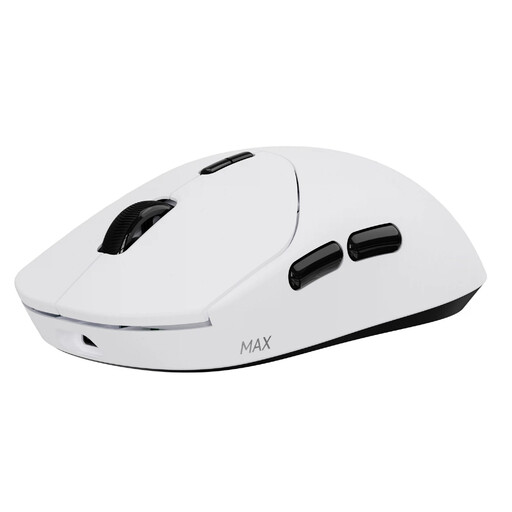 No image available
Consider this model if you want several mouse controls available for repeated map-editor commands on a cable-free desk.
The product name lists 10 programmable buttons and a stated weight of 53 g. Check A HUB compatibility with your computer and intended bindings, and confirm mouse-lighting controls if you need a dim or static profile.
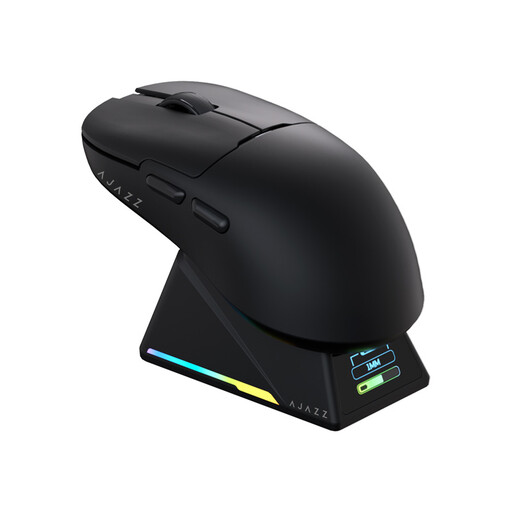 No image available
Consider this model if a wireless desk arrangement and software-configured editor shortcuts both matter to you.
Its name states 56 g and lists 2.4G and wired modes alongside a magnetic charging base. Confirm the exact connection modes before buying, particularly if you need Bluetooth, and check mouse-lighting controls separately from any lighting on the base.
 No image available
Consider this model if you want to assess a dock-based, cable-free setup alongside your map-editor binding needs.
The product name lists BT, 2.4G and USB-C modes, but connection details differ across its listing; confirm the modes for this exact variant. Check its stated weight before making a weight-based choice, and distinguish dock lighting from configurable lighting on the mouse.
Choose by the editor commands you would actually use on the mouse and by which controls you can reach comfortably. For reference, SteelSeries lists nine programmable buttons on the Rival 5, while Razer lists 10+1 on the Basilisk V3; check your editor’s bindings and the relevant configuration software before treating either count as useful to you.
You can configure lighting on a compatible model if its supported software offers the settings you need. Razer says Synapse can personalise device lighting, while SteelSeries warns that another RGB-control application may interfere with Prism; check the exact mouse’s controls rather than assuming that lighting on a charging dock applies to the mouse.
Choose wireless when cable-free placement matters enough for you to check its power and connection arrangements; choose wired if you would rather avoid battery-related decisions. Razer lists dual-mode wireless connectivity for the Basilisk V3 X HyperSpeed, whereas the cited Basilisk V3 and Logitech G502 X models are wired.
Check your local council’s electrical-recycling options or an available retailer take-back route. Brighton & Hove City Council’s guidance identifies small items with a plug, battery or cable as electrical items that can be recycled; the collection options available to you depend on your area.