Players who use frequent shortcuts
If you regularly open inventories, maps and evidence menus, accessible programmable buttons and a wheel that suits menu navigation are worth checking.


For detective games in a bright room, choose a button-rich mouse if you repeatedly use inventory and map shortcuts, or a lighter model if broad cursor movement matters more. Check button reach, grip and your tracking surface before treating RGB or maximum DPI as deciding features; wireless also adds charging to the decision.
If you regularly open inventories, maps and evidence menus, accessible programmable buttons and a wheel that suits menu navigation are worth checking.
When you spend time reading clues and moving between scenes, compare shape, grip and mass rather than choosing by maximum DPI alone.
If your playing surface varies, check the exact mouse’s surface guidance and consider a consistent mat. Logitech G notes that some patterns can interfere with sensor performance.
Start with the controls you will actually bind in your games, then assess grip and movement on the surface where you play. For consumers choosing a mouse for detective games in a bright room, each percentage below refers to those putting that concern first.
| Concern | What to check | Who this matters to |
|---|---|---|
| Shortcuts and menus | Check button placement and whether your game accepts the bindings you want; compare wheel behaviour for longer menus. | If I open maps and evidence menus repeatedly, I want useful controls within reach without disrupting my grip. Around 33% of consumers put shortcut access first. |
| Tracking surface | Try the intended desk or a clean, plain mat; confirm glass support for the exact model if you need it. | On a patterned or glossy desk, I need cursor movement to remain consistent while examining clues. Roughly 27% of consumers prioritise their tracking surface. |
| Grip and movement | Compare shape, dimensions, side-button reach and mass; a stated weight cannot establish how a mouse fits your hand. | During a long session, I would rather have a shape and movement feel that suit my grip than chase a higher DPI figure. Around 20% of consumers put comfort and movement first. |
| Lighting appearance | Decide whether RGB matters to you in your usual lighting; do not use it as a substitute for controls or surface suitability. | If my desk is brightly lit, I care whether I will enjoy the mouse’s lighting as it appears there. About 7% of consumers make lighting appearance their primary concern. |
| Connection and charging | Confirm the model’s connection modes, charging method and included accessories. | I want to decide whether cable freedom is worth managing charging, or whether a wired setup is simpler for me. Around 13% of consumers put connectivity first. |
A high maximum DPI does not tell you whether the buttons are reachable, the grip suits you or tracking is consistent on your desk.
Compare controls, shape and surface needs first, then choose a sensitivity you can control in the game.
RGB is an appearance feature; its presence does not establish how visible it will be in your room or how the mouse will track.
Judge lighting as a preference, separately from button access, fit and the surface you use.
Logitech G notes that some surface patterns can interfere with sensor performance, so a sensor specification alone may not settle how a mouse behaves on your desk.
Try the mouse on your intended surface. If movement is inconsistent, try a clean, plain, stable mat before changing sensitivity settings.
That may mean using a separate mouse mat rather than the bare desktop.
Its Basilisk and Viper lines offer different control and movement choices.
G502 models are relevant if configurable controls and wheel use are central to your choice.
The wired Pulsefire Core is a reference point for players considering palm or claw grip.
The wired M65 RGB ULTRA is another model to assess by shape and controls rather than sensor figures alone.
These gaming mice offer different ways to balance programmable controls with lighter movement. Compare each model’s button layout and grip against your game bindings, and consider the surface where you will use it.
 No image available
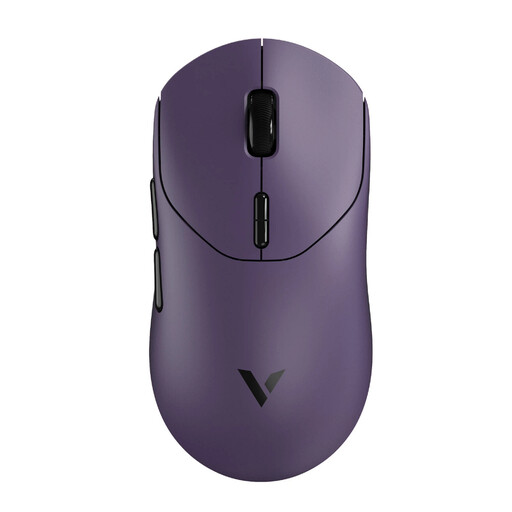
Consider it if you want mouse shortcuts for inventories and maps while keeping a stated 53 g mass. The product name lists 10 programmable buttons, an 8K wireless polling rate and optical switches; check whether the button positions suit your grip and whether tracking is consistent on your desk.
 No image available
Consider it if shortcut access and low-mass movement both matter to you. The product name lists 10 programmable buttons, 53 g, an 8K wireless polling rate and mechanical switches, distinguishing it from the optical-switch VT7 MAX; check button reach and your playing surface.
 No image available
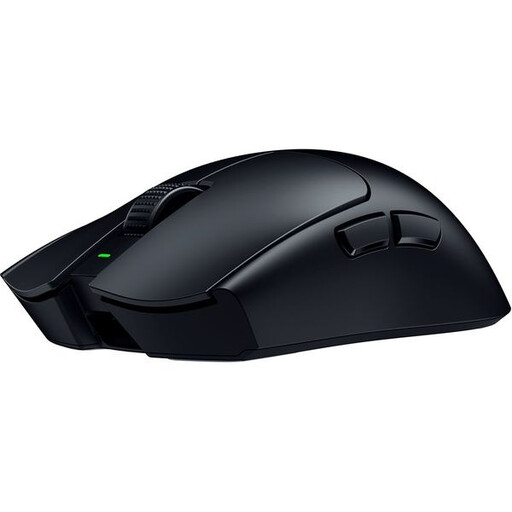
This is a movement-focused option if its shape suits your hand and eight programmable controls cover your shortcuts. Razer lists a 54 g design, while the Joybuy product information identifies a Focus Pro 35K Optical Sensor Gen-2 and no Razer Chroma RGB; confirm grip and tracking on your intended surface.
 No image available
Consider it if you favour a stated 56 g mass and want a magnetic charging base. The product name lists a PAW3950 sensor and 2.4G and wired modes; confirm the exact connection modes, remappable-button layout and grip before relying on it for frequent shortcuts.
Room brightness alone is not a sound basis for choosing a sensor. Check how the mouse moves on your actual surface: Logitech G notes that some patterns can interfere with sensor performance, so a clean, plain mat is worth trying if movement is inconsistent.
Choose RGB for its appearance, not as a tracking or control feature. How visible it looks depends on your setup, so assess it in lighting similar to your room if it matters to you.
Not necessarily UKCA rather than CE: GOV.UK says CE marking continues to be recognised in Great Britain alongside or instead of UKCA marking where the applicable product regulations meet UK needs. Check which requirements apply to the particular mouse; Northern Ireland has different arrangements.
Look for a local electrical-equipment collection or recycling route rather than putting it in general waste. GOV.UK describes the UK’s waste electrical and electronic equipment framework as supporting recovery, reuse and recycling; check your local authority or retailer for the collection options available to you.